By
6 min ago 3 min read
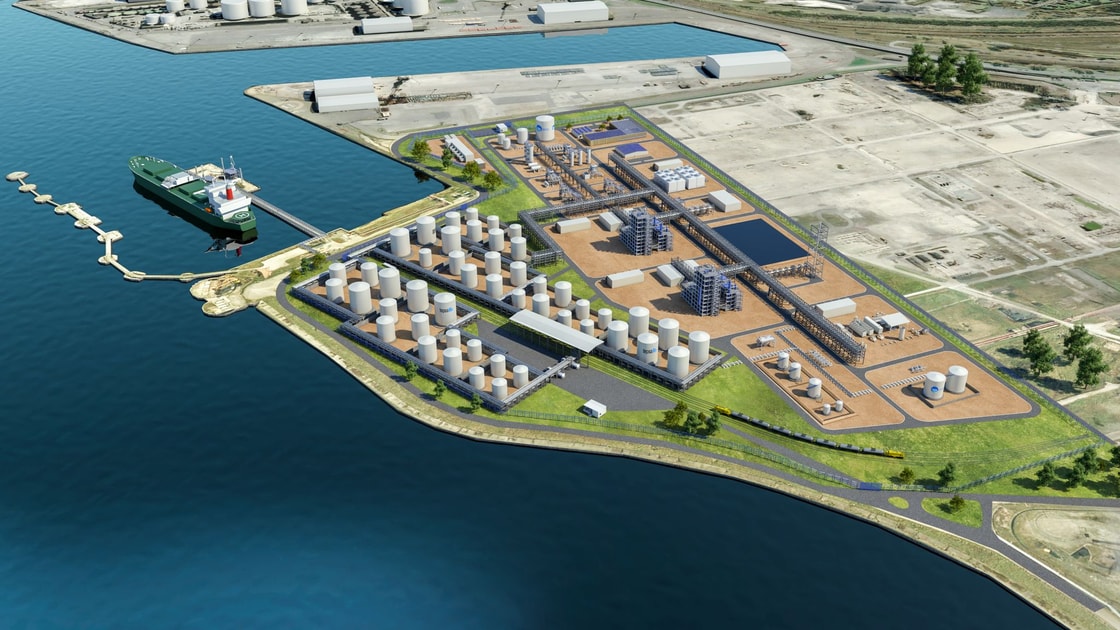
A European consortium led by Technip Energies could join forces to develop a 160,000 tonne-per-year (tpa) sustainable aviation fuel (SAF) facility at the Port of Dunkirk, France.
Named Rebound, the project would be realised by a joint venture (JV) also featuring aerospace companies Airbus and Safran, and French agriculture group, Tereos.
It would use the alcohol-to-jet (ATJ) pathway, in which renewable feedstocks such as sugars or waste biomass are fermented into alcohols like ethanol or isobutanol, then chemically dehydrated and hydrogenated into drop-in aviation fuel for blending with conventional jet fuel.
Lead developer Technip, which also in an 80,000tpa SAF project in Normandy and will for a 100,000tpa plant in the Netherlands, says it would oversee engineering and technology integration.
France’s Tereos would supply the project’s agricultural feedstocks, while Airbus and Saffran are slated as offtake facilitators and potential end-users themselves.
No timeline for a final investment decision (FID) has yet been revealed, technology providers remain to be selected, and the JV is subject to closing conditions – with finalisation expected this year.
However, the Port of Dunkirk has already allocated Rebound an industrial site offering logistical and permitting streamlining.
Benjamin Lechuga, Chief Strategy and Sustainability Officer of Technip, called SAF a “critical lever” for decarbonising aviation and said the ATJ pathway is a credible, scalable route.
“With Rebound, we are putting into practice our strategy to capture greater value through adjacent business models, originating and developing projects in fast-growing energy transition markets alongside recognised industry leaders,” he added
The announcement comes as EU states ramp-up SAF creation capabilities to meet mandates under RefuelEU Aviation framework, which dictates that at least 10% of aviation fuel must come from SAF by 2030, with a target of up to 70% by 2050.
Scaling the fuel, however, remains challenging given , and only a fraction of quantities needed to meet the targets currently being produced.
Recently, however, a European consortium flew what was billed as the to Germany using a 5% e-SAF blend.
Never miss a hydrogen headline
Hydrogen moves fast – stay on top of it with our daily and weekly briefings.
- Daily: The top five hydrogen stories, straight to your inbox
- Weekly: The week’s biggest news, features, interviews and analysis
- North American Bulletin: Dedicated coverage of the region’s key hydrogen developments