By
22 min ago 3 min read
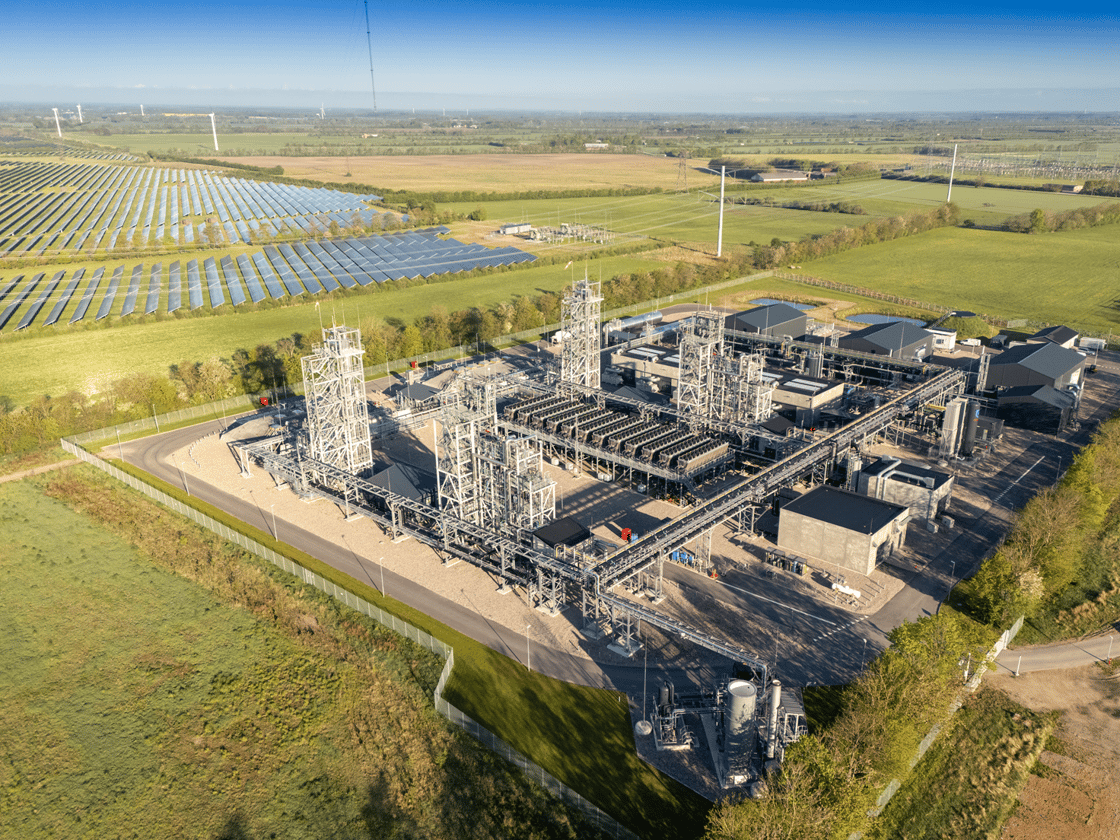
French utility Engie and European Energy have agreed to expand Denmark’s Kassø green hydrogen project to 150MW by 2030.
Located in Aabenraa Municipality, the facility has been awarded €228m ($263m) in German subsidies to build on its existing 52MW capacity and to connect the planned Danish-German Hydrogen Backbone.
It came and produces green hydrogen from electrolysis as a feedstock for e-methanol production.
Under a new collaboration agreement, Engie – which focuses on energy assets, infrastructure, and flexibility solutions – will gain marketing rights for 20,000 tonnes of green hydrogen per year, while the pair conduct technical studies and examine hydrogen transport logistics.
Measures for increasing hydrogen production, currently supported by three Siemens Energy electrolysers, were not disclosed in the announcement. H2 View has reached out to European Energy for information.
Rene Alcaraz Frederiksen, Head of Power-to-X at European Energy, said Engie’s expertise in connecting production and demand of renewable energy will play an important role in decarbonisation across Europe.
The project’s recent cash injection came under the European Hydrogen Bank’s (EHB) Auctions as a Service (AaaS) platform, which ($1.5bn) of subsidies across three Danish projects to supply the hydrogen backbone, a recognised EU project of common interest due for completion by 2030.
It Everfuel with €244.9m ($283m) for the first 200MW phase of its Frigg project in Vejen, and Copenhagen Infrastructure Partners with around €777m ($899m) for the Høst project in Esbjerg.
Denmark is positioned as a strong potential green hydrogen producer due to its high offshore wind capacity, with various projects looking to export to Germany.
However, the Danish Hydrogen Backbone from its original start date of 2028 with transmission system operator Energinet citing increased complexity and longer planning and environmental processes.
It comes as Germany looks to ramp up supplies of green hydrogen after passing in the transport sector.
By 2040, the molecule must make up 10% of transport energy, with fuel suppliers facing penalties for non-compliance.
H2 View webinars bring together industry leaders to discuss the hottest topics and biggest trends.
With H2 View webinars, you’ll get:
• Insightful talks from global hydrogen experts
• Live debates, discussion, and audience Q&A
• On-demand access to every past webinar
Register for or