“As ports electrify and grow, DP World sees access to reliable, low-carbon energy as critical to future competitiveness,” the company said. “Rising demand from electrified equipment, shore power, AI data centres, residential heating and industrial activity is placing greater pressure on existing energy systems, driving demand for stable and scalable power. Nuclear energy, including SMRs, has the potential to provide consistent, low-carbon electricity for port operations and wider industrial use.”
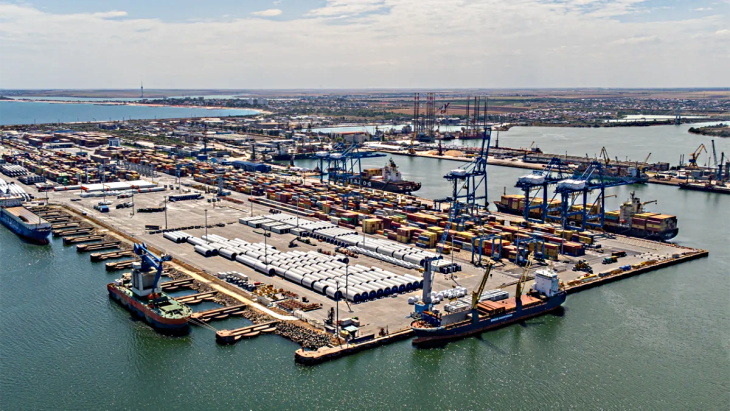
DP World has signed an agreement with French research organisation Commissariat à l’Energie Atomique et aux Energies Alternatives (CEA) and strategy specialist TerraWater Institute to launch a feasibility study into the use of SMRs at the Port of Constanța. At the mouth of the Danube-Black Sea Canal, the port links sea routes into Eastern and Central Europe, with deep-water access for larger vessels.
The study will model projected energy demand at the port from 2030 to 2050, evaluate integrated low-carbon energy systems, and assess the technical, strategic and economic feasibility of nuclear-based solutions. It will also examine safety standards and considerations for surrounding communities, drawing on CEA’s expertise in SMR design and nuclear safety.
DP World said the study is intended to inform future decision-making on how best to meet long-term energy needs for the port and the wider economy. Any future development would be subject to further technical assessment, regulatory review and stakeholder engagement, it noted.
“DP World sees the transition to a net-zero economy not only as an environmental imperative, but as a driver of future growth across global trade,” said Nicholas Mazzei, VP Sustainability – Europe, DP World. “Nuclear SMRs are not just energy projects for our ports, they are a competitive infrastructure differentiator. This study will help us better understand how nuclear energy can strengthen operational resilience and help meet rising demand. Across Europe, nuclear energy is increasingly recognised as a resilient and cost-effective solution with the potential to underpin the next generation of industrial activity and the supply chains.”
Myrto Tripathi, General Director, TerraWater Institute, added: “Ports sit at the intersection of industry, energy systems, and communities. This study is about understanding how future low-carbon energy systems could be designed to meet complex and evolving demands, while maintaining high standards of safety and environmental performance. For energy as for everything, offer should not shape demand and should provide opportunities rather than dictate terms. Industries’ needs have to be understood, assessed and met, while decarbonising. This is the only energy paradigm we should strive for and what we are aiming to demonstrate with this study, thanks to nuclear.”
“This study brings together expertise in nuclear technology and energy systems to assess how small modular reactors could be integrated into a real port environment,” said Stéphane Sarrade, Directeur des Programmes Énergies at CEA. “By working with DP World and TerraWater, we are applying advanced modelling and analysis to better understand how these solutions could support reliable, low-carbon energy for ports.”
In September last year, DP World signed a memorandum of understanding with US-based micro-nuclear technology developer Last Energy to establish the world’s first port-centric micro-nuclear power plant at London Gateway in the UK. A proposed PWR-20 microreactor – to begin operations in 2030 – would supply London Gateway with 20 MWe of electricity to power the logistics hub, with additional capacity exported to the grid.