The Japan Atomic Energy Agency (JAEA) and the National Nuclear Centre of the Republic of Kazakhstan (NNC RK) have been advancing the phased EAGLE Projects on core safety experiments of fast reactors since the early 2000s and implemented three phases: EAGLE-1, EAGLE-2, and EAGLE-3. It is aimed at advancing the safety of sodium-cooled fast reactors, including the investigation of phenomena associated with severe accidents involving core melt. The project includes studies of molten core material behaviour and its interaction with sodium coolant and structural materials through both in-pile and out-of-pile experiments. In-pile tests are conducted at NNC RK’s unique IGR research reactor, while out-of-pile studies are performed at the EAGLE test-bench.
About 200 preparatory tests have been carried out, along with two intermediate-scale and nine full-scale reactor experiments, as well as more than 65 out-of-pile tests at the EAGLE test-bench. The EAGLE-1, EAGLE-2, and EAGLE-3 experimental programmes have been successfully completed, confirming that molten fuel is promptly discharged from the core in the event of a severe accident. In addition, with the support of Marubeni Utility Service Ltd, analytical and computational studies were performed to prepare the next phase of the EAGLE programme (the Post-EAGLE-3 project).
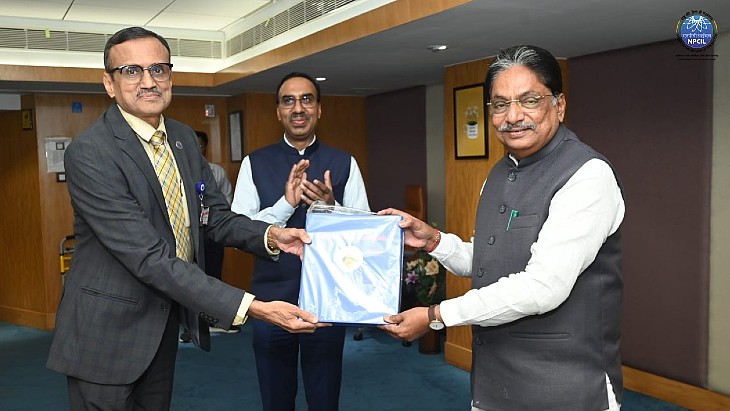
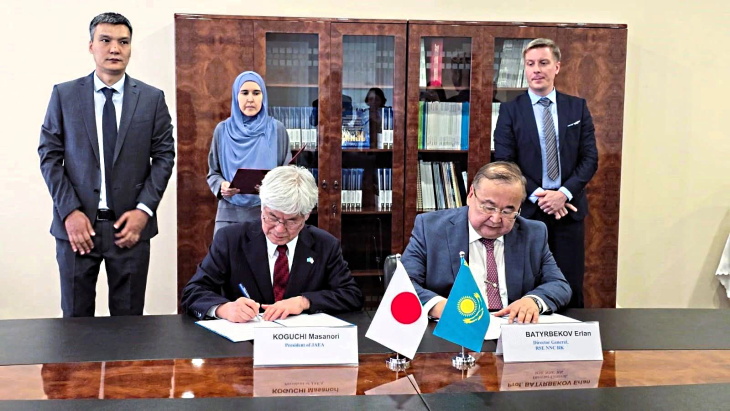
NNC RK Director General Erlan Batyrbekov and JAEA President Masanori Koguchi have now signed a memorandum of cooperation to undertake a fourth-phase cooperative research project – EAGLE-4 – and to promote core safety experiments toward the implementation of fast reactors while further strengthening collaboration between both institutions.
The EAGLE-4 project includes several in-pile experiments, twelve out-of-pile experiments, and a series of small-scale tests. The main objectives of this new phase are to test fuel assemblies for advanced Japanese Generation IV reactors, conduct research at the IGR reactor and other NNC RK facilities, and provide the scientific basis for the safety assessment of advanced nuclear technologies.
JAEA said it will conclude in coming months an implementation arrangement that defines the detailed specifications of the core safety tests to be implemented under the EAGLE-4 project and will proceed with the cooperative research with NNC RK.
NNC RK said it is in discussions with JAEA on the continuation of the EAGLE-4 project through to 2031.
Fast neutron reactors offer the prospect of vastly more efficient use of uranium resources than in conventional power reactors, as well as the ability to burn actinides. Fast reactors have operated in various countries since the 1950s, with some producing electricity commercially.
JAEA has a history of operating sodium-cooled fast reactors, such as Monju in Fukui Prefecture and the Joyo experimental fast reactor in Ibaraki Prefecture. However, the development of fast reactors in Japan was halted when the government decided to decommission Monju in 2016, following a series of problems, including leakage of sodium coolant in 1995.
In the strategic roadmap for fast reactor development adopted by Japan’s Cabinet in December 2018, a policy was defined to assess the efficacy of various types of fast reactors to be developed following a technological competition among private-sector corporations. The roadmap was subsequently revised by the Cabinet decision on 23 December 2022, at which time two decisions were taken: firstly, to select a sodium-cooled fast reactor as the target of the conceptual design of the demonstration reactor, set to get under way in fiscal 2024; and secondly, to select a manufacturer to serve as the core company in charge of the fast reactor’s design and requisite R&D which would proceed with technology development in accordance with the goals and policy directions established by the government.
In collaboration with domestic companies, JAEA is conducting research and development towards the implementation of fast reactors, including the conceptual design of a demonstration fast reactor and the development of severe accident mitigation technologies. A demonstration fast reactor is planned to operate by 2050.