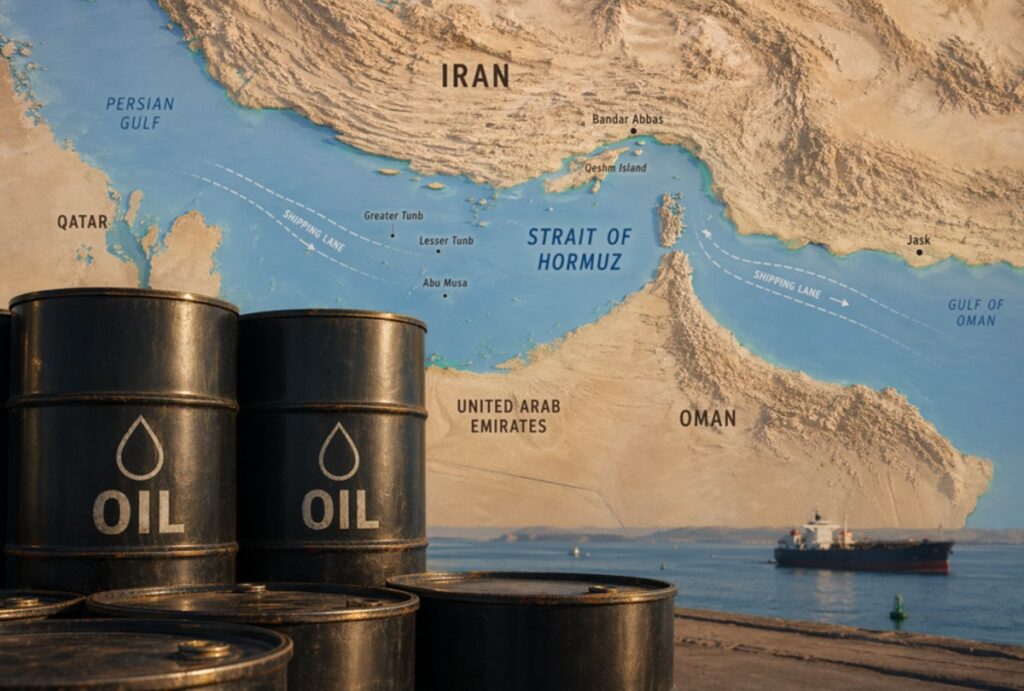
The U.S.-Iran deal ending months of fighting and reopening the Strait of Hormuz will prompt a collective sigh of relief from energy exporters and importers alike. But the fragile calm may not prevent future flare-ups, casting doubt over how quickly – or fully – tanker traffic through the vital waterway can return to normal. Under the agreement announced late on Sunday, Iran and the U.S. agreed to lift their blockades on the Strait of Hormuz, through which roughly a fifth of global oil and LNG flowed before the war broke out on February 28. The strait is expected to reopen once both sides formally sign the accord on Friday.
Get the Latest US Focused Energy News Delivered to You! It’s FREE:
That is obviously good news for supply-strapped energy markets, but the deal leaves unresolved the key disputes that triggered the U.S. and Israeli bombing campaign against Iran, including the future of Tehran’s nuclear programme. That ambiguity opens significant room for confusion, disagreement and renewed confrontation. Indeed, tensions have already resurfaced. Iran’s insistence on linking any deal to Israel’s campaign against Hezbollah in Lebanon has threatened to derail the talks, as the Iranian-backed militia has repeatedly exchanged fire with Israel, including over the weekend. Even the status of Hormuz itself is far from clear.
While both the U.S. and Iran have committed to lifting their blockades, the deal leaves Tehran with a powerful lever. Iran’s willingness and ability to choke off the strait for months has shattered a decades-old taboo, raising the prospect that it could do so again – or simply threaten to – whenever it seeks leverage over its Gulf neighbours or adversaries. That shift alone could have lasting consequences. The prolonged disruption of the world’s most critical energy chokepoint will almost certainly make shippers, buyers and producers more cautious long after flows resume. Some significant adaptations are already taking place. Saudi Arabia has sharply expanded shipments from its Red Sea port of Yanbu since March, tripling loadings to around 4.5 million barrels per day, roughly 60% of pre-war exports. The United Arab Emirates has also increased exports from Fujairah, outside the Strait.
Both Riyadh and Abu Dhabi are unlikely to reverse these shifts completely, even after Hormuz reopens.
Shipping behaviour could change as well. Tanker owners and charterers are likely to minimise time spent inside the Gulf, wary of being stranded if tensions flare up again. High insurance costs and security concerns will reinforce that caution. Together, these factors suggest that transit through Hormuz may not return to its pre-war peak of nearly 20 million bpd any time soon. A durable flow of around 16 million bpd is more plausible in the months, and potentially years ahead. That residual risk should help underpin prices. Brent crude has retreated below $85 per barrel from a March peak of $118, but a higher geopolitical risk premium and more complex logistics are likely to prevent a full unwind back to pre-war levels in the $60s.
A FLOOD OF RELIEF
The reopening of Hormuz will trigger a multi-phase adjustment in global energy flows. The first wave will come from within the Gulf itself. Tankers stranded during the blockade will begin exiting almost immediately to supply energy-starved markets, particularly in Asia. Around 60 million barrels of crude and refined products are currently held in floating storage within the Gulf, unable to exit through Hormuz, according to Kpler. That will be followed by an influx of vessels heading toward the Gulf to draw down swollen Middle Eastern onshore inventories and restore export programmes.
Logistics will take time to normalise, however. Sailing distances, port congestion and scheduling bottlenecks mean supply chains could take 60 to 90 days to rebalance fully. For instance, it takes three weeks to sail from the Middle East to Asia, meaning the resumption of shipments will not translate into instant relief for the most vulnerable markets.29dk2902l
Still, the potential impact on global oil supply will be substantial, if not immediate. Regional producers will be able to bring back roughly 11 million bpd of oil output shut in during the conflict, alongside idled refining and LNG export capacity. Some volumes could return within weeks, but a complete recovery will take much longer. Restarting fields, refineries and export terminals after prolonged outages is complex, and infrastructure damage sustained during the war could take months or even years to repair.
A RESILIENT BUT STRETCHED MARKET
The reopening also comes at a challenging moment for the supply-demand balance. Summer in the Northern Hemisphere typically marks the peak in global fuel consumption, driven by increased travel and air conditioning.
As a result, returning supply from the Middle East will initially do little more than slow the rapid drawdown in global inventories. Oil stocks fell at an average rate of 5.3 million bpd between March and May, according to the U.S. Energy Information Administration.
It’s important to remember that the market has proven surprisingly resilient throughout this conflict. A mix of commercial and strategic stock releases, surging U.S. exports, weaker Chinese demand, and the partial easing of sanctions on Russian and Iranian crude helped cushion the shock and prevent an outright supply collapse. Those measures have not eliminated the economic damage, but they have kept it broadly manageable – effectively buying time for the global economy.
But with inventories running dangerously low, that time was rapidly running out. That is why the U.S.-Iran agreement comes not a moment too soon.
Yet by papering over the underlying disputes at the heart of the U.S.-Iran conflict, the agreement does little to reduce the risk of renewed confrontation.
For oil markets, the message is clear: the acute risk from the supply shock may be over, but the structural vulnerabilities revealed by the war are here to stay.
(The opinions expressed here are those of Ron Bousso, a columnist for Reuters.)
Enjoying this column? Check out Reuters Open Interest (ROI), your essential new source for global financial commentary. Follow ROI on LinkedIn, and X. And listen to the Morning Bid daily podcast on Apple, Spotify, or the Reuters app. Subscribe to hear Reuters journalists discuss the biggest news in markets and finance seven days a week.
(Ron Bousso; Editing by Marguerita Choy)
Share This:
More News Articles