

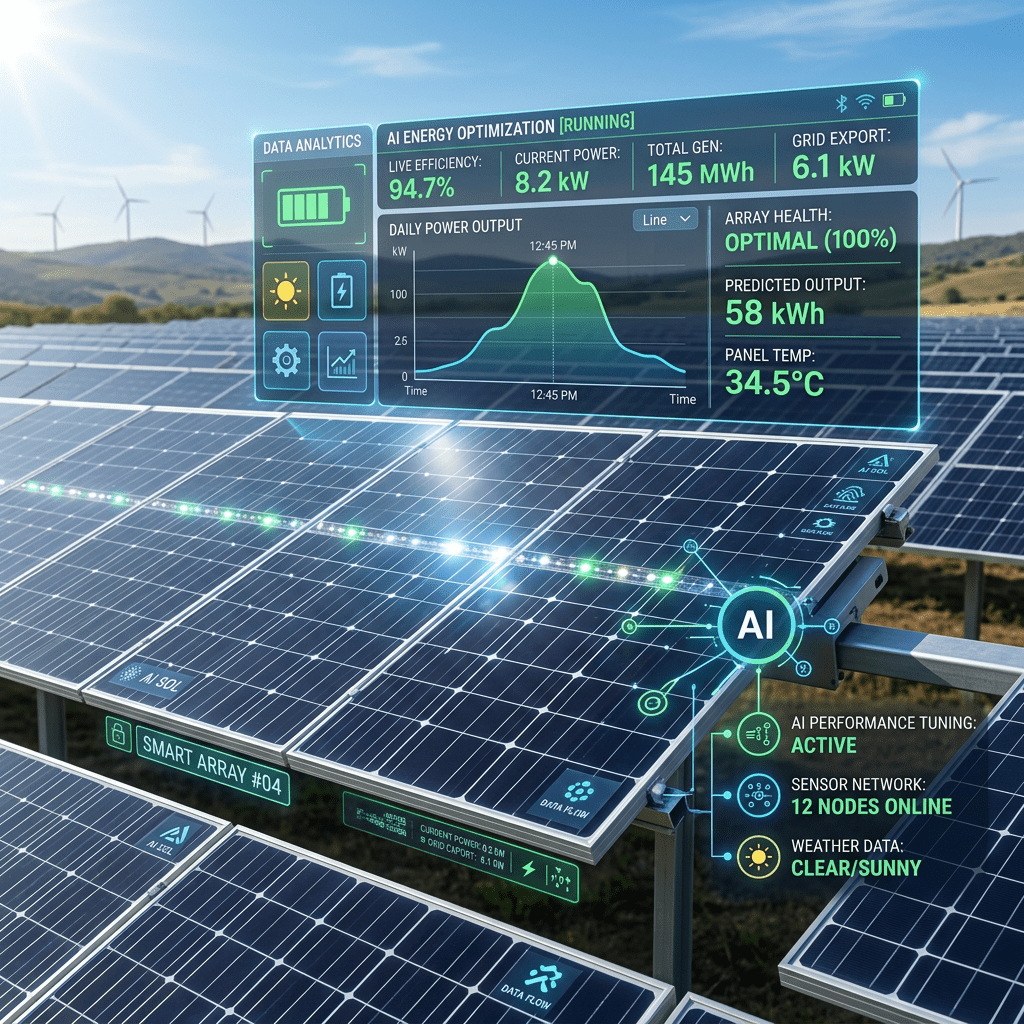
Artificial Intelligence (AI) is transforming the solar energy industry, particularly in the design, manufacturing, and performance analysis of photovoltaic (PV) modules. As the demand for high-efficiency solar panels continues to grow, manufacturers are increasingly adopting AI-driven technologies to improve product quality, reduce costs, and maximize energy generation. The integration of AI into solar module production is paving the way for next-generation smart solar modules that are more reliable, efficient, and intelligent than ever before.
In the manufacturing process, AI helps identify defects and quality issues with exceptional accuracy. Traditional inspection methods often rely on manual checks, which can be time-consuming and prone to human error. AI-powered computer vision systems use cameras and machine learning algorithms to inspect solar cells and modules in real time. These systems can detect microcracks, cell misalignment, soldering defects, and other manufacturing irregularities that may affect module performance. As a result, manufacturers can improve product quality while reducing production waste and operational costs.
AI also plays a crucial role in optimizing manufacturing operations. By analyzing large volumes of production data, AI systems can identify patterns and predict equipment failures before they occur. This predictive maintenance capability minimizes unplanned downtime, improves factory productivity, and extends the lifespan of manufacturing equipment. AI-driven process optimization can further enhance cell efficiency by fine-tuning production parameters such as temperature, pressure, and material usage.
Beyond manufacturing, AI is revolutionizing the way solar modules are monitored and managed in the field. Modern smart solar modules are equipped with sensors that continuously collect performance data, including voltage, current, temperature, and energy output. AI algorithms analyze this information to detect performance anomalies, identify underperforming modules, and predict potential failures. This allows operators to take corrective actions before significant energy losses occur.
Performance forecasting is another major advantage of AI in the solar sector. By combining historical generation data with weather forecasts, satellite imagery, and environmental conditions, AI models can accurately predict solar power output. These forecasts help utilities, grid operators, and solar plant owners manage energy generation more effectively and maintain grid stability. Improved forecasting also supports the integration of renewable energy into power systems by reducing uncertainty in electricity supply.
AI is also contributing to the development of digital twins for solar power systems. A digital twin is a virtual model that replicates the behavior of a physical solar asset. Using real-time data and AI analytics, operators can simulate different operating conditions, evaluate system performance, and optimize maintenance strategies without affecting actual operations. This technology enhances decision-making and improves the overall efficiency of solar installations.
As solar technology continues to evolve, AI is becoming an essential component of next-generation PV modules. From intelligent manufacturing and predictive maintenance to advanced performance analytics and energy forecasting, AI is helping the solar industry achieve higher efficiency, lower costs, and greater reliability. The combination of artificial intelligence and solar energy represents a significant step toward a smarter, more sustainable, and data-driven renewable energy future.
Subscribe to get the latest posts sent to your email.








)