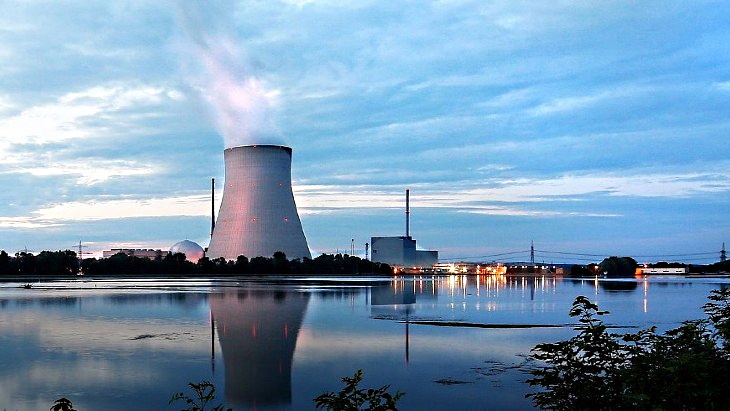
“Reactivated nuclear power plants offer an opportunity to return to competitive industrial electricity prices, including grid fees, in Germany in the medium term and to secure Germany’s energy supply through diversification, without conflicting with European climate targets,” says the letter, which is addressed to Federal Chancellor Friedrich Merz, Federal Minister of Economics Katherina Reiche and the chairman of the CDU/CSU parliamentary group Jens Spahn.
“Furthermore, the repair and reactivation of existing plants is essential for maintaining expertise in this field in Germany and thus ensuring its compatibility with future technologies such as small modular reactors (SMRs) and nuclear fusion. Regarding the readiness of industry and personnel, it should be noted that German-designed and similar nuclear power plants are in operation or under construction abroad (Spain, Switzerland, the Netherlands, Brazil, Argentina). Despite the decommissioning of the German plants, experience with the German plant type therefore still exists in industry, fuel management, and training. Expertise, sites, infrastructure, power plant buildings, plant components, and personnel are still available in Germany and can be expanded.”
The group say “further issues need to be addressed or clarified” to enable the restart of the country’s reactors. These include an “ideology-free evaluation” of the electricity production possibilities, taking into account all socio-economic factors and considering the goal of achieving greenhouse gas neutrality by 2045; accompanied and supported by a public communication campaign. They say there must be a suspension of the dismantling of potential nuclear power plant sites and the associated cost regulations, as well as an amendment to the Atomic Energy Act and subordinate regulations. They call for bureaucracy to be reduced in the process of seeking new nuclear permits and environmental impact assessments, as well as preservation of existing know-how in educational institutions and among plant manufacturers. In addition, they say incentives for investment in the nuclear sector must be created. “Under the current framework, power plant operators themselves have no interest in resuming reactor operation due to the ‘unbundling’ of grids and generation, and the associated cost burden on electricity customers,” the latter says. “The interest of other investors is currently thwarted only by nuclear legislation.”
“You can influence the framework conditions politically. We can contribute our technical expertise,” says the letter – the by German tabloid newspaper Bild. “From a purely technical point of view, the existing power plants in Germany that were recently shut down can be reactivated.”
The signatories include: Horst Kemmeter, former head of the Emsland and Biblis plants; Thomas Franke, former head of the Philippsburg and Leibstadt plants; Jürgen Haag, former head of Emsland; and Hans-Joachim Mueller from the Brokdorf nuclear power plant.
As a technical basis, the signatories refer to the new report prepared by the Radiant Energy Group in collaboration with German pro-nuclear group Nuklearia, which examines the feasibility, timeline, and economic viability of restarting the most recently decommissioned plants.
“Since the reactivation can utilise existing plant components and the existing workforce at the site, it is highly attractive both economically and in terms of timing – both compared to new construction projects abroad and other energy sources,” says the report, titled . “Reactivation modernises the plants, equipping them for decades of further operation. The resulting levelised cost of electricity (LCOE) is so low that reactivation would be attractive to investors even without government support, provided policymakers pave the way. This also represents Germany’s best opportunity to once again offer industry internationally competitive electricity prices without the need for subsidies.”
The report concludes that up to 14 reactors can be modernised and, in some cases, even have their output increased.
“The decision to reactivate the plants should be made as soon as possible to avoid further damage to the facilities caused by dismantling,” it says. “However, since even more extensively dismantled plants are still eligible for recommissioning, this option remains open for several years should the decision to reactivate be delayed. The report assumes that dismantling will cease and preparations for reactivation will begin in January 2027.”
Background
Following the accident at the Fukushima Daiichi plant in Japan in March 2011, the government of Chancellor Angela Merkel decided it would phase out its use of nuclear power by the end of 2022 at the latest. Prior to the accident, Germany was obtaining around one-quarter of its electricity from nuclear power.
In August 2011, the 13th amendment of the Nuclear Power Act came into effect, which underlined the political will to phase out nuclear power in Germany. As a result, eight units were closed down immediately: Biblis A and B, Brunsbüttel, Isar 1, Krümmel, Neckarwestheim 1, Phillipsburg 1 and Unterweser.
The Brokdorf, Grohnde and Gundremmingen C plants were permanently shut down at the end of December 2021. The country’s final three units – Emsland, Isar 2 and Neckarwestheim 2 – shut down in April 2023. All the units are now at various stages of decommissioning. (Click for a full timeline of Germany’s nuclear phaseout).