US mines produced 1,388,000 pounds U3O8 (534 tU) in 2025, up from 677,000 pounds U3O8 in 2024. The 2025 figure was the highest since 2016’s production of 2,545,000 pounds, according to the government agency’s , released on 23 June. Production was from one underground mine and seven in-situ recovery operations – the same as in 2024 – with some production from “other sources” of uranium, which the Energy Information Administration (EIA) says could include mine water, mill site cleanup and mill tailings, and well field restoration.
Uranium exploration and development drilling activities in 2025 were at their highest levels since 2013 for number of holes drilled and for total footage drilled, the EIA reported. Although at the end of 2025 only one conventional uranium mill – Energy Fuels’ White Mesa Mill in Utah – was in operation, two remained on standby (the Shootaring Canyon Uranium Mill in Utah and the Sweetwater Uranium Project in Wyoming), while the Sheep Mountain heap leach facility in Wyoming had reached a partial permitting and licensed stage.
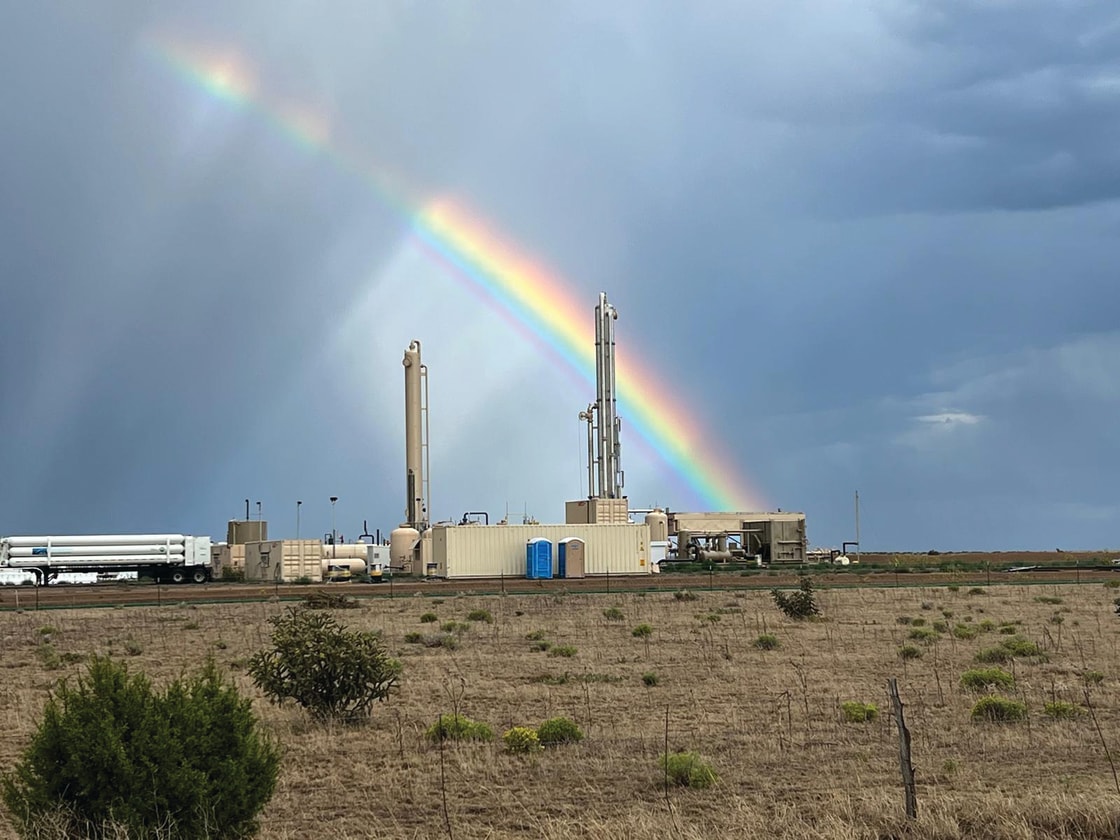
In-situ recovery (ISR) facilities at the Alta Mesa, Lost Creek, Smith Ranch-Highland Operation, Ross Central Processing, and Willow Creek projects were operating at the end of the year, with a combined annual capacity of 13.3 million pounds U3O8 per year – slightly down from the industry-wide ISR capacity of 14.1 million pounds in 2024. Five in-situ recovery plants, with a combined annual production capacity of 8.8 million pounds U3O8, were on standby. Seven ISR plants – in South Dakota, Texas, and Wyoming – were planned, with a combined annual production capacity of 10.5 million pounds U3O8. (ISR – also known as in-situ leach – involves dissolving uranium directly from the orebody and recovering it via wells: ).
Expenditures for land, exploration, drilling, production, and reclamation totalling USD234.7 million in 2025 were the highest since 2014, while total employment in the U.S. uranium production industry, at 711 full-time person-years (a person year is equal to full-time employment for one person), was 41% up from the 506 full-time person-years in 2024 and the highest employment total since 2014.
Following the Fukushima accident of 2011 – which led to all of Japan’s nuclear reactors being taken off line for an extended period – a time of weak uranium prices and an excess supply of uranium globally saw many US producers decide to curtail their operations. The last time US domestic production topped the million pounds mark was in 2017: production fell so low that numbers were withheld in 2020 to avoid disclosure of individual company data ( put US production at just 6 tU in 2020). This left US reactor operators dependent on imports of uranium to fuel their power plants.
Since 2022, successive US Administrations have pursued strategies to revitalise and secure the domestic US nuclear fuel supply chain.
The Energy Information Administration is a statistical and analytical agency within the US Department of Energy.