By
59 min ago 3 min read
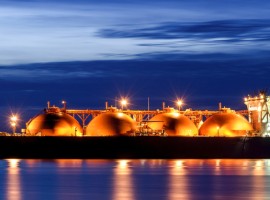
UAE-headquartered investment firm XRG has acquired 7.6% stake in of Rio Grande LNG in Brownsville, Texas, which have an expected combined liquefied natural gas (LNG) production capacity of around 12 million tonnes per annum (mtpa).
XRG, the international branch of Abu Dhabi National Oil Company (ADNOC), said its continued investment in US LNG company NextDecade’s Rio Grande project will strengthen its presence in the US LNG market and support energy security on a global scale.
The acquisition gives XRG equity interests across all five trains under construction at Rio Grande LNG, which are expected to have a combined liquefaction capacity of around 30 mtpa.
XRG first invested in Rio Grande LNG by acquiring an indirect 11.7% stake in Phase 1, covering interest in Trains 1, 2, and 3.
XRG’s investments were made through Global Infrastructure Partners (GIP), a part of US-headquartered investment firm BlackRock.
First LNG production is targeted at Rio Grande LNG for the first half of 2027, with operational testing expected later this year.
Mohamed Al Aryani, President of XRG’s International Gas business, said, “Rio Grande LNG… helps connect advantaged US gas supply with international demand.”
NextDecade said Trains 6, 7, and 8 could have a total potential LNG production capacity of approximately 18 mtpa.
US-UAE energy cooperation
XRG says the US is a core element of its global portfolio, with its latest investment also supporting the wider US-UAE energy cooperation.
According to the US International Trade Administration (ITA), US-UAE LNG cooperation comes as the UAE looks to increase domestic LNG production and global exports to meet market demand.
In May 2025, during US President Trump’s visit to the UAE, ADNOC, the parent company of XRG, signed gas and LNG agreements with US companies to potentially support $60bn of US investments in UAE energy projects.
UAE energy companies are also investing in US projects, like XRG’s investment in Rio Grande LNG, to create economic integration.
Supply disruption
Following the Middle East crisis, the combined effect of short-term supply losses and slower capacity growth could result in a cumulative loss of around of LNG supply between 2026 and 2030, according to the International Energy Agency (IEA).
Prior to global LNG supply chain disruptions around 20% of global LNG supply moved through the Strait of Hormuz last year.
With disruption to trade flow in the Strait, LNG supply from Qatar and the UAE has decreased by 300 million cubic metres per day since 1 March, adds the IEA.