By
25 min ago 3 min read
A series of 12 new bio-liquefied natural gas (bioLNG) refuelling stations will be deployed across key freight routes spanning the Southeast, Midlands and North of the UK.
The network will enable heavy goods vehicles (HGVs) to fuel with bioLNG at motorway forecourts and depot sites, with the renewable fuel capable of cutting lifecycle carbon dioxide emissions by more than 80% compared with diesel.
Roadgas Limited plans to roll out the stations throughout 2026 on behalf of Cambridge-based biomethane supplier Pretoria Energy. According to the company, the initial deployment will roughly double the UK’s heavy-duty gas refuelling network.
The announcement comes as investment in bioLNG-powered freight transport continues to gather pace in the UK. Earlier this year, DHL doubled its UK bioLNG truck fleet to 60 vehicles, while retailer M&S announced plans to expand its biomethane fleet through the deployment of mobile refuelling stations at distribution centres.
“By combining biomethane with expanded refuelling sites, we are delivering a transparent solution for UK haulage,” said David Rix, Managing Director of Roadgas.
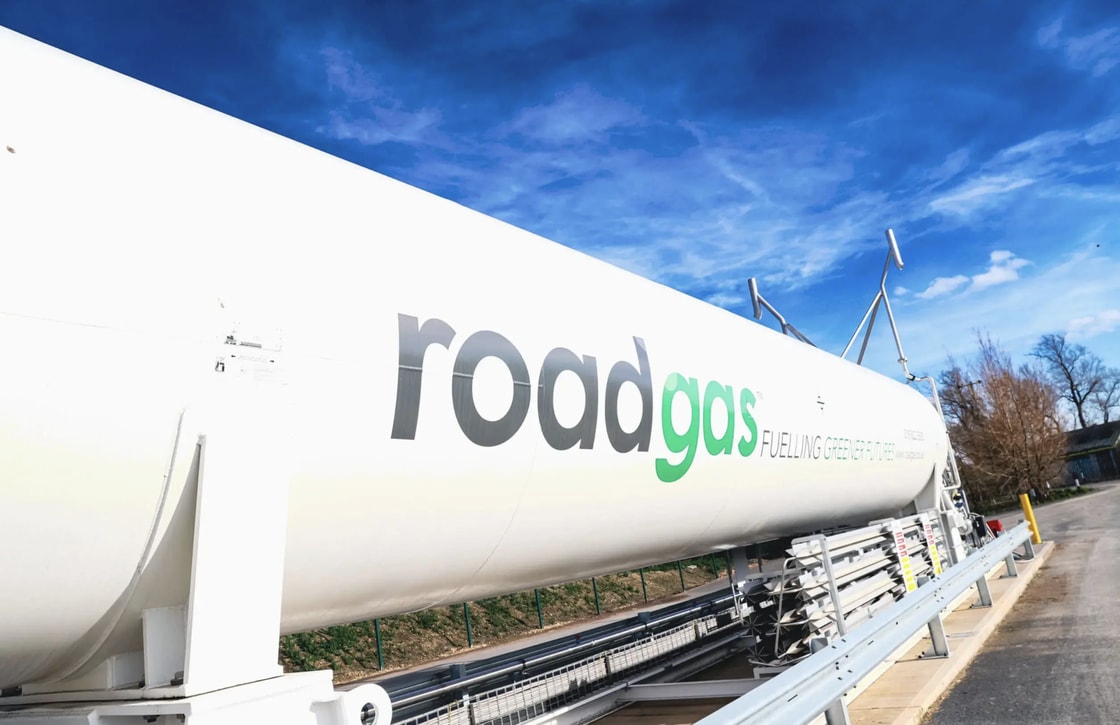
The network will comprise a mix of public-access stations and private depot sites, each equipped with high-flow cryogenic dispensers and large-capacity LNG storage tanks designed to refuel HGVs within minutes.
The partners said fleets will also be able to access flexible payment models, including pay-per-mile contracts that combine fuel, vehicle leasing and maintenance into a single agreement.
Roadgas said bioLNG offers significantly greater emissions savings than fossil LNG, which typically reduces CO2 emissions by around 5 to 10% compared with diesel.
The company added that bioLNG-powered trucks can travel up to 1,000km between refuelling stops, making the fuel well suited to long-haul freight operations.
The expansion builds on growing investment in the UK’s bioLNG market, where infrastructure has increasingly become the limiting factor for wider adoption.
Last year, Gasrec opened its Hams Hall near Birmingham to ease capacity constraints on one of the country’s busiest freight corridors.
And earlier this year logistics company its UK bioLNG truck fleet to 60 vehicles and M&S announced plans to expand its biomethane-powered fleet using mobile refuelling stations at distribution centres.
The rollout also reflects broader momentum for bioLNG across Europe as transport operators seek lower-carbon alternatives in sectors where electrification remains difficult.
In the maritime sector, companies including Tallink Grupp and Viking Line have of bioLNG to help meet tightening emissions requirements while reducing the carbon footprint of ferry operations.