South Korea Bets on Red Sea Route as Hormuz Disruptions Persist

Since the Iran war disrupted shipments through the Strait of Hormuz in early March, South Korea has been increasingly betting on the Red Sea route and the Saudi export terminal of Yanbu to load oil on tankers and ship it to Asia.

Before the Iran war began, South Korea depended on cargoes transited via the Strait of Hormuz for as much as 61% of its crude oil imports and 54% of its naphtha imports.

South Korea, one of Asia’s biggest economies and one of the largest energy importers in the region, has sought to diversify its crude imports not only with supplies from producers outside the Middle East but also via the Red Sea route. Saudi Arabia has redirected to this route the better part of its crude oil shipments amid the disruptions and threats to commercial shipping in and around the Strait of Hormuz.

South Korea’s Ministry of Oceans and Fisheries announced on Friday that a South Korean oil tanker successfully transited the Red Sea and is currently en route to Asia. This was South Korea’s 14th crude oil shipment to use the route since the Middle East conflict cut off most of the trade through the Strait of Hormuz.

The tanker loaded crude oil at Saudi Arabia’s Yanbu Port on the Red Sea before passing through the Red Sea and heading toward South Korea, the Ministry of Oceans and Fisheries said, without providing too much detail of the vessel’s movements for safety reasons.

The government “considers using the Red Sea route to be the most realistic option for the time being, as the Strait of Hormuz has yet to stabilize,” the ministry said in a statement carried by South Korea’s news agency Yonhap.

However, the newly created South Korean route to load Saudi oil for Asia could be at risk as the Iran-aligned Houthis in Yemen are reportedly waiting for the green light from Iran’s Islamic Revolutionary Guard Corps (IRGC) to close the Bab el-Mandeb Strait and choke the exports via the Red Sea.

By Charles Kennedy for Oilprice.com

More Top Reads From Oilprice.com


  • Related Posts

    Asia Needs $1 Trillion a Year to Secure Energy Supplies

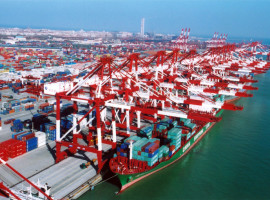
    Asia will need as much as $1 trillion annually in energy investment over the next 15 years to meet rising demand and reduce its exposure to supply disruptions, according to…

    Citi’s $60 Oil Call Meets $112 Brent

    Citi sees more upside risk for oil prices despite recovering Middle Eastern crude exports, a considerably less bearish assessment from the bank that predicted $60-to-$65 Brent by year-end just three…

    Have You Seen?

    Heidelberg halts German cement CCS project over CO2 infrastructure concerns

    • October 23, 2026
    Heidelberg halts German cement CCS project over CO2 infrastructure concerns

    Singapore pairs biomethane pilot with S$143m industrial decarbonisation funding

    • October 23, 2026
    Singapore pairs biomethane pilot with S$143m industrial decarbonisation funding

    Citi’s $60 Oil Call Meets $112 Brent

    • October 23, 2026
    Citi’s $60 Oil Call Meets $112 Brent

    Asia Needs $1 Trillion a Year to Secure Energy Supplies

    • October 23, 2026
    Asia Needs $1 Trillion a Year to Secure Energy Supplies

    CSERC Rejects Immediate Pre-Payment Meter Relief For HT Consumer, Allows Security Deposit In Installments

    • October 23, 2026
    CSERC Rejects Immediate Pre-Payment Meter Relief For HT Consumer, Allows Security Deposit In Installments

    APTEL Rejects Compensation Claim Over Increased Solar And Wind Grid Connectivity Charges In Rajasthan

    • October 23, 2026
    APTEL Rejects Compensation Claim Over Increased Solar And Wind Grid Connectivity Charges In Rajasthan

    BOC opens Teesside CO2 plant as UK seeks to strengthen domestic supply

    • October 23, 2026
    BOC opens Teesside CO2 plant as UK seeks to strengthen domestic supply

    Solar Power Plant Cost in India: Investment, Land Requirement & ROI

    • October 23, 2026
    Solar Power Plant Cost in India: Investment, Land Requirement & ROI

    Websol Energy Appoints Vinay Vyas As CEO Of Websol Renewables, Targets 5,350 MW Solar Cell Capacity By 2028

    • October 23, 2026
    Websol Energy Appoints Vinay Vyas As CEO Of Websol Renewables, Targets 5,350 MW Solar Cell Capacity By 2028

    Clean Max To Sell 26% Stake In Subsidiary Clean Max Hachi To Chambal Fertilizers

    • October 23, 2026
    Clean Max To Sell 26% Stake In Subsidiary Clean Max Hachi To Chambal Fertilizers