By
- Strait of Hormuz flows have slowed after last month’s truce collapsed
- Iran pressed Houthis to disrupt Red Sea shipping if US hits power sites
NEW YORK, July 17 (Reuters) – Oil prices climbed more than 4% to their highest in more than a month on Friday after the U.S. and Iran stepped up attacks across the Gulf, with shipping threatened by a potential Red Sea closure on top of the restricted traffic through the Strait of Hormuz.
Get the Latest US Focused Energy News Delivered to You! It’s FREE:
Brent crude futures settled $3.87, or 4.59%, higher to $88.10 a barrel, while U.S. West Texas Intermediate futures rose $3.54, or 4.48%, at $82.49. Both were at their highest since mid-June.
For the week, both benchmarks gained about 16%, with Brent on track for a third consecutive weekly gain and WTI set for its second.
The two foes expanded fighting on Friday, with the U.S. striking bridges and an airport in Iran and Tehran hitting a power and desalination plant in Kuwait. Iran said it launched more strikes on U.S. facilities in the Middle East, including the first direct attack in Syria, after a sixth straight night of U.S. strikes on Iranian military facilities.
“The market is reacting to the increasing hostilities between Iran and the United States that have culminated this week with nightly attacks on Iranian infrastructure and retaliation by Iran on its neighbors’ infrastructure,” said Andrew Lipow, president of Lipow Oil Associates. “If more tankers come under fire and become damaged, we’re going to see oil prices continue to move up as shipowners simply refuse to enter the Persian Gulf.”
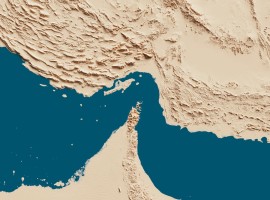
The collapsed truce between the U.S. and Iran has resulted in a sharp decline in oil flows in the strait as Iran targets vessels transiting through it. Before the Iran war, about 20% of global oil supplies flowed through the waterway. Iran has pressed the Houthis to close the Red Sea route if the U.S. attacks Iran’s power infrastructure.
“Given that so much of Saudi Arabia’s exports have been redirected to the port of Yanbu via the East-West Pipeline to avoid Hormuz, any such development is a threat indeed,” Tamas Varga, analyst at PVM Oil Associates, wrote in a note.
Saudi Arabia has diverted more than 70% of its normal daily crude exports to the Red Sea port of Yanbu since the beginning of the war. Shipments from Yanbu averaged 4 million barrels per day in recent weeks, up from around 973,000 bpd in the same period last year.
Qatar’s defence ministry said its armed forces thwarted an Iranian missile attack early on Friday and the interior ministry said a child was wounded by shrapnel resulting from interception operations.
In a different conflict zone, Ukraine’s military said it struck a Russian oil refinery in the Yaroslavl region on Thursday.
Reporting by Nicole Jao in New York, Robert Harvey in London, Mohi Narayan in New Delhi and Helen Clark in Perth; Editing by Philippa Fletcher, Rod Nickel and Daniel Wallis
Share This:
More News Articles