By
31 min ago 3 min read
The food and beverage industry is finding new ways to decarbonise, from lower-carbon refrigeration to carbon dioxide (CO2) recovery. But could more efficient CO2 distribution, supported by telemetry, unlock another opportunity to cut emissions?
In recent years, across commercial refrigeration, manufacturers have increased the use of non-fluorinated refrigerants, including carbon dioxide (CO2, R-744), propane (R-290) and isobutane (R-600a), in a move towards more environmentally friendly operations.
Additionally, in breweries, manufacturers have started to capture and reuse fermentation byproducts.
Speaking on a recent gasworld webinar, Andy Hepworth, Chairman and Managing Director of Hepworth Brewery, shared the West Sussex-based brewery has integrated cost-effective CO2 recovery methods into its operations.
“We have a very…advanced reduction programme within the brewery and obviously [are] capturing some of the CO2 that we are producing anyway, we can clean it, dry it, and recompress it, and that cut our vulnerability, but also cut our carbon footprint.”
Cost-efficient CO2 distribution mechanisms
Beyond CO2 recovery and alternative refrigerants, the distribution of CO2 itself presents an opportunity to improve both operational efficiency and the carbon footprint of the food and beverage supply chain.
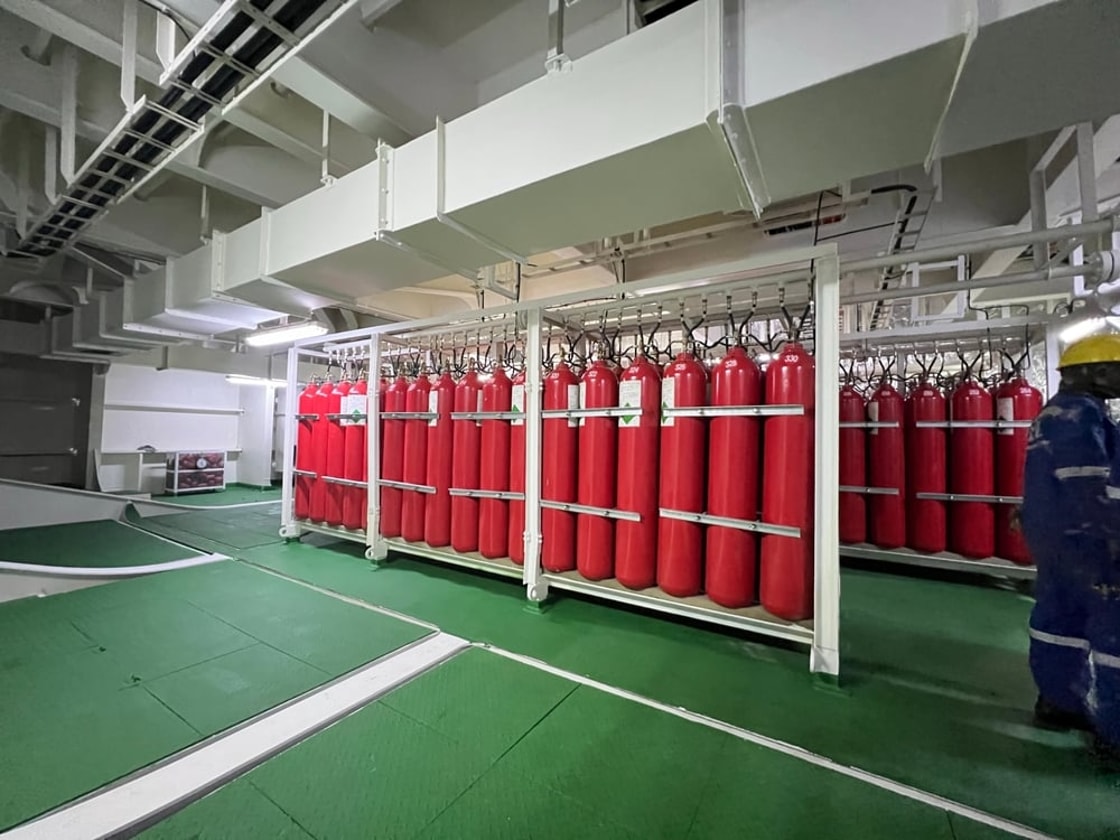
Andy Castiglione, President at WestAir Gases & Equipment, said the company’s Eco-CO2 system, used in the food and beverage CO2 supply chain, reduces the cost to serve customers by streamlining distribution logistics and reducing the emissions associated with distribution.
Castiglione said the Eco-CO2 system provides a constant, uninterrupted supply of CO2, and does not require the cylinder to be exchanged, connected or disconnected, while simultaneously ensuring that none of the CO2 is emitted during the fill process.
The stationary CO2 setup is designed to eliminate the need for manual tank switching and gas venting in beverage and brewing applications.
Telemetry in CO2 distribution
In the food and beverage supply chain, telemetry is important because it enhances distribution efficiency and prevents gas runouts by providing visibility into customers’ CO2 tank levels.
Telemetry is the automated process of remotely capturing data to monitor industrial operations.
For CO2 suppliers, this visibility can help optimise delivery schedules, reducing unnecessary journeys while ensuring customers receive product before their supply runs out.
The technology improves operational efficiency, which can lead to a reduction in CO2 emissions from transportation and distribution mechanisms.
Castiglione shared that the company relies on telemetry for efficiency gains. “With telemetry, we can monitor the contents of those cylinders, so we can provide just-in-time deliveries where the customer’s not running out, so we don’t run the risk of shutting down their operation.”
“But we’re also not delivering too early, where a truck is going there and filling when there’s still 50% of the product left,” he added.
This leads to fewer trips for the company’s diesel-fuelled trucks, improving overall distribution economics across Westair’s Californian customer base.