

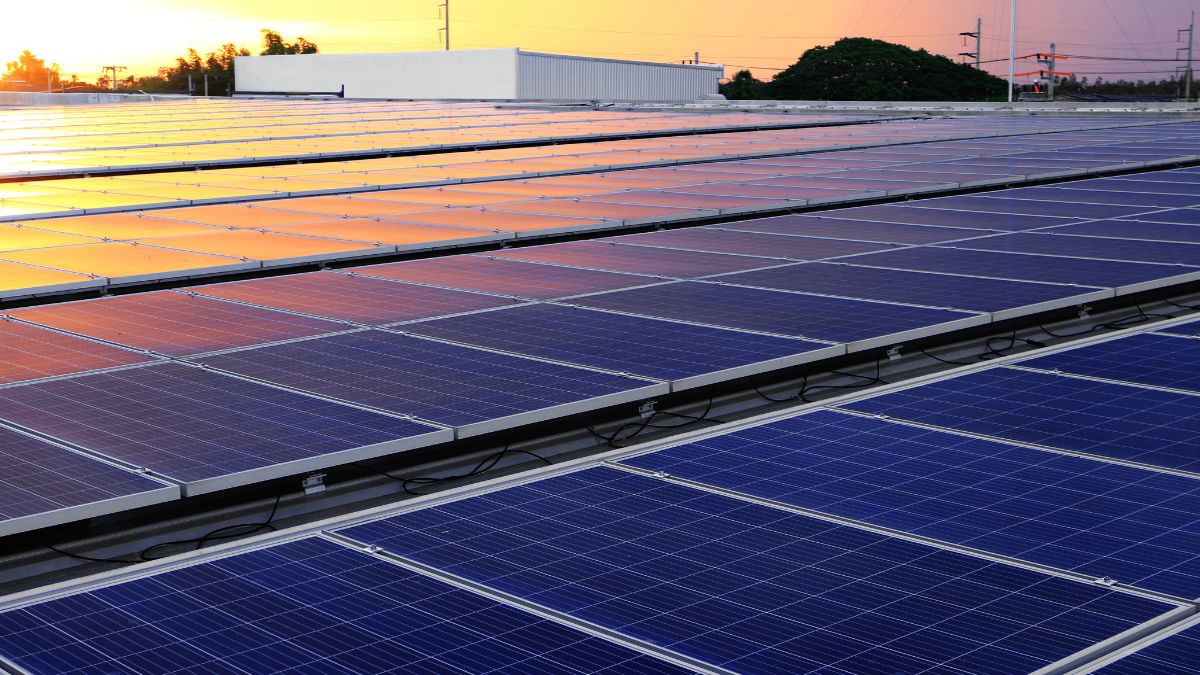
Godavari Marathwada Irrigation Development Corporation (GMIDC) has invited an Expression of Interest for a 14.3 MW solar project integrated with battery energy storage at the Vishnupuri project in Maharashtra. The initiative is aimed at utilising available infrastructure for renewable power generation while incorporating storage to improve flexibility and energy management. Combining solar generation with BESS can help shift electricity availability beyond sunshine hours and support more reliable utilisation of renewable power. The EOI represents another example of Maharashtra exploring solar-plus-storage opportunities across public infrastructure as battery technologies become increasingly important to India’s renewable energy transition.
India’s renewable energy expansion continued in July 2026, with renewable sources accounting for approximately 43.4% of the country’s installed power capacity and cumulative solar capacity crossing 165 GW. The milestone builds on rapid additions during the first half of the year, when India had already exceeded 162 GW of installed solar capacity by June. Solar remains the dominant contributor to India’s renewable portfolio, supported by utility-scale projects, rooftop installations and distributed generation. Continued capacity additions underline solar’s increasingly central role in India’s electricity mix as the country advances toward its long-term clean energy and non-fossil capacity goals.
The Andhra Pradesh Electricity Regulatory Commission (APERC) has simplified regulations governing behind-the-meter rooftop solar systems, reducing regulatory and financial barriers for consumers. The changes remove the surcharge burden associated with qualifying behind-the-meter installations, improving the economics of self-consumption for electricity users. The move is expected to encourage consumers to generate and use more solar electricity directly at their premises while reducing dependence on grid purchases. Andhra Pradesh has also recently clarified regulatory treatment for existing rooftop installations, indicating a broader effort to provide greater certainty to solar consumers. The latest reform could further support distributed solar adoption across the state.
Jaipur Vidyut Vitran Nigam Limited (JVVNL) has floated a tender for a 2 MW/4 MWh distributed Battery Energy Storage System pilot project in Rajasthan. The two-hour storage system represents a targeted move toward evaluating batteries closer to the distribution network, where they can potentially support peak management, renewable integration and improved system flexibility. Distributed BESS projects can also help utilities understand the operational and commercial benefits of deploying storage near electricity demand centres. The pilot could provide useful experience for larger future deployments as Rajasthan expands renewable generation and evaluates storage solutions to manage an increasingly dynamic electricity system.
The Uttarakhand Electricity Regulatory Commission (UERC) has proposed Deviation Settlement Mechanism Regulations, 2026, aimed at strengthening grid discipline and establishing a clearer framework for financial settlement of electricity deviations. DSM mechanisms encourage market participants to adhere more closely to their scheduled generation and drawal, helping system operators maintain grid stability. The proposed regulations come as Uttarakhand develops broader frameworks for grid reliability, including ancillary services and resource adequacy. UERC’s recent ancillary-services proposals also cover energy storage and demand-response resources capable of supporting grid operations. Together, these reforms point toward increasingly sophisticated management of the state electricity system.
SJVN Green Energy Limited (SGEL) has invited bids for solar power projects totalling 1,000 MW across Punjab and Rajasthan, marking another major expansion of its renewable energy development programme. SGEL has previously entered into a PPA with Punjab State Power Corporation Limited for procurement of 1,000 MW from grid-connected solar projects. The latest bidding activity reinforces SJVN’s growing role in India’s utility-scale solar market. The company has already developed major projects in Rajasthan, including its recently inaugurated 1,000 MW Bikaner solar facility, demonstrating the scale of its expanding renewable portfolio.
Subscribe to get the latest posts sent to your email.







)