By
1 hour ago 3 min read
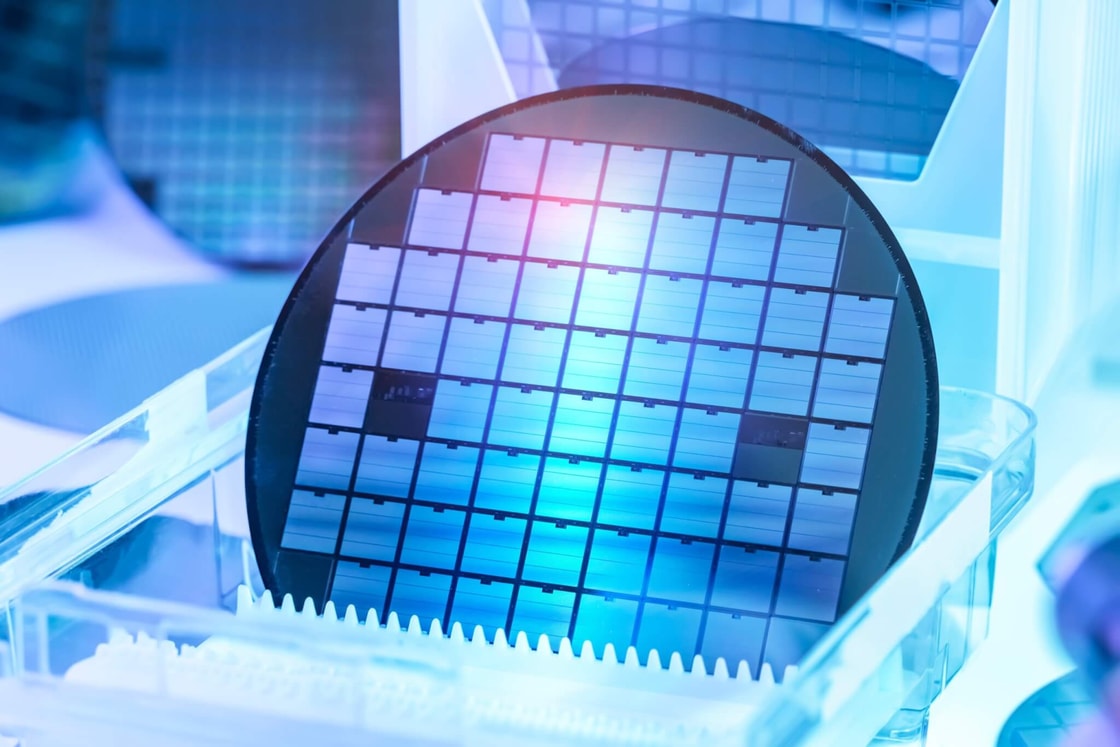
Global semiconductor revenue is expected to reach $1.6 trillion in 2026, increasing 92% from 2025 revenue of $809bn, according to Gartner.
Next year the business and tech insights firm forecasts revenues rising to $1.9 trillion.
“The semiconductor industry is entering a fundamentally new phase of growth,” said Ben Lee, Director Analyst at Gartner. “The pace of industry expansion is accelerating dramatically, driven by sustained investment in AI infrastructure and a stronger-than-anticipated memory pricing cycle.”
“As AI infrastructure scales, it is not only reshaping investment across the semiconductor ecosystem but also redefining the industry’s application mix. The AI data center ecosystem is expected to grow from 36.5% of the semiconductor revenue in 2026 to more than 53% by 2030, underscoring a structural shift in where semiconductor value is created and how demand is evolving across the industry.”
Memory revenue is forecast to total $837bn in 2026 and surpass $1 trillion in 2027. Memory remains the primary contributor to semiconductor industry growth this year and is forecast to account for 54% of total semiconductor revenue, up from 27% in 2025.
DRAM revenue is projected to increase 246.6% in 2026, while NAND flash revenue is expected to grow 371.9%. Although additional capacity is expected to enter the market in 2027, supply-demand conditions are projected to remain tight as AI infrastructure deployments continue to increase memory consumption.
“AI infrastructure has fundamentally changed the dynamics of the memory market,” said Shrish Pant, Director Analyst. “While pricing expansion is accelerating growth in 2026, continued AI infrastructure deployments, higher memory content per AI server and sustained demand for high-bandwidth memory will support memory revenue growth through 2027 and beyond.”
As AI clusters become larger, faster and more power-intensive, they require increasing investment in CPUs, networking silicon, power management, analogue devices and optical interconnect technologies.
“AI is expanding the semiconductor opportunity across the entire infrastructure stack rather than benefiting a single device category,” said Lee.
Industrial gas major Messer recently announced it is to expand production in Northern Vietnam as demand grows from semiconductor and electronics industries.
The country’s Bac Ninh province has attracted around with a combined value of $2.74bn, according to the provincial Department of Science and Technology.
China is on track to domestically slash its deficit in advanced chips over the next decade as domestic foundries rapidly scale up production.
Net profits for Semiconductor Manufacturing International Corporation and Hua Hong , capitalising on rising domestic AI chips demand.
Companies across the US semiconductor supply chain have announced a combined , across more than 160 projects spanning 30 states, according to new data from the Semiconductor Industry Association.