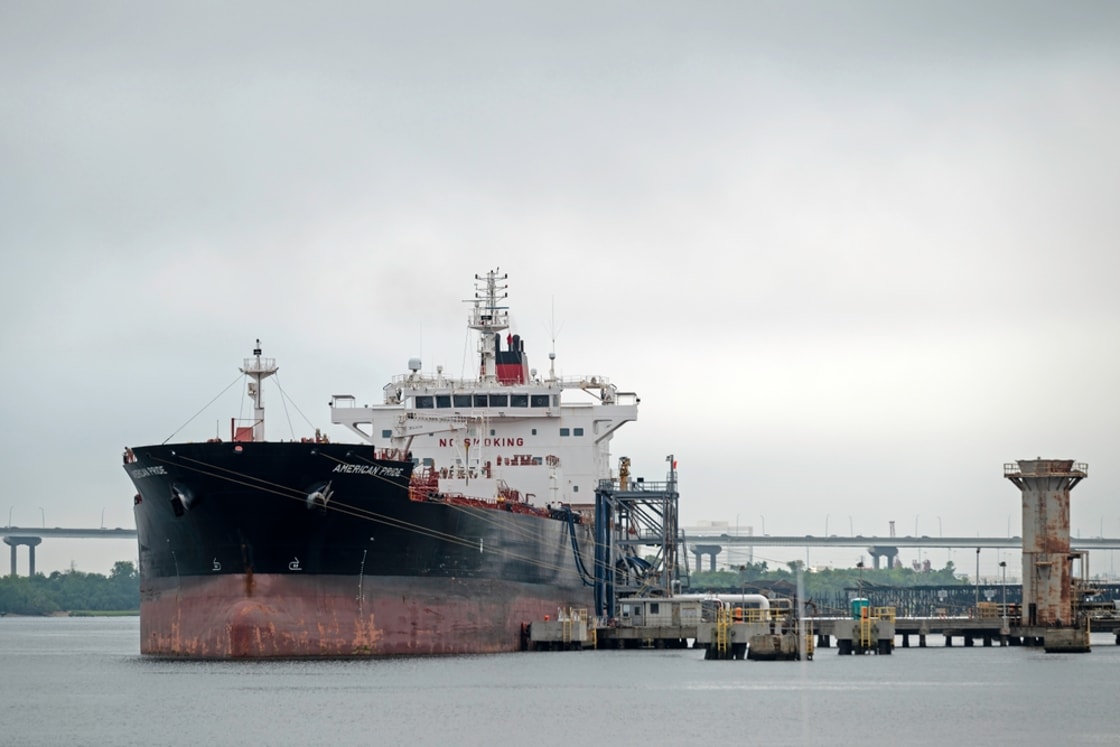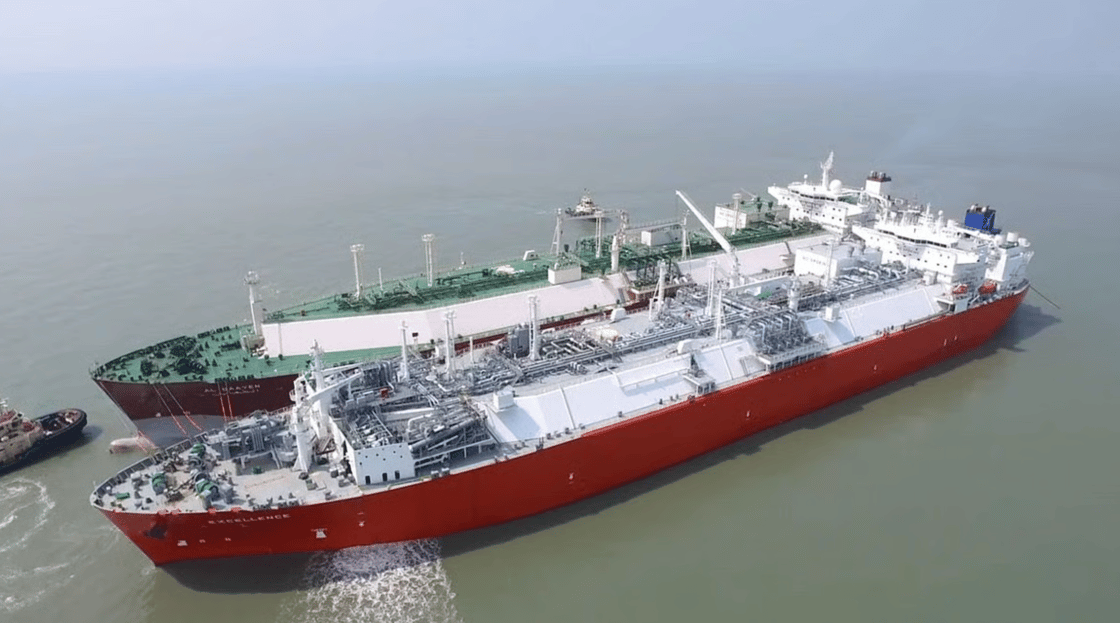
The Moheshkali LNG terminal during ship-to-ship transfer ©Excelerate Energy
You’ve read 1 of 1 of your free articles this month.
The US-based Excelerate Energy-operated floating storage and regasification unit (FSRU) off Maheshkhali, Bangladesh has resumed liquefied natural gas (LNG) regasification and gas supply to the national grid three days after a three-day halt caused by critically low LNG inventories.
The FSRU resumed operations over the weekend with an initial supply of around 100 million cubic feet per day (mmcfd), which is expected to increase gradually, according to Md Shoyeb, Director of the Production Sharing Contract Division at Petrobangla. The designed send-out capacity is 600 mmcfd per day.
With both FSRUs operating, Bangladesh was receiving around 670 mmcfd of LNG as of Saturday afternoon, while total national gas supply reached around 2,300 mmcfd, according to Shoyeb.
The FSRU stopped supplying gas to the national grid on 10 August after its inventory fell to critically low levels, worsening an already severe gas shortage across the country.
It has been a summer beset by challenges for the Moheshkhali FSRU facility.
On 21 July, during a ship-to-ship transfer at the facility forced a shutdown that slashed national grid supplies by up to 450 mmcfd of gas supply.
The damaged FSRU terminal partially restarted operations on 6 August after emergency overseas equipment replacement and repair work.
Between 19 and 21 August 19 the terminal ran out of stored LNG amid tighter regional spot market constraints, causing a complete three-day supply halt.
And despite the latest restoration of regasified supply, the outlook remains difficult for Bangladesh.
Until 2028, government officials estimate a continuous structural daily deficit of roughly 1.3 billion cubic feet as new infrastructure and terminal capacity are brought online.
Long-term shipments to the country have experienced disruption since the outbreak of regional conflict in the Persian Gulf, which caused QatarEnergy to halt production and declare force majeure.
Bangladesh imported roughly 4.15 million tonnes of LNG from Qatar in 2025, which accounted for around two-thirds of the country’s total LNG import needs.
The country is now sourcing LNG through new international spot-market tenders and recent long-term supply agreements.
Beyond supply security, safety standards across Bangladesh’s LNG sector also remain following the deaths of nine workers exposed to toxic gas at an LNG shipbreaking yard.