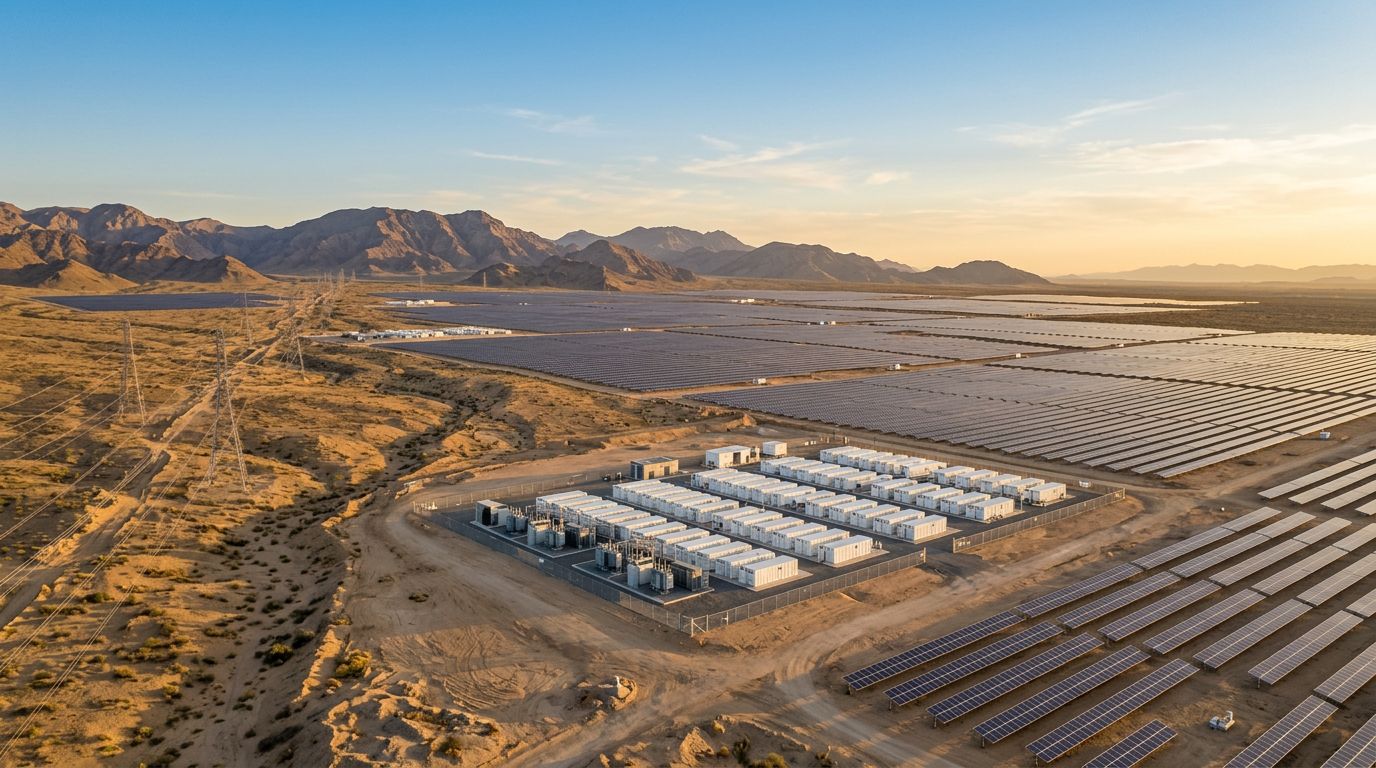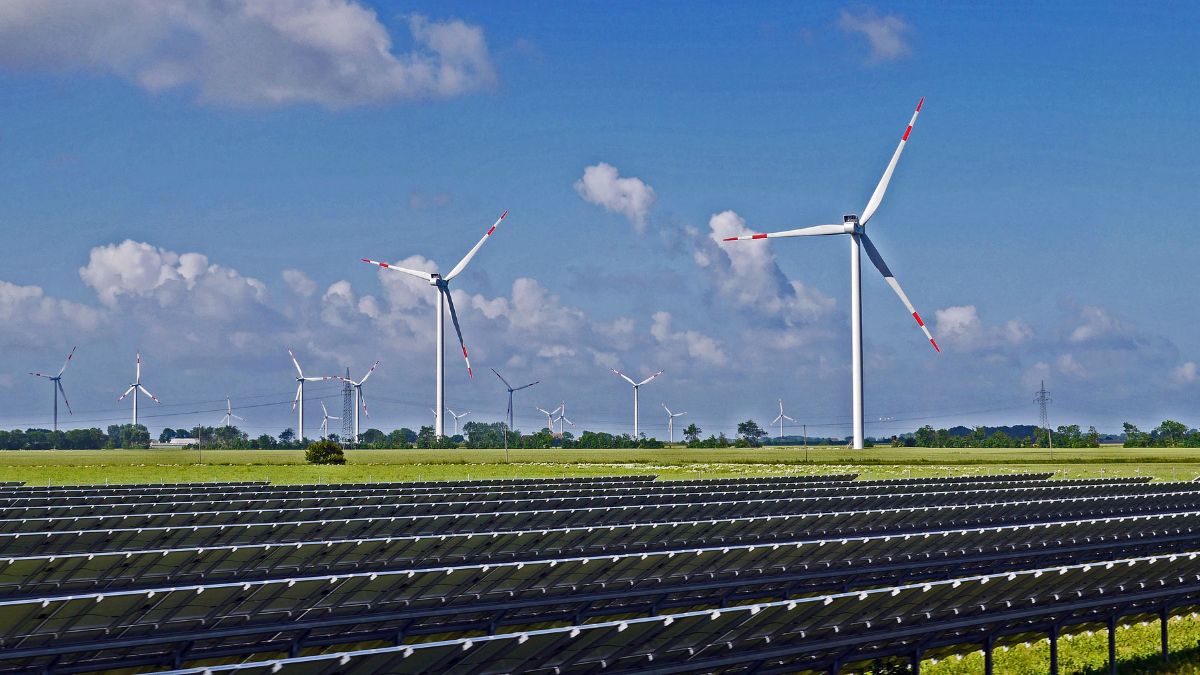
Solar installations are typically defined by their most visible components — modules, inverters and mounting structures. Yet behind these technologies is an equally important network responsible for carrying every unit of power generated across the system: the cables.
Connecting different components across a solar installation, cables continuously transmit the power generated by the system. Their role may appear simple, but their performance has a direct bearing on the reliability and safety of the installation.
In many ways, cables form the bloodline of a solar power system.
Solar projects are designed to operate reliably for decades, and every component within the installation must be capable of performing throughout this extended lifecycle. Cables are no exception.
Unlike components housed within protected environments, solar cables can face prolonged exposure to demanding operating and environmental conditions. Heat, sunlight, UV exposure, mechanical stress and changing weather conditions can all affect their performance over time.
Because cables run throughout the installation, any compromise in their quality can have implications beyond the cable itself. It can affect power transmission, system reliability and, importantly, the overall safety of the installation.
Cable selection, therefore, should be considered an important engineering decision rather than simply a matter of price.
As India’s solar market expands, a growing range of cables is available to project developers, EPC companies, installers and distributors. While products may appear similar externally, their materials, construction, durability and compliance can differ.
This is where certification becomes particularly important.
Certified wires and cables are manufactured and tested according to defined standards and requirements applicable to their intended use. For EPC companies, installers, distributors and project owners, certification provides an additional level of confidence when selecting components expected to remain part of a solar installation for years.
Certification is therefore more than a mark printed on a cable. It represents accountability towards quality, safety and performance.
For an industry building renewable energy infrastructure for the long term, certified products should form an important part of reliable installations.
It is within this context that Flipcab Wires & Cables has developed its approach to solar cabling, focusing on material selection, engineering, durability and certified quality for the demanding conditions encountered in photovoltaic installations.
Flipcab’s approach is reflected in its DC Cable, which has been developed specifically for solar installations where cables must withstand prolonged outdoor exposure while continuing to perform reliably.
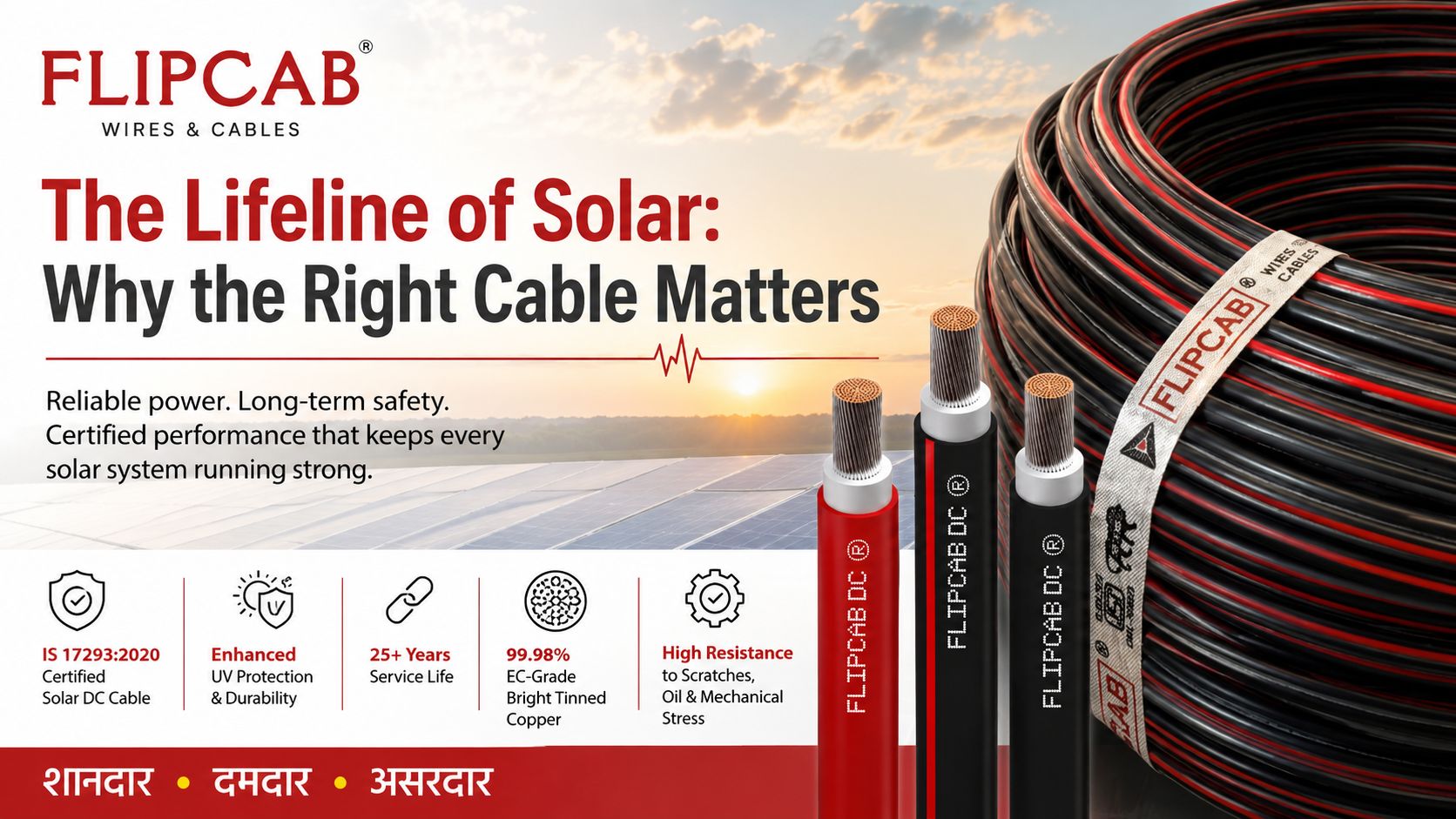
The Flipcab DC Cable is manufactured with 99.98% EC-Grade Bright Tinned Copper and protected with a high-performance XLPO-EBXL insulation compound. This combination is engineered to provide enhanced UV protection along with high resistance to scratches, oil and mechanical stress.
Designed for a service life of over 25 years, the cable is built to withstand prolonged outdoor exposure while maintaining dependable performance across demanding solar applications.
These characteristics are particularly relevant for solar projects, where cable infrastructure is expected to operate alongside other long-life system components and remain exposed to varying environmental conditions throughout the project’s operating life.
Alongside material selection and engineering, certification forms an important part of Flipcab’s solar cable proposition.
Flipcab DC Cable is certified in accordance with IS 17293:2020, the Indian Standard specifically established for electric cables used in photovoltaic systems up to 1500 V DC.
The standard addresses stringent performance requirements for solar cables exposed to conditions such as sunlight, humidity, weather and prolonged outdoor operation. It brings Indian solar cabling requirements in line with the rigorous performance philosophy seen across internationally recognised PV cable standards such as EN 50618.
For Flipcab, certification is therefore not simply a mark on the cable. It reinforces the elements that go into the product — quality conductors, engineered insulation, long-term durability and performance designed specifically for solar applications.
Solar modules generate energy and inverters convert it, but between these technologies lies the network responsible for carrying that power every day.
The cable.
As India’s solar infrastructure continues to expand, conversations around project quality need to extend beyond modules and inverters to the components that connect the entire system. Cables may represent a relatively small part of a solar installation, but their role in power transmission, reliability and safety makes their selection important to the performance of the overall project.
Choosing the right cable — and, importantly, choosing certified wires and cables — is therefore part of building solar systems that are designed not only to generate power today, but to continue performing reliably for years to come.
For Flipcab Wires & Cables, that responsibility begins with what goes inside every cable it manufactures.
Because when the cable forms the bloodline of a solar installation, every strand, every layer and every standard matters.
Flipcab Wires & Cables
शानदार • दमदार • असरदार
Subscribe to get the latest posts sent to your email.