The agency’s 10-day Emergency Preparedness Review, which concluded on Wednesday, identified strengths in Finland’s framework, “including the national mechanism bringing together public authorities, industry and non-governmental organisations to ensure the continuity of critical societal functions in an emergency, and the Satasairaala hospital’s training plan for managing anyone affected by radioactive contamination as the result of an emergency”.
Areas identified for further improvement include to: “strengthen national coordination at the preparedness stage by establishing a National Coordinating Mechanism and during the response to a nuclear or radiological emergency especially in the early and transition phases by developing a National Radiation Emergency Plan in accordance with IAEA Safety Standards; establish legislation for the management of radioactive waste generated from decontamination activities in case of a nuclear or radiological emergency; further improve arrangements for the protection of the public, emergency workers and helpers, for public communication and for integrating international assistance with the national response; and enhance laboratory capacity for the analysis of environmental, food and water samples”.
Olivier Isnard, Deputy Director for Emergency Preparedness and Response at the French Authority for Nuclear Safety and Radiation Protection, who led the mission team, said: “Finland has invested considerable effort and resources in preparing for nuclear and radiological emergencies, and we saw this reflected in the expertise and commitment of the organisations we met … more systematic coordination at the national level, and across sectors and phases of an emergency, would help Finland draw even more effectively on these capabilities.”
Karim Peltonen, Director at Finland’s Radiation and Nuclear Safety Authority (STUK), said the mission provided “important input to the development of Finnish arrangements in preparedness for nuclear and radiological emergencies, especially enhancing the coordination of all parties that participate in preparedness and response” and demonstrated Finland’s commitment “to the rule-based world order and to the international framework for preparedness and response for nuclear and radiological emergencies”.
The Emergency Preparedness Review (EPREV) was carried out at the invitation of Finland’s government and hosted by STUK. The team included experts from Argentina, Austria, Canada, France, the Netherlands, Slovenia and South Africa. They visited the country’s two nuclear power plants, the Satasairaala hospital chemical, biological, radiological and nuclear training centre, as well as food safety laboratories and the Helsinki City Rescue Department and civil defence shelter. They also interviewed the main governmental and emergency authorities.
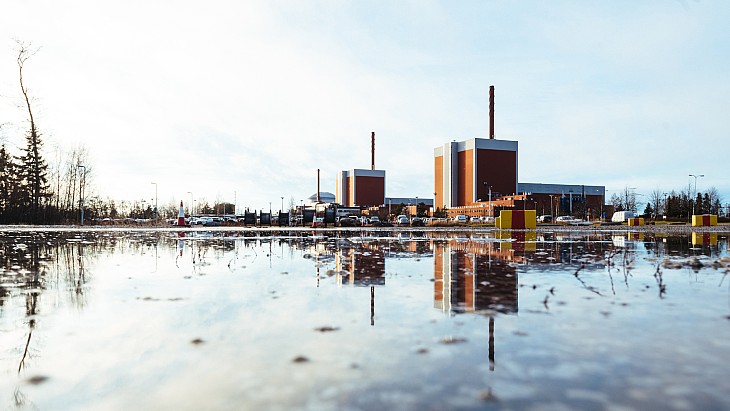
Finland operates five nuclear power reactors at the Loviisa and Olkiluoto nuclear power plants. Radiation sources are also used in medical, industrial and research applications, and the Olkiluoto site also hosts the world’s first geological disposal facility, Onkalo.