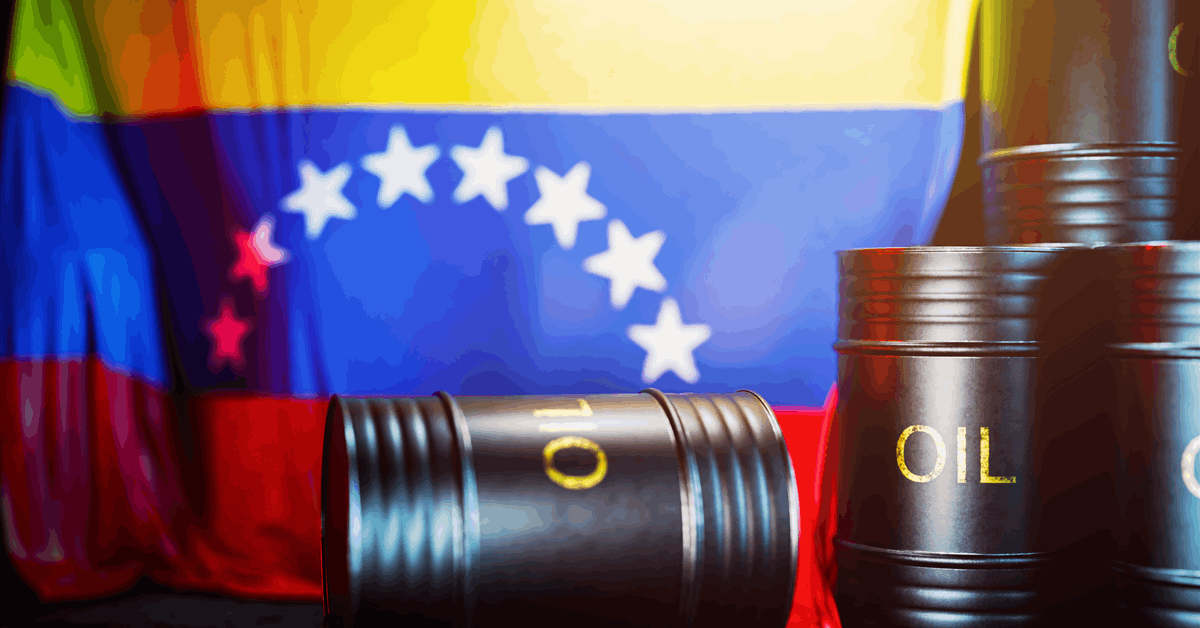
Venezuela’s exit from the OPEC group is “structurally likely” but not for now, Kpler Senior Commodity Analyst Homayoun Falakshahi outlined in a market update sent to Rigzone recently.
“Venezuela is reportedly in internal deliberations over leaving OPEC, months after the UAE’s withdrawal,” Falakshahi noted in the update.
“Though an eventual exit has a real probability, OPEC is unlikely to push for quotas on Venezuela in the near term given its still-modest output, a dynamic that removes urgency,” he added.
“Venezuela’s own production recovery argues for patience: although output has significantly risen year to date, it is only back to around 1.3 million barrels per day and guided toward ~1.4 million barrels per day by late-2027,” he continued.
“2027 could see a flurry of deals signed, but the larger impact on production capacity won’t be seen before the end of the decade,” he said.
Falakshahi went on to warn that domestic politics may end up the bigger swing factor than oil market logic.
“Acting president Delcy Rodríguez faces internal pressure over her tilt toward Washington, and opposition within Chavismo to that alignment could resurface with knock-on implications for how Caracas handles OPEC,” he noted.
“In practice, Venezuelan barrels are already moving largely outside OPEC’s supply-management logic: record U.S.-bound flows, a returning Indian offtake, and renewed European and Caribbean trade, regardless of what Caracas eventually decides on membership,” he stated.
In the update, Falakshahi outlined that, although OPEC has seen many of its members exit throughout its history, the UAE’s withdrawal at the end of April “had a particular weight, as it held around 30 percent of the group’s spare capacity”.
He warned that the exit of another member would further damage OPEC’s cohesion and credibility, “especially given Venezuela’s major role in OPEC’s founding in 1960, under the diplomacy of oil minister Juan Pablo Pérez Alfonzo”.
“Should Venezuela follow the UAE out the door, the two exits combined would strip out roughly six million barrels per day of OPEC capacity, or about 20 percent of total production capacity,” he pointed out.
Falakshahi said the rumor that Venezuela will exit the producer group “comes as a way to test the market in prevision of an exit”, pointing out that, “similarly, the first rumors around a UAE exit dated back from 2021”.
Looking at the potential oil price impact of an eventual OPEC exit, the Kpler analyst outlined that this would be “limited”.
“Venezuela accounts for a small share of global seaborne exports, and its output is already exempt from OPEC’s cuts,” he said, adding that “an actual exit would be more symbolic than supply-altering in the near term”.
Falakshahi went on to note that Venezuela’s “reshuffling of oil flows matters more right now than the OPEC membership question”.
“Independent of any OPEC decision, Venezuelan barrels are already reintegrating into global markets on distinctly U.S.-aligned terms,” he said.
“Exports to the U.S. hit above 700,000 barrels per day in July; India has returned as a major offtaker of Merey and Boscan grades; ARA took its first Venezuelan cargo in seven years; and Curaçao’s Bullenbay terminal is back in service under the Trafigura/Vitol-linked U.S. marketing program,” he highlighted.
In a report sent to Rigzone recently, Standard Chartered Bank Energy Research Head Emily Ashford outlined that the bank had seen “some speculation” that a recent oil deal between the U.S. and Venezuela “may encourage” the latter to exit OPEC.
“There are arguments both for and against Venezuela leaving the group, that hinge on the balance between production freedom and influence,” Ashford said in the report.
“Leaving OPEC, a) removes the risk of restrictive quotas as the country tries to rebuild production, although Venezuela is currently not obligated to achieve any particular production goals, [and] b) … would align Venezuela more closely with the U.S., which may be at odds with OPEC’s producer management strategy,” Ashford noted.
The Standard Chartered Bank Head outlined in the report that, if it remained in OPEC, Venezuela “would retain a seat at the table when OPEC is becoming more fragmented, giving it significantly more strategic importance than its current output belies”.
Ashford added that leaving the group does not guarantee Venezuela can produce more.
“Its physical production constraints remain (at least in the near term),” the analyst pointed out.
“However, what remains critical will be OPEC’s credibility, with the risk of a feedback loop of members leaving, lower compliance with quotas, and reduced ability to manage supply, potentially resulting in supply becoming more price elastic,” Ashford added.
“This would, in turn, make Saudi Arabia even more critical as a swing producer, while reducing OPEC’s overall influence as a collective,” Ashford continued.
Rigzone has contacted the Venezuelan embassy in the UK and OPEC for comment on Falakshahi and Ashford’s statements. At the time of writing, neither has responded to Rigzone.
In a statement posted on his Truth Social page on August 28, U.S. President Donald Trump announced that the U.S. had “just entered into an Agreement with the Country of Venezuela on … THE BIGGEST OIL DEAL IN WORLD HISTORY!”.
In a statement posted on her X page on August 30, Delcy Rodriguez, Acting President of the Bolivarian Republic of Venezuela, announced a “historic agreement with the United States government”, which she said “will have a significant impact” on Venezuela’s “revival”.
OPEC was created at the Baghdad Conference on September 10-14, 1960, by Iran, Iraq, Kuwait, Saudi Arabia, and Venezuela, the organization states on its website, noting that the five Founding Members were later joined by Qatar in 1961, Indonesia and Libya in 1962, the UAE in 1967, Algeria in 1969, Nigeria in 1971, Ecuador in 1973, Gabon in 1975, Angola in 2007, Equatorial Guinea in 2017, and Congo in 2018.
OPEC’s site highlighted that Qatar terminated its membership in January 2019, Indonesia suspended its membership in January 2009, reactivated it in January 2016, then decided to suspend it again in November 2016, Ecuador suspended its membership in December 1992, reactivated it in October 2007, then decided to withdraw its membership effective January 1, 2020, Angola withdrew its membership effective January 1, 2024, and Gabon terminated its membership in January 1995 but rejoined in July 2016.
In a statement posted on its X page back in April, which was translated from Arabic, the UAE Ministry of Energy and Infrastructure announced that the country had made a decision to withdraw from OPEC and OPEC+, effective May 1.
To contact the author, email