The hyperscale data centre boom sweeping Asia is set to drive LNG demand growth in Southeast Asia, while South Asia remains largely out of reach for gas, according to new research from Wood Mackenzie.
Southeast Asia’s data centre pipeline is set to more than triple from 2.8 GW today to 9.4 GW by 2035, with electricity demand from data centres growing from 17 TWh to 57 TWh over the same period.
Combined-cycle gas turbines (CCGTs) are currently the most viable technology capable of meeting data centres’ 24/7 reliability requirements at scale, as grid-scale battery storage remains commercially immature across the region through the mid-2030s.
Md Fadhlullah Omarali, principal analyst at Wood Mackenzie, said data centre demand was interesting from an LNG perspective because it involves large, creditworthy off-takers with power needs that remain stable regardless of economic cycles.
The LNG demand opportunity is not uniform across Southeast Asia, with the country-level picture showing where it is most pronounced.
Singapore’s grid runs on approximately 95% gas today, meaning virtually every new data centre megawatt translates almost directly into incremental LNG offtake.
With piped imports from Malaysia and Indonesia expected to cease by the early 2030s, the city-state’s LNG reliance is on course to reach 100%.
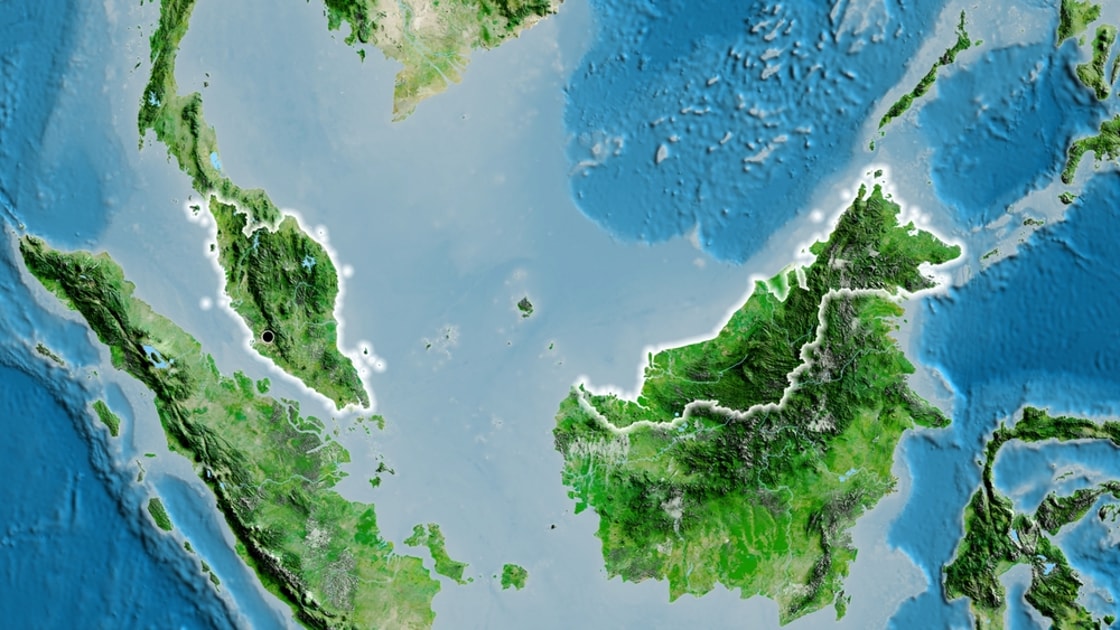
Malaysia and Thailand offer the biggest opportunities for growth. Both are seeing steady drops in domestic and piped gas supply, making LNG the only fuel option to support new gas power plants.
Malaysia has 3.9 GW of data centre capacity under development, with new regasification terminals being built to meet growing power demand. Thailand, where two-thirds of the grid is already gas-fired, is expected to see its LNG share of gas supply exceed 50% by 2035 as Gulf of Thailand production and Myanmar pipeline imports fall.
Indonesia’s Batam is emerging as the third node of the Singapore-Johor-Riau corridor, with more than 450 MW in the pipeline. Power deliverability remains a constraint, with grid reliability a concern at the scale of incoming demand.
“Malaysia and Thailand are at a turning point,” said Omarali. “Data centre investment is growing quickly just as domestic gas output peaks and declines.”
Rystad Energy’s research also points to a role for gas in behind-the-meter power for AI data centres. Natural gas accounts for 85% of the power-sourcing strategy for announced BTM projects on a risked basis, compared with 10% for renewables and 4% for nuclear, with aeroderivative turbines and reciprocating engines the main gas technologies.
India’s data centre market is set to grow fivefold to nearly 12 GW by 2035, making it the second largest in Asia Pacific and attracting an estimated $145bn in investment between 2024 and 2030.
Despite this scale, Wood Mackenzie finds that LNG is structurally unable to capture the opportunity. LNG-to-power costs are two to three times higher than renewables paired with battery storage, while gas currently accounts for less than 2% of India’s power generation and is forecast to remain at that level.
Coal and renewables are expected to dominate India’s power mix, while pipeline infrastructure gaps limit gas availability in southern, central and eastern markets.
None of India’s hyperscalers have announced gas-backed power purchase agreements, while the renewable PPA market already has more than 33 GW of contracted data centre capacity.
The wider regional outlook also points to growing gas demand. The International Energy Agency expects gas-fired generation in Southeast Asia to increase more than 1.5-fold to around 600 TWh by 2035, while regional gas production falls from around 210 billion cubic metres in 2024 to around 175 bcm, increasing the region’s reliance on LNG imports.
Earlier this year, a from the International Gas Union revealed that gas-fired generation for data centres could expand by around 30 bcm by 2030, and could even double.