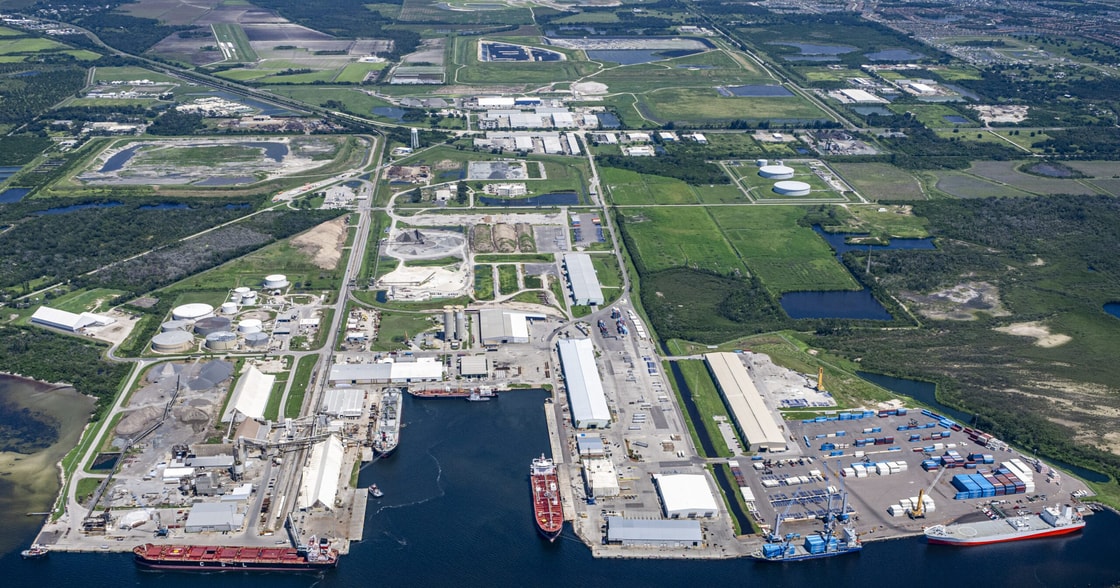
Seaport Manatee in Florida, where the CO2 terminal will be located ©Seaport Manatee
You’ve read 1 of 1 of your free articles this month.
US-based Aptamus Carbon Solutions and Demeter Energy have signed a deal to explore a new liquid carbon dioxide (LCO2) terminal and marine transport system in Florida, US.
The collaboration will support Demeter’s planned biomethanol and carbon capture facility at Port Manatee, which is expected to produce around 100,000 tonnes of low-carbon biomethanol annually while capturing approximately 200,000 tonnes of CO2.
Under a memorandum of understanding, Aptamus will identify a suitable location for a CO2 terminal at Seaport Manatee, develop a site plan and investigate the design of a new tank vessel.
Captured CO2 would be received, liquefied and transported by sea to a discharge port in Texas or Louisiana for permanent underground storage or utilised for enhanced oil recovery.
In its biomethanol white paper, Demeter identifies industrial utilisation (such as chemicals) as a potential “additional revenue pathway” for the approximately 200,000 tonnes of biogenic CO2 captured annually, alongside permanent geological storage and carbon credits.
“Aptamus brings specialised expertise in CO2 logistics, complex terminal systems, and will be developing a new dual cargo methanol and LCO2 tank vessel to export the captured carbon,” said Jeffrey Ross Williams, President of Aptamus.
The proposed vessel would be capable of carrying both biomethanol and LCO2, which Aptamus says would make it the first US vessel designed to transport both liquid cargoes.
It would also be a US-flagged Jones Act vessel, requiring construction in a US shipyard, ownership by a US company and a crew of US citizen mariners.
“We are advancing a scalable platform that combines low-carbon fuel production with carbon capture,” said Tom Walklett, CEO of Demeter Energy.
The agreement builds on Aptamus’ work developing CO2 marine transport infrastructure in Florida, including its COAST 20 project, which is examining the use of Jones Act-compliant vessels to transport captured CO2 to storage sites in Louisiana and Texas.