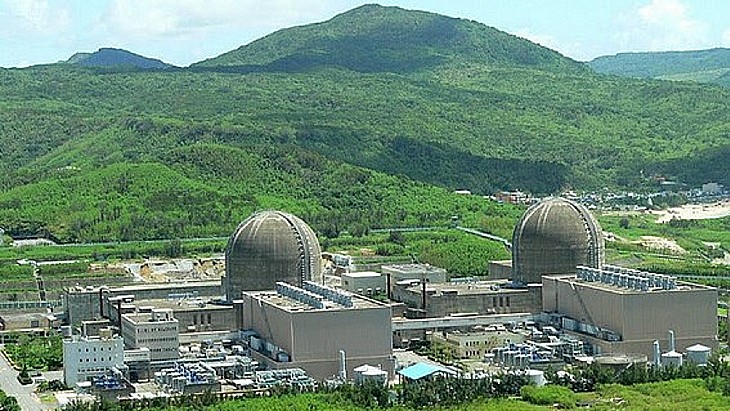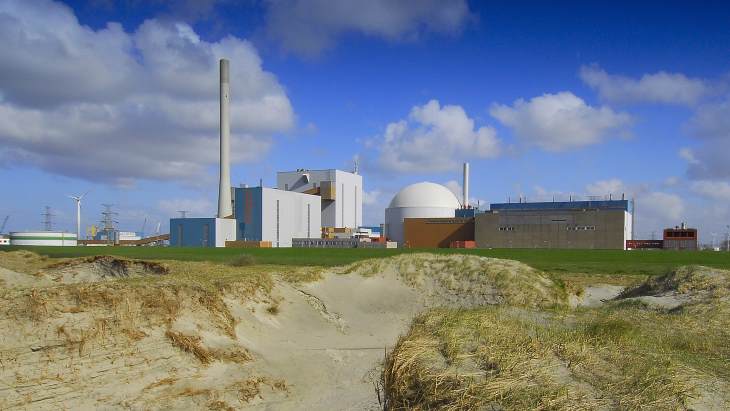
In October 2025, the Dutch cabinet submitted an amendment to the Nuclear Energy Act to the House of Representatives to enable the continued operation of Borssele. The 485 MWe (net) pressurised water reactor has been in operation since 1973 and accounts for about 3% of the Netherlands’ total electricity generation. Under the current Nuclear Energy Act, the plant may remain in operation up to the end of 2033. An application for the continuation of operations will not be processed after that date. However, the government has requested it remain in operation until 2054, if this can be done safely. The government had earlier said it would consider acquiring a stake in the Borssele plant should a decision be made to extend its operation beyond 2033.
The proposed amendment – which removes the 2033 shut down date, meaning a permit application for an extension of the plant’s operating life can now be submitted – was adopted by the House of Representatives (the lower house of the bicameral parliament) on 16 June this year. The Senate (the upper house) adopted the proposal on 22 September.
“The Senate’s approval marks an important milestone in the process towards extending the operating life,” said EPZ CEO Marco Muilenburg. “Now that this legal obstacle has been removed, we can proceed with preparations for the permit application. This allows us to demonstrate that the nuclear power plant will continue to contribute to the Dutch energy supply safely, reliably, and responsibly in the future.”
At the request of the government, EPZ has been working for some time on preparations for a comprehensive safety evaluation to demonstrate that the Borssele plant can continue to produce electricity safely and reliably after 2033. It said intensive consultations are taking place with the Netherlands Nuclear Safety and Radiation Protection Authority (ANVS), the licensing authority and regulator of nuclear safety in the Netherlands. The assessment will be conducted based on international safety standards established by the International Atomic Energy Agency. Part of the process involves a thorough analysis of the technical condition of the plant and the options for implementing additional improvements to further enhance safety.
In addition to safety, EPZ is also investigating other important aspects related to a longer service life, such as the fuel cycle and the necessary investments for the coming decades.
EPZ says that the operating extension could be officially applied for “around the summer of 2027”.
On 23 September – the day after the Senate approval – the government announced it had reached an agreement on acquiring the 70% stake in EPZ held by ZEH Energy. ZEH Energy is owned by the Province of Zeeland and Zeeland municipalities, which had previously indicated that they did not see a role for themselves as shareholders in the extension of the nuclear power plant’s operating life.
The state will pay EUR115.7 million (USD131.3 million) for the shares. In addition, as a shareholder, the central government is making EUR119 million in capital available to safeguard the stability of the company, for example to cover ongoing costs.
The shares will be definitively transferred once Parliament and the current shareholders (the Province of Zeeland and municipalities) have approved the agreement. The remaining 30% of EPZ remains in the hands of German energy company RWE.
“Nuclear energy will play an important role in a diverse and stable energy supply in the Netherlands,” said Jo-Annes de Bat, State Secretary for Climate and Green Growth. “Acquiring the shares is an important step to keep the nuclear power plant open longer in the long term. In doing so, we retain not only a stable energy source but also a great deal of nuclear expertise.”
In December 2021, the Netherlands’ then coalition government placed nuclear power at the heart of its climate and energy policy. In addition to keeping the Borssele plant in operation for longer, the government also called for the construction of new reactors. Based on preliminary plans, two new reactors will be completed around 2035 and each will have a capacity of 1,000-1,650 MWe. The two reactors would provide 9-13% of the country’s electricity production in 2035. The cabinet announced in December 2022 that it saw Borssele as the most suitable location for the construction of the new reactors. Three other locations are also being considered for the reactors: the Tweede Maasvlakte near Rotterdam, Terneuzen in Zeeland and Eemshaven in Groningen.