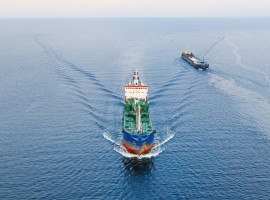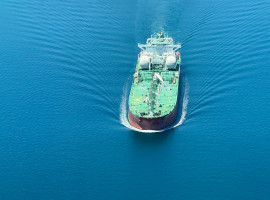
Insurance costs for ships transporting oil across the Black Sea have surged from approximately $200,000 to $2.5 million per vessel in recent months, increasing crude transportation costs and putting additional pressure on fuel prices in Bulgaria, according to the manager overseeing Lukoil’s operations in the country, local media reported.
Evgeni Simeonov, Lukoil’s special commercial manager in Bulgaria, told Bulgarian National Television on Monday that the increase reflects mounting risks to commercial shipping following repeated attacks on vessels and port infrastructure.
The figures represent a 12.5-fold increase in the quoted insurance cost, equivalent to an additional $2.3 million per vessel as described by Simeonov.
London’s marine insurance market had already expanded its Black Sea high-risk reporting requirements in September to cover the entire basin. Voyages within the territorial waters of neighboring countries, including Bulgaria, Romania, Georgia and Turkey, remain exempt from notification requirements. Reuters reported that war-risk premiums were adding hundreds of thousands of dollars to shipping costs for seven-day voyages.
The threat is also expanding into Bulgaria’s exclusive economic zone. On October 6, drones struck two commercial vessels, sinking the Togo-flagged Alfa Watan and damaging the Palau-flagged Able. All 18 crew members aboard the Able were rescued, according to the Associated Press.
Bulgarian authorities have not established who carried out the attacks. The sinking prompted Syria to request an independent investigation after ten crew members, including nine Syrians, went missing.
Shipping costs were already rising before the October attacks. Bloomberg reported in August that benchmark daily tanker earnings on the Novorossiysk-to-Augusta route had reached a record $440,948, based on 135,000-ton crude shipments. The assessment had increased 140% since early July.
Bulgaria’s Burgas refinery has continued receiving crude shipments. Simeonov said the facility had not experienced any cancelled deliveries and had secured supplies through the beginning of December.
He also defended Bulgaria’s decision to lift restrictions on diesel exports, arguing that preventing the refinery from selling surplus production abroad could force it to reduce crude processing as storage facilities fill.
Simeonov said the refinery produces more diesel than Bulgaria consumes and that restrictions on diesel exports could consequently reduce production of gasoline, aviation fuel and other petroleum products.
By Michael Kern for Oilprice.com
More Top Reads From Oilprice.com
- Supertanker Rates Slip From Record Highs
- Oil Jumps 2% as Saudi Attacks and Tanker Strikes Revive Hormuz Fears
- Small Indian Factories Face Blackouts as Coal Stocks Plunge