Several Japanese oil tankers are returning to the Middle East to pick up crude cargoes for Japan’s refineries, but none of these are moving into the Persian Gulf through the Strait of Hormuz.
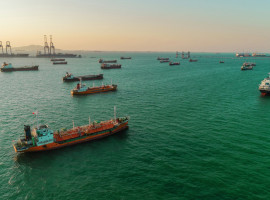
Instead, a rising number of Japan-owned or Japan-bound tankers – most of which have steered clear of the Middle East since the Iran war began – are returning to waters in the Gulf of Oman to participate in ship-to-ship (STS) transfers offshore Oman or Fujairah, Bloomberg reported on Tuesday, quoting shipbrokers and tanker-tracking data.
For the better part of seven months, Japan-linked tankers – those that weren’t trapped behind the Strait of Hormuz – avoided the Middle East region and picked up cargoes in STS transfers offshore India or Southeast Asia. The vessels that were trapped managed to exit the Persian Gulf in the June-July window of the three-week-long U.S.-Iran ceasefire when the Strait of Hormuz was mostly open to all traffic.
Now some of the Japan-linked vessels are back to the Middle East, but not to venture into the Persian Gulf via Hormuz. So far this month, Japanese ship owners and refiners have transferred higher volumes of crude outside the Middle East than in similar transfers elsewhere along the route to Japan, according to Kpler data cited by Bloomberg.
The first STS in the Middle East involving Japan-bound cargoes took place in August, and these transfers have been rising ever since, per the Kpler data.
Japanese refiners and ship owners remain extremely cautious in Middle East voyages; hence, they are not attempting Hormuz transits into the Gulf. But they appear to be willing to pick up more Middle East cargoes and optimize shipping costs in these STS transfers in the Gulf of Oman.
Japan’s Mitsui OSK Lines, the world’s largest tanker operator, last month said it expects the shipping disruptions at the Strait of Hormuz to continue for longer than previously expected, with no normalization by the end of the year.
By Michael Kern for Oilprice.com
More Top Reads From Oilprice.com
- Japan to Compensate Oil Importers for High Shipping Costs
- Pakistan Faces $1 Billion LNG Bill This Winter
- Super El Niño Could Ease Asia’s LNG Supply Concerns