By
7 min ago 3 min read
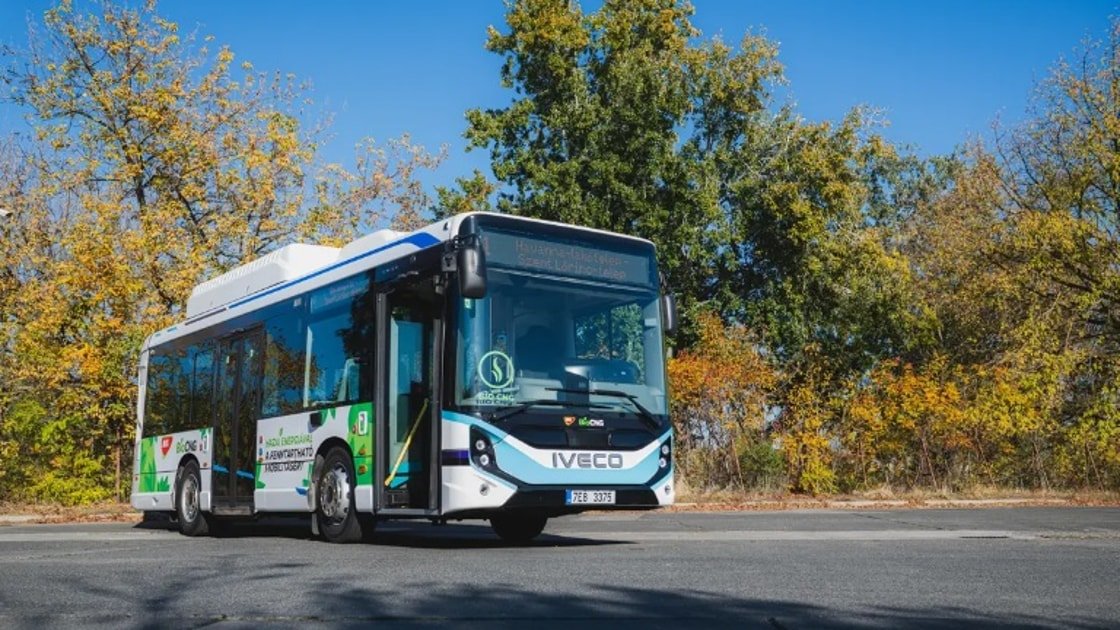
Budapest is trialling its first biomethane-powered bus as cities across Europe explore renewable gas as an alternative to diesel in public transport fleets.
The vehicle was unveiled in the Hungarian capital on Monday (2 November) and will operate until 4 November, with passengers able to travel free of charge during the trial.
The initiative involves Hungarian oil and gas company MOL Group, Budapest transport authority BKK and public transport operator BKV, and aims to showcase the potential for domestically produced biomethane to contribute to the decarbonisation of urban transport.
It follows MOL’s launch of its first biomethane production facility in Hungary , after completing a HUF 2.7bn ($8.3m) upgrade of its Szarvas biogas plant.
The facility can produce more than seven million cubic metres of biomethane annually for injection into the national gas network, with transport fuels such as bio-CNG and bio-LNG also identified as potential markets.
Budapest’s trial comes amid wider adoption of biomethane in European public transport, where the fuel is already being used to power municipal fleets in several countries.
In the UK, Nottingham City Transport operates a fleet of 143 biomethane-powered double-decker buses, introduced in phases from 2017.
Spain’s Pamplona, meanwhile, became the country’s first city to operate an entirely renewable gas-powered urban bus fleet in 2022, using biomethane produced from sewage sludge and organic waste.
Elsewhere, Paris has invested in adapting bus depots to accommodate biomethane vehicles, while Sweden has a long history of using biogas in public transport, including in cities such as Linköping.
The projects show how biomethane can provide an alternative to diesel using established gas engine technology, while creating an additional market for renewable gas produced from agricultural, municipal and industrial waste.
However, scaling up deployment will depend on the availability and cost of biomethane, as well as investment in refuelling infrastructure and compatible vehicles. The fuel also faces growing competition from battery-electric buses as European cities accelerate their transition away from fossil fuels.
In Budapest, around 1,100 of the city’s 2,300 public transport vehicles are buses, most of which run on diesel. BKK Chief Executive Ádám Bodor said that while electrification remained important, alternative technologies would also have a role in creating a more sustainable transport system.
gasworld’s Industrial Gas Conference 2026
The development of alternative fuels and the changing role of gas in Europe’s energy mix will also form part of wider industry discussions when Budapest hosts the gasworld from 1 to 3 December.
Held at the Anantara New York Palace Budapest, the conference will bring together industry executives and experts to examine the risks and opportunities shaping industrial gas markets through to 2030.
Under the theme ‘Navigating Risk, Enabling Industry and Securing Supply Chains’, the programme will cover regional energy investment trends, Europe’s industrial challenges and the evolving markets for hydrogen, ammonia, LNG and helium.
Among the speakers, Professor Richard Boocock of Boocock Advisory will deliver a keynote on industrial gases in an increasingly fragmented world, while Stephen B. Harrison of sbh4 GmbH will examine the industry’s next decade, from molecules to markets.
The European session will also explore the challenges facing the region, alongside developments in helium supply, demand and investment.