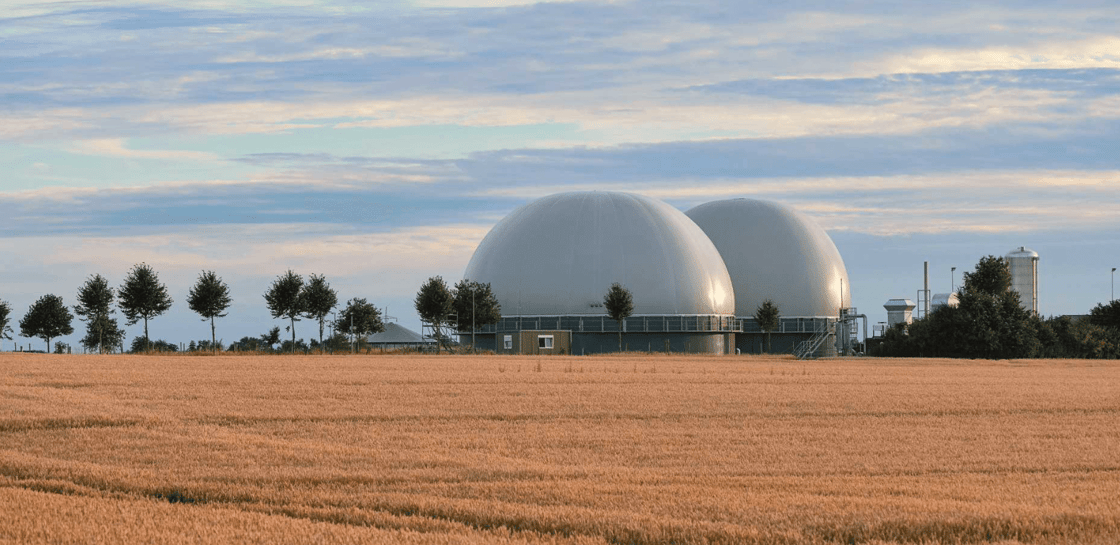
Ireland has closed expressions of interest for a €200m ($221m) capital grant scheme aimed at accelerating the development of domestic biomethane production, as the country looks to deliver on its target of producing up to 5.7TWh of renewable gas annually by 2030.
The three-week expression of interest process closed on 30 October, with prospective developers invited to submit details of projects seeking capital support under the government’s biomethane strategy.
Funding is expected to be allocated through several rounds between 2026 and 2030, with a formal application process to follow.
Darragh O’Brien, Ireland’s Minister for Climate, Energy and the Environment, described the scheme as an important milestone in delivering the country’s national biomethane strategy.
The €200m funding programme follows an earlier capital grant allocation of almost €19m ($21m) to seven anaerobic digestion (AD) projects, supporting the initial development of Ireland’s domestic biomethane industry.
Among the developments is Bia Energy’s €90m ($99.4m) facility at Huntstown in County Dublin, which became the in Ireland to connect to the national gas network in August.
The facility is expected to inject up to 120GWh of biomethane annually once operating at full capacity, using surplus and short-dated packaged food alongside agricultural and food production waste as feedstock.
Gas Networks Ireland has also secured connection agreements with six other biomethane producers, while a €32m ($35m) central grid injection facility opened in early October is expected to inject up to 700GWh of biomethane into the national network each year once fully operational.
That capacity is equivalent to around 12% of Ireland’s 2030 production target.
However, the latest funding round comes amid wider uncertainty surrounding the policy framework needed to support the country’s biomethane ambitions.
In April, the European Commission issued a Detailed Opinion a proposed domestic production multiplier under Ireland’s Renewable Heat Obligation, which would have allowed Irish-produced biomethane to count as 1.5 units towards supplier obligations.
The mechanism was intended to improve the economics of domestic production and encourage investment in new projects, but the Commission concluded that it breached EU internal market rules by favouring domestic production over imports.
The ruling raised concerns over the future viability of projects that depend on policy support to compete with lower-cost imported gas.
“The opinion from the EU Commission … is a very worrying development for the fledgling biomethane sector in Ireland,” said Seán Finan, CEO of the Irish Bioenergy Association, following the ruling.
“The latest development potentially risks the future and viability of many projects.”
The €200m capital grant scheme represents a separate funding mechanism, providing direct capital support to developers as Ireland seeks to build out its domestic production capacity.
Seven AD plants have recently been completed or are under construction across the country, although industry group Renewable Gas Forum Ireland has warned that further infrastructure development will be required to meet the government’s ambitions.
Commenting on the latest funding process, Shani Stallard, an energy sector expert at Pinsent Masons in Dublin, said the scheme represented an important development for developers seeking to take AD and biomethane projects into operation.
She said the EOI process provided an early opportunity for developers to demonstrate project readiness, although submitting an expression of interest neither guarantees funding nor is a requirement for participation in the subsequent formal application process.
Garrett Monaghan, also an energy industry expert at Pinsent Masons, advised developers to use the period before the formal funding call to assess their readiness across planning and permitting, feedstock arrangements, grid connections, land rights, financing and delivery timelines.
He also highlighted the importance of understanding state aid requirements and funding conditions, including how grant support would interact with the wider financing and commercial structure of projects.