Thursday, 20 February 2025
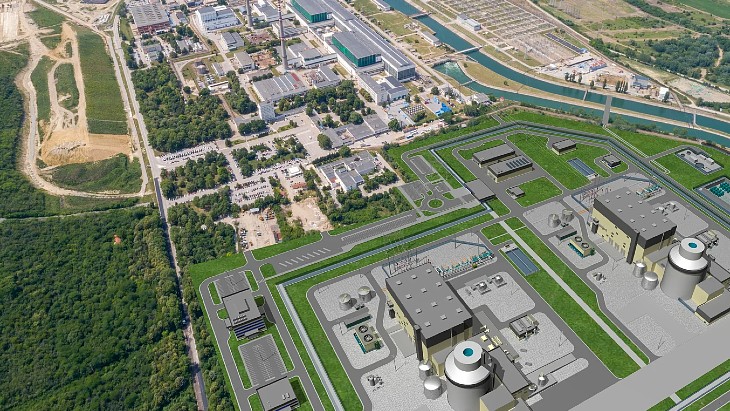
The project company, Kozloduy NPP–New Build EAD, is state-owned via its parent company Kozloduy NPP EAD, which operates the existing nuclear power plant. It said on Tuesday it had submitted its application for the permit.
“All required documents were attached to the application, which will be subject to review and assessment for compliance with the requirements of the ASUNE (Act on the Safe Use of Nuclear Energy) and its implementing regulations. The submitted application is the first step in the overall process of licensing a new nuclear facility, and the company has a number of activities ahead of it to secure it,” the project company said.
The agency confirmed receipt of the application and added that it would “prepare a programme for a comprehensive review and assessment of the submitted application and the documents attached to it”.
The submission came on the same day that Bulgaria’s Energy Minister Zhecho Stankov held talks with European Union Energy Commissioner Dan Jorgensen in which the government’s priorities were explained as working to “diversify energy sources, develop nuclear energy and green technologies, as well as increase energy efficiency”.
Stankov also took part in a meeting of ministers from the EU members’ Nuclear Alliance, where he said Bulgaria supported the effort “to have nuclear energy recognised by the European Commission as a low-carbon baseline option, which would enjoy the same advantages as other technologies that contribute to decarbonisation”.
The background
Kozloduy units 1-4 were VVER-440 models which the European Commission classified as non-upgradeable and Bulgaria agreed to close them during negotiations to join the European Union in 2007. Units 5 and 6 feature VVER-1000 reactors that were connected to the grid in 1987 and 1991, respectively. Both units have been through refurbishment and life-extension programmes to enable extension of operation from 30 to 60 years. The country’s two operable reactors generate about one-third of its electricity.
Westinghouse’s AP1000 has been selected as the technology for two proposed new units and in November Hyundai Engineering & Construction, Westinghouse and Kozloduy NPP-New Build signed an engineering contract for the new capacity, with ministers saying that signing the contract meant that schedule and finance details would be firmed up within 12 months for the new capacity.
The aim is for the first new Westinghouse AP1000 unit – unit 7 at Kozloduy – to be operational in 2035 and the second one – unit 8 – to be operational in 2037. The 2300 MWe capacity of the two new units would exceed the 1760 MWe capacity of the closed first four units. The Bulgarian government has also said that further units will be needed to replace units 5 and 6 by 2050.