Friday, 21 February 2025
The G20, or Group of Twenty, is a forum of major developed and developing economies established to address global economic and financial issues. Representing 85% of the global GDP, more than 75% of global trade, and two-thirds of the world’s population, it is a crucial platform for multilateral cooperation. South Africa, a G20 member since its inception in 1999, assumed the Presidency on December 1, 2024. This marks the first time an African nation has held this position, a significant milestone for the continent.
South Africa’s G20 Presidency comes at a time when the global community is grappling with economic recovery, energy transitions, and sustainable development. Since assuming the role, South Africa has already hosted the First Sherpa-Finance and Central Bank Deputies Meeting in December 2024. Upcoming discussions include the Research and Development Working Group Meeting, the Energy Transition Working Group Meeting, and the Task Force on Inclusive Economic Growth, Industrialisation, Employment, and Reducing Inequality. These forums offer a unique opportunity to integrate nuclear energy into the broader G20 agenda.
South Africa’s nuclear research and innovation sector, however, faces significant challenges. A 2023 report by the Academy of Science of South Africa (ASSAf) highlighted the country’s limited participation in International Atomic Energy Agency (IAEA) initiatives and a lack of strategic direction in nuclear research and development. The report recommended enhancing interdepartmental collaboration, developing a human capital strategy for sustainable nuclear applications, and integrating research into isotope hydrology and nuclear medicine. These recommendations underscore the need for nuclear technology to be a key focus during the Research and Development Working Group discussions.
The energy transition is another area where nuclear energy could play a transformative role. South Africa operates the Koeberg Nuclear Power Station, Africa’s only commercial nuclear plant, which has been a cornerstone of energy stability and economic growth. In July 2024, the National Nuclear Regulator approved a 20-year life extension for Koeberg’s Unit 1, reaffirming its importance to the national grid. Eskom, the state-owned utility, recently emphasised Koeberg’s contributions, noting that the plant adds R23.1 billion to South Africa’s GDP, supports 1,600 permanent jobs, and stabilises the Western Cape’s power grid.
Policy frameworks also highlight nuclear’s potential. The Department of Mineral Resources and Energy’s Integrated Resource Plan (IRP) 2019 allocated 2,500 MW of new nuclear capacity, while the draft IRP 2023 proposes up to 14,500 MW by 2050. These plans position nuclear as a vital component of South Africa’s efforts to achieve net-zero emissions target while addressing energy security and many other socio-economic challenges.
Globally, nuclear energy is gaining renewed attention. It currently generates 9% of the world’s electricity and is the second-largest source of low-carbon power after hydropower. At COP29 in Baku, six nations joined a declaration to triple global nuclear capacity by 2050, bringing the total number of endorsing countries to 31. The United Nations Economic Commission for Europe (UNECE) has unequivocally stated that international climate objectives cannot be met without nuclear power, describing it as essential for decarbonising energy systems.
The IAEA’s involvement in the 2024 G20 under Brazil’s Presidency marked a turning point for nuclear energy’s inclusion in global forums. The agency presented strategies for scaling nuclear power to meet net zero goals, setting a precedent that South Africa would do well to follow. By inviting the IAEA to this year’s G20 meetings, South Africa could ensure nuclear energy remains a focal point in discussions on energy transitions.
South Africa’s leadership in the G20 presents a unique opportunity to champion nuclear energy as a solution to pressing global challenges. Fourteen G20 countries currently operate nuclear power plants, two are exploring the adoption of nuclear technology, and six pledged at COP28 in Dubai to triple their nuclear capacity by 2050. With its extensive experience and established infrastructure, South Africa is well positioned to advocate for nuclear’s role in sustainable development.
The time has come for South Africa to move beyond rhetoric and demonstrate tangible commitment to nuclear energy. Integrating nuclear into the G20 agenda is not just a matter of national interest but a global imperative. By prioritising nuclear discussions in the Research and Development, Energy Transition, and Inclusive Economic Growth working groups, South Africa can set a powerful example of leadership and innovation. Nuclear energy has proven its value – it is time for the G20 to give it the attention it deserves.
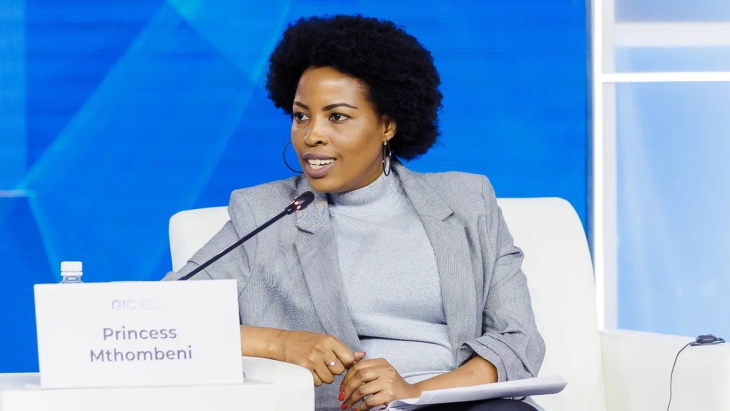
Princess Mthombeni, an award-winning nuclear communicator, writes in her role as a founder and communications lead at Africa4Nuclear.