KERC’s New Guidelines For Determining Captive Power Plant Status In Karnataka

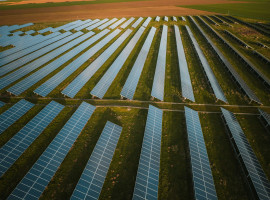
Representational image. Credit: Canva

The Karnataka Electricity Regulatory Commission (KERC) has issued a procedure for determining the “captive status” of electricity generating plants within the state. This is important because the Electricity Act of 2003 and related rules provide certain benefits to plants that qualify as “captive generating plants” (CGPs) and their users.   

The crux of the matter lies in defining what qualifies a power plant as a CGP. According to the Electricity Act of 2003, a CGP is a plant set up by someone to generate electricity primarily for their own use. This includes plants set up by cooperative societies or associations for their members.  The Electricity Rules of 2005 further specify conditions related to ownership and electricity consumption.  Generally, this means that at least 26% of the plant’s ownership must be held by the users, and at least 51% of the generated electricity must be consumed by those users annually.   

These rules also address scenarios where a plant is owned by a Special Purpose Vehicle (SPV) and situations involving multiple owners.  In the case of multiple owners (an “association of persons”), the rules specify how the electricity consumption should be proportional to their ownership shares.   

The KERC’s involvement stems from its responsibility to regulate the electricity sector in Karnataka.  The commission has the authority to determine whether a plant meets the criteria for captive status.  This includes the power to ensure that the rules are followed and to address any misuse, such as disproportionate electricity consumption by a minority owner.   

Recent court rulings, including those from the Supreme Court of India, have further clarified the interpretation and application of these rules.  These rulings have touched on aspects like ownership transfers, the continuous requirement of maintaining ownership and consumption thresholds throughout the year, and the definition of “association of persons.”   

To implement these regulations, the KERC has outlined a procedure for data collection, scrutiny, and verification of captive status.  This process involves the distribution licensee (DISCOM) in whose area the CGP is located.  The DISCOM is responsible for collecting and scrutinizing the necessary information and submitting a report to the KERC.

 

  • Related Posts

    Recurrent Energy Secures €1.3 Billion Credit Facility To Accelerate Renewable Expansion Across Europe

    Solar panels and wind turbines exemplify sustainable energy financing in Europe. Recurrent Energy, a global developer of solar and energy storage projects and part of Canadian Solar, has secured a…

    Solar Adoption In Singapore Condominiums Faces Cost, Design, And Consensus Challenges

    Representational image. Credit: Canva Singapore’s efforts to expand solar energy adoption are encountering notable challenges in private residential developments, particularly condominiums. While the country has set ambitious sustainability targets and…

    Have You Seen?

    EU confirms 2026 review of RFNBO hydrogen rules, eyes role for nuclear

    • April 22, 2026
    EU confirms 2026 review of RFNBO hydrogen rules, eyes role for nuclear

    Duo targets Brazil-Europe hydrogen-based iron supply chain

    • April 22, 2026
    Duo targets Brazil-Europe hydrogen-based iron supply chain

    Germany raises green hydrogen mandates for road transport in revised bill

    • April 22, 2026
    Germany raises green hydrogen mandates for road transport in revised bill

    Three shipping attacks highlight strait security concerns

    • April 22, 2026
    Three shipping attacks highlight strait security concerns

    Air Liquide’s latest ASU to supply gases for chips in China

    • April 22, 2026
    Air Liquide’s latest ASU to supply gases for chips in China

    KHI eyes Canada for Japan’s liquid hydrogen supply with new partnerships

    • April 22, 2026
    KHI eyes Canada for Japan’s liquid hydrogen supply with new partnerships

    New catalyst converts CO2 to CO under low-energy conditions

    • April 22, 2026
    New catalyst converts CO2 to CO under low-energy conditions

    AG&P to take full ownership of South Vietnam LNG import terminal

    • April 22, 2026
    AG&P to take full ownership of South Vietnam LNG import terminal

    Californian bus operator looks to limit LH2 boil-off at Bakersfield station

    • April 22, 2026
    Californian bus operator looks to limit LH2 boil-off at Bakersfield station

    China Oil Buying Set to Return After Stockpile Drawdown

    • April 22, 2026
    China Oil Buying Set to Return After Stockpile Drawdown