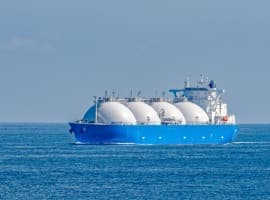
Energy companies are ready to commit to buying $115 billion worth of liquefied natural gas from Alaska once President Trump’s pet energy project gets done, the company in charge of the project, Glenfarne, reported, noting that as many as 50 companies have expressed formal interest.
The $44-billion LNG export facility is strongly supported by the Trump administration, which has also been pressing Japan and South Korea to buy more LNG as a way to reduce America’s trade deficit with its Asian allies—the same approach that Trump has adopted with European countries.
Glenfarne said the companies that have expressed formal interest in buying LNG from the Alaskan facility, yet to be built, are from the United States, Europe, India, Japan, South Korea, and Taiwan—all countries that the Trump administration has sought to pressure into more U.S. energy commodity buying.
Last month, Taiwan committed to buying LNG from Glenfarne’s Alaska facility. For the island, the decision was really a no-brainer. Alaska LNG would be Taiwan’s closest LNG supply source among all U.S. LNG export facilities. The fuel from Alaska LNG wouldn’t need to pass through the Panama Canal, which will effectively shorten shipping time, reduce voyage risks, and improve the reliability of Taiwan’s natural gas supply, the Taiwanese economy ministry said at the time.
Japanese trading heavyweight Mitsui, which is investing in LNG projects globally also earlier this year indicated it could be interested in participating financially in the Alaska project. Two other Japanese majors, JERA and Mitsubishi, are also potential stakeholders in the project.
The Alaska LNG project will have a capacity of 20 million tons of liquefied natural gas annually, to be transported via an 800-mile pipeline to the Gulf of Alaska, from where it will be shipped around the world. The project also involves local supply of natural gas for the state of Alaska.
By Irina Slav for Oilprice.com
More Top Reads From Oilprice.com
- Venezuela Defies U.S. Sanctions as Oil Exports Hold Steady
- Upstream Spending and Production Holds Steady in Canada
- Trump Administration to Roll Back Biden’s Curbs on Alaska Oil Drilling