By
The current disruption has tested global energy markets. While uncertainty remains high, the United States entered this period producing record amounts of oil, operating world-class refineries and supplying more new energy to global markets than any other country.
Get the Latest US Focused Energy News Delivered to You! It’s FREE:
Markets remain tight, inventories are low and uncertainty around the Strait of Hormuz and other key shipping lanes persists. Yet, America’s energy system has helped cushion what could have been a much more severe shock.
That didn’t happen overnight. It reflects decades of investment and innovation, reinforced by recent policies supporting domestic energy development.
Years of investment changed America’s role in global energy
The United States has become the world’s largest oil producer and the largest source of new global oil supply while producing nearly 14 million barrels of crude oil every day — more than any country in history.
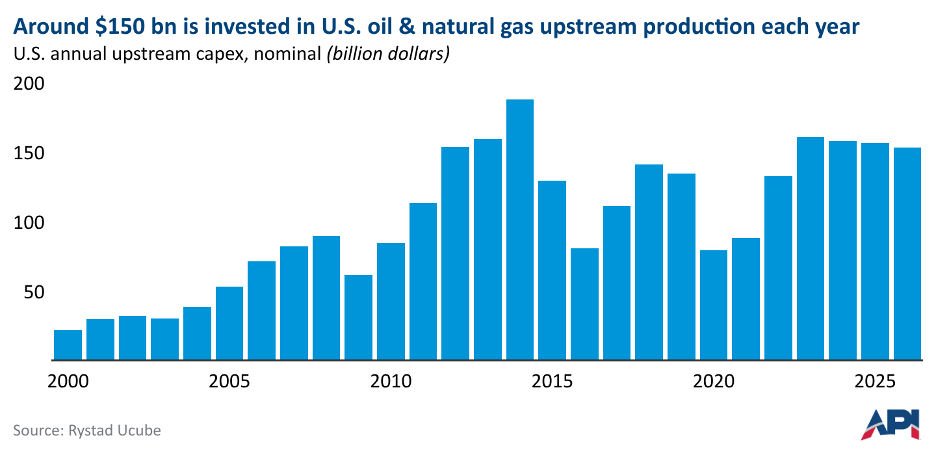
That transformation didn’t happen by accident. The U.S. oil and natural gas industry invests roughly $150 billion every year in oil and natural gas upstream production alone —not including billions more invested annually in pipelines, refineries, export terminals and other critical infrastructure. Those sustained investments fundamentally changed America’s role in global energy markets.
Today, when disruptions occur elsewhere, that leadership leaves the United States uniquely positioned to help stabilize global energy markets, keep energy flowing and soften the impact on consumers.
Energy security requires continuous investment across market cycles
Today’s disruption is a reminder that energy security is built through investments made over many years and across changing market conditions. Oil and natural gas is one of the world’s most capital-intensive industries, with companies continually reinvesting in new production, refineries, pipelines and other critical infrastructure to meet future demand.
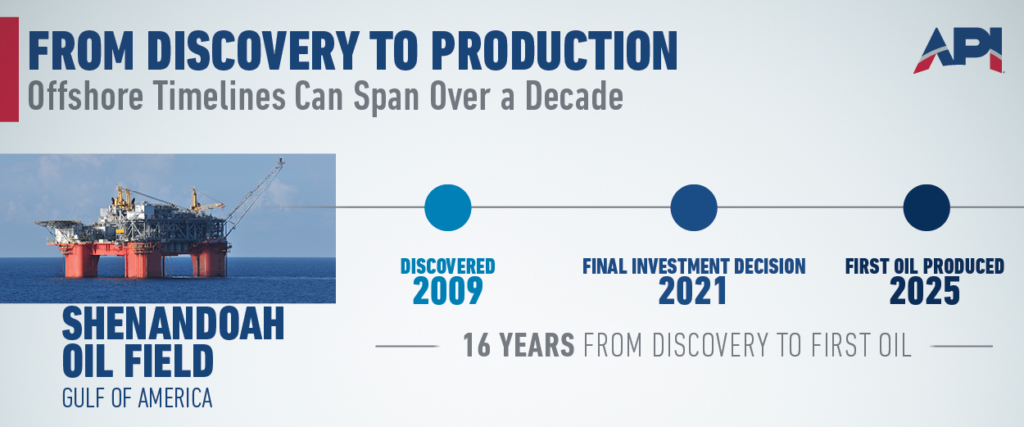
That investment often begins years — sometimes decades — before consumers ever see the benefit. More than one-third of the crude oil produced in federal offshore waters in 2025 came from leases sold in the 1990s. Three decades later, that production is helping cushion consumers during one of the most significant global energy disruptions in decades. The Shenandoah offshore project in the Gulf of America reflects that longer-term development horizon. It was discovered in 2009 and began producing in 2025 — 16 years later.
The same principle applies across market cycles. During the higher-price environment of the early 2010s, companies invested in new drilling technologies, expanded production, pipelines and refining capacity that powered the shale revolution.
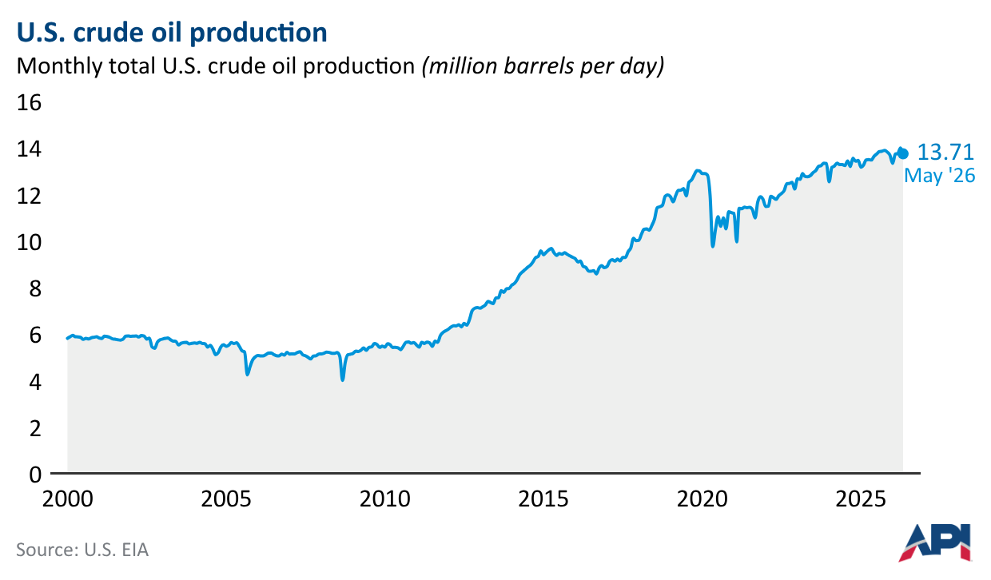
Those investments transformed the United States into the world’s largest oil producer and the largest source of new global oil supply. Today’s record production, world-class refining and America’s role in global markets are, in many ways, the result of those long-term investment decisions — and have helped cushion consumers during today’s disruption.
Long-term investment requires a path from production to market
America’s energy advantage depends not only on investment, but on confidence that projects can be planned, permitted, built — and connected to markets.
Recent actions by Congress and the administration, including expanded leasing opportunities, regulatory relief and tax policies supporting domestic energy development, are helping strengthen that outlook. But new production only delivers value when pipelines, processing facilities, refineries and export terminals can keep pace.
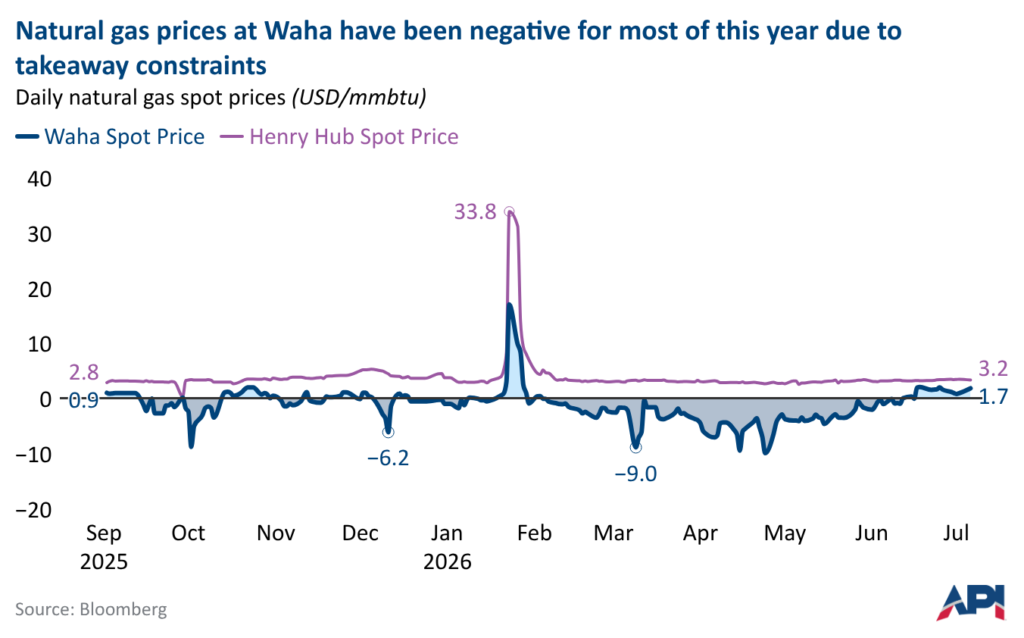
West Texas illustrates the point. Natural gas prices at the Waha hub spent much of the first half of 2026 below zero — not because there was no demand, but because there was not enough pipeline capacity to move gas to willing buyers. A June pipeline expansion helped move more Permian natural gas into the broader market — but only after more than four years from announcement to service.
That is why leasing, permitting and infrastructure are critical. Long-term investment requires confidence that energy can be produced — and delivered to the consumers who need it.
The takeaway
America’s role as an energy stabilizer reflects years of investment across changing market conditions — and policies and infrastructure that allowed those investments to reach consumers. Preserving that advantage means continuing to create the conditions for long-term investment, infrastructure and domestic energy development so America is prepared for whatever comes next.
Share This:
More News Articles