As disruption in the Middle East continues to impact supply chains, disruptions have become routine in the world of semiconductors materials – from helium to the lesser-known bromine. Now tungsten hexafluoride is in the spotlight.
Also known as WF6, it is the only industrial precursor gas used to deposit tungsten metal in advanced chips. It is used in 3D NAND flash and high-bandwidth memory at 7nm nodes and below – the very technologies underpinning today’s AI boom.
The tungsten deposited from the gas forms the microscopic contacts and vias (tiny electrical pathways) that connect billions of transistors across multiple layers of a chip. Its high conductivity and thermal stability make it indispensable for advanced semiconductor manufacturing.
Advanced nodes such as these generated roughly three-quarters of chip giant TSMC’s wafer revenue in the second quarter of 2026 – around $40.2bn – underlining how strategically important the gas has become to the semiconductor industry.
Production cuts in Japan, coupled with soaring WF6 prices, have raised concerns over a new semiconductor materials bottleneck. Those concerns were reinforced this week when China’s CSSC Specialty Gas (CSSC) announced plans to expand its WF6 production capacity by a further 1,000 tonnes per year by 2027, increasing its total capacity to 3,000 tpa.
The investment reflects confidence in long-term AI demand, but also highlights that meaningful new supply remains at least a year away, leaving manufacturers to navigate a tightening market.
Although WF6 represents only a tiny fraction of wafer costs, the tungsten it deposits combines low resistivity, thermal stability and the ability to fill extremely narrow structures in a way that has yet to be matched commercially, leaving advanced chipmakers with few viable alternatives.
WF6 is a colourless, highly corrosive inorganic gas used in semiconductor fabrication. Inside chip fabrication plants, it is introduced into CVD reactors where it reacts – typically with hydrogen – to deposit pure tungsten metal onto silicon wafers.
The resulting tungsten films fill microscopic contacts and vias, creating the low-resistance electrical interconnects between billions of transistors. Their exceptionally low resistivity, thermal stability and ability to fill extremely narrow structures make them critical for advanced semiconductor manufacturing.

Tungsten is introduced into CVD reactors like this where it reacts – typically with hydrogen – to deposit pure tungsten metal onto silicon wafers. ©Kintek
While alternative materials such as molybdenum are beginning to replace tungsten in some NAND memory applications, WF6-deposited tungsten remains irreplaceable for many leading-edge logic devices.
Ensuring reliable supplies of semiconductor-grade WF6 has therefore become more important as demand for AI accelerators, advanced processors and high-bandwidth memory continues to grow.
Until July 2026, Japan’s Kanto Denka Kogyo and Central Glass together produced around 2,000 to 2,200 tonnes of WF6 annually – roughly a quarter of global production capacity. Their ultra-high-purity electronic gases supplied customers in Japan, South Korea and Taiwan.
After relying on stockpiles for several months, however, both companies ceased production on 1 July 2026, completing final shipments by the end of June and accepting no new orders.
The shutdown was not caused by operational problems but by shortages of electronic-grade tungsten powder. Japan imports virtually all of this feedstock, and China’s export controls on tungsten – introduced in early 2025 – have effectively halted supplies.
Without access to sufficiently pure tungsten powder, the companies have effectively lost the ability to manufacture semiconductor-grade WF6.
In a market estimated at around 8,000 to 9,000 tonnes annually, removing more than 2,000 tonnes of 6N and 7N ultra-high-purity product creates an immediate deficit for the advanced chip sector.
China already accounts for around 80% of global tungsten mining and processing and dominates production of the electronic-grade powder required to manufacture WF6.

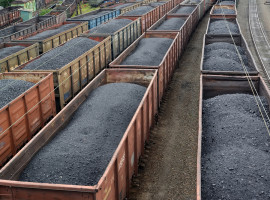
The semiconductor supply chain starts at the mine. Tungsten extracted and refined into electronic-grade powder is the essential feedstock for manufacturing semiconductor-grade WF6. ©Shutterstock
While Beijing says its export controls are intended to protect national security, conserve resources and support domestic industry, they also reinforce China’s influence over the semiconductor materials supply chain by restricting overseas access to a critical feedstock while giving domestic manufacturers priority.
When Kanto Denka and Central Glass warned customers in April that production would be reduced, alarm bells rang across the industry. Trade reports indicated inventories would last only through May and June before production was effectively halved from July, removing one of the world’s most important sources of ultra-high-purity WF6 just as demand for AI processors and advanced memory continued to accelerate.
The consequences are already being felt across the semiconductor industry. South Korean memory manufacturers Samsung and SK Hynix, together with foundry giant TSMC, have been among the most exposed.
Industry sources estimate around 80% of Samsung’s and SK Hynix’s WF6 had previously been sourced from Japanese producers.
The industry’s response is already underway. CSSC’s latest expansion illustrates how manufacturers are positioning themselves for a structurally tighter market.
The company said its existing 2,000 tpa WF6 capacity is already operating at a high utilisation rate and is struggling to keep pace with rapidly growing downstream demand from AI-related semiconductor manufacturing, particularly 3D NAND and HBM memory.
Its additional 1,000 tpa production line forms part of a broader electronic gases project valued at around RMB870m ($129m) and is expected to enter operation in 2027.
The announcement underlines a broader shift taking place across the industry. As Japanese output remains constrained by shortages of electronic-grade tungsten powder, Chinese producers are expanding capacity to capture growing demand both domestically and internationally.
Yet because the additional production will not come online until next year, it offers little immediate relief to manufacturers facing today’s supply constraints.
Samsung, which had relied more heavily on Japanese material, is scrambling to qualify alternative suppliers. Under normal circumstances, qualification of semiconductor materials can take between 18 and 24 months to ensure impurities do not compromise chip yields. The company is now accelerating those processes under exceptional circumstances.
SK Hynix – whose shares recently slumped 10% on the back of shipment delays – has already moved to mitigate the immediate impact. The company had been developing alternative supply channels and quickly transferred orders to domestic suppliers SK Specialty and Foosung, as well as CSSC in China.
SK Specialty has reportedly agreed to supply around 150 tonnes of WF6 per month to help offset the Japanese shortfall.

©sk Hynix
TSMC faces similar challenges. While its supplier base is somewhat more diversified and it maintains strategic inventories, analysts warn that prolonged tightness could complicate the company’s aggressive expansion of 3nm and 2nm production.
Nevertheless, prices are rising sharply. Suppliers report that imported tungsten powder costs have surged, prompting warnings of WF6 price increases of between 70% and 90% during the second half of 2026.
The episode echoes previous shortages involving and . Like those gases, WF6 is manufactured by only a small number of qualified suppliers, while demand is heavily concentrated in advanced semiconductor production.
The immediate risk is that memory manufacturers begin exhausting available inventories. With only weeks of qualified WF6 stock typically held on site, any prolonged disruption could begin affecting production within a month.
Contract prices for DRAM and NAND could rise as manufacturers prioritise higher-margin products such as HBM over commodity memory, with broader implications for AI infrastructure investment.
Longer term, the industry is beginning to respond. Alongside CSSC’s latest expansion, companies including Sumitomo Electric and Mitsubishi Materials are investing in alternative tungsten sourcing and recycling, while new mining projects such as South Korea’s Sangdong mine aim to reduce dependence on Chinese supply.
But none of these initiatives will solve the immediate problem. Developing tungsten mines, refining electronic-grade powder and qualifying semiconductor-grade WF6 production typically takes years rather than months.
The shortage also highlights a broader shift in the semiconductor materials landscape. China’s dominance no longer ends with tungsten mining and refining.
Through export controls and expanding downstream production capacity, it is influencing where critical semiconductor gases are manufactured. As Japanese production contracts and Chinese capacity grows, the geography of the global WF6 market is beginning to change.
For chipmakers, the lesson is clear. WF6 may account for only a tiny proportion of the cost of manufacturing a semiconductor wafer, but its strategic importance is vastly disproportionate.
Like helium before it, WF6 has become another reminder that in advanced semiconductor manufacturing, a shortage of a single specialty gas can become the weakest link in a trillion-dollar supply chain.