A new report by Global Energy Monitor shows that Brazil, India, and China — the original BRICS members — are leading the world in clean energy growth. These countries have some of the biggest wind and solar energy systems globally, placing among the top five for wind and top seven for utility-scale solar capacity. The BRICS bloc as a whole also has more than twice the amount of clean energy projects (those in planning or under construction) compared to fossil fuel ones.
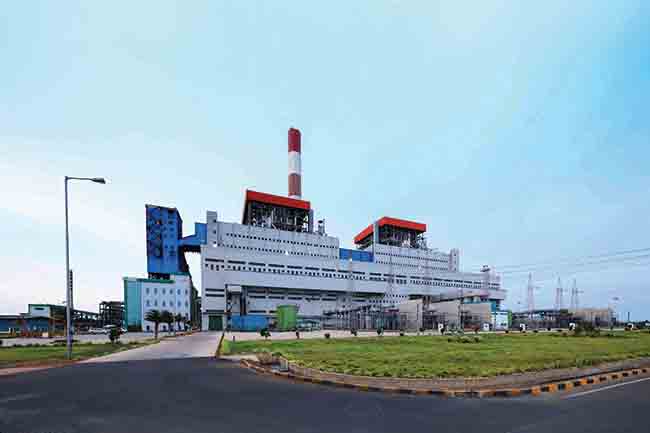
However, newer BRICS members are taking a different path. Countries like Indonesia, Belarus, Bolivia, Kazakhstan, Cuba, Malaysia, Thailand, Uganda, Uzbekistan, and Nigeria currently have 25 gigawatts (GW) of coal, oil, and gas projects under construction — compared to just 2.3 GW of wind and solar energy. Much of this power infrastructure is being built with the help of Chinese companies.
In fact, 62% of all power capacity under construction in these countries involves Chinese state-owned firms, particularly in coal and hydropower, where Chinese involvement reaches 88% and 93%, respectively. Indonesia alone accounts for 7.7 GW of new coal capacity, despite China’s earlier promise to stop funding overseas coal plants.
James Norman, Project Manager for the Global Integrated Power Tracker, said in a statement, “Stalwart BRICS members have an opportunity to show leadership and model their experience with the clean energy transition for new members. Instead, there’s a real risk of sending these countries down the wrong path by investing in coal, gas, and oil.”
Still, China is also leading clean energy development in these countries, building over half of their new solar capacity (947 megawatts) and nearly 90% of wind capacity (601 megawatts). Even though many of the new BRICS countries are still focusing on fossil fuels, most have pledged to cut emissions and shift toward cleaner energy. Eight out of ten of these members have set net-zero targets, and all five that currently rely on coal have announced plans to stop using it.
BRICS began in 2009 with Brazil, Russia, India, and China, with South Africa joining in 2010. In 2024, the group expanded again to include Iran, the UAE, Ethiopia, and Egypt. Brazil, holding the rotating presidency, also welcomed Indonesia as a full member and granted partner status to nine more countries: Belarus, Bolivia, Kazakhstan, Cuba, Malaysia, Thailand, Uganda, Uzbekistan, and Nigeria. Today, BRICS accounts for over a third of the world’s GDP and roughly half of its population and CO₂ emissions.