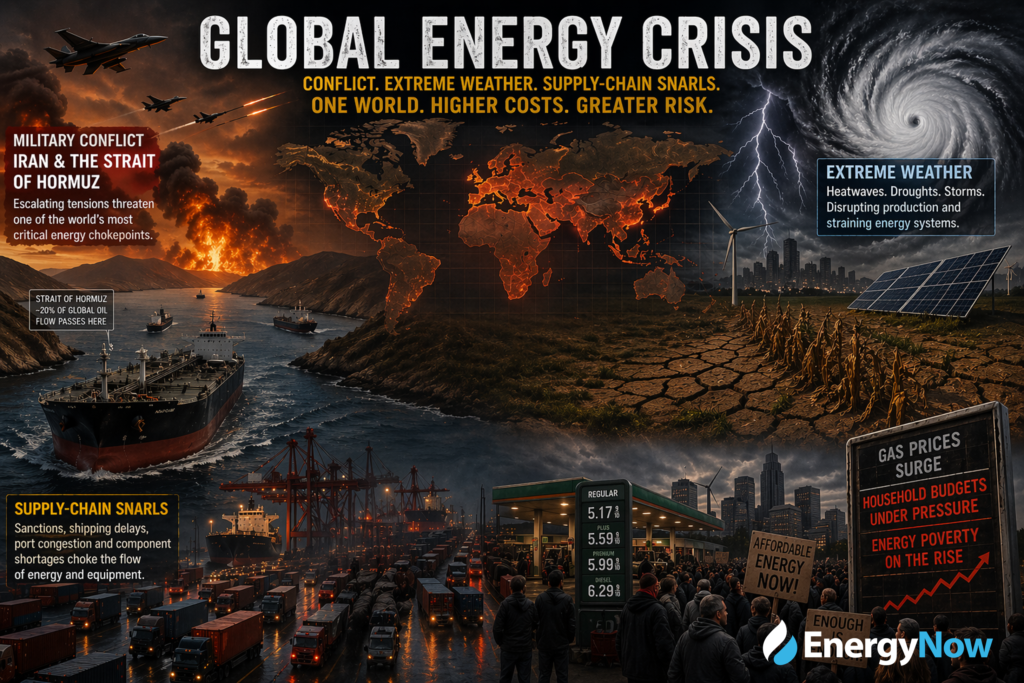
The past decade has brought a rapid succession of global energy crises, driven by military conflict, extreme weather and supply-chain snarls. As today’s highly interconnected oil and gas markets become more fragmented and the low-carbon transition accelerates, recurring shocks may be becoming the norm.
Get the Latest US Focused Energy News Delivered to You! It’s FREE:
First came the post-pandemic inflationary surge in 2021, quickly followed – and amplified – by Russia’s invasion of Ukraine in 2022. Now, four years later, comes the Iran war, which has sparked the greatest disruption to oil and gas supplies in history. Three shocks of such magnitude in such a short span far exceed the historical norm. Broadly speaking, the world has averaged one major energy crisis per decade since World War Two.
More worryingly, the underlying causes of the recent crises – geopolitical and trade fragmentation – suggest the world may face more frequent shocks in the decades ahead.29dk2902l
FRACTURED TRADING SYSTEM
Today’s energy markets are more globalised than ever. That is largely the result of a shift in the centre of gravity in energy demand in recent decades away from Western economies and toward Asia, particularly China.
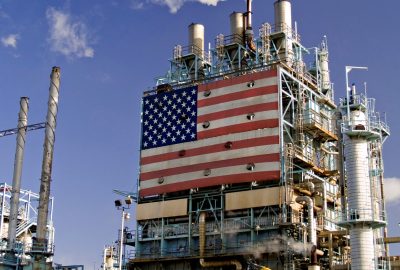
Global oil imports surged by 55% between 2000 and 2024 to around 70 million barrels per day, according to the Energy Institute’s Statistical Review. China’s imports alone grew six-fold over that period to 13.4 million bpd. At the same time, global energy flows have been dramatically redrawn by the transformation of the U.S. – the world’s No. 1 oil consumer – from one of its biggest energy importers into the top oil and gas producer and exporter.
Between 2000 and 2026, U.S. oil exports rose more than 12-fold to about 12 million bpd – roughly 11% of the global market – putting Washington in direct competition with traditional exporting powerhouses such as the Organization of the Petroleum Exporting Countries and Russia. Meanwhile, skyrocketing U.S. exports of liquefied natural gas (LNG) added to that globalisation – improving efficiency, spurring growth and strengthening ties between producers and importers.
For a time, all of this worked.
The war in Ukraine exposed both the benefits and the vulnerabilities of that model. Europe’s dependence on Russian energy left it scrambling after Moscow’s invasion and the subsequent Western sanctions. The continent was forced into a painful reassessment of energy security and diversification. The Iran war has shattered yet another long-standing assumption: the idea that Gulf producers would never engage in conflict that would seriously impede energy flows. Tehran’s decision to block the critical Strait of Hormuz – through which 20% of the world’s oil and gas previously flowed – and attack its Gulf neighbours’ energy infrastructure overturned decades of tacit restraint among Middle Eastern producers. This “new normal” may sow the seeds for future regional tensions. More broadly, the ease with which Iran disrupted the world’s energy supplies raises uncomfortable questions about the security of other critical chokepoints – from the Red Sea to the South China Sea.
TRADE UNDER STRAIN
Alongside the rise in military conflicts is the growing prevalence of trade conflicts, which have upended the post-war ambition to foster peace through multilateral cooperation.
U.S. President Donald Trump’s decision last year to impose sweeping tariffs on most trading partners intensified those strains. His explicit use of America’s energy dominance as a negotiating tool heightened concerns over the long-term reliability of the U.S. as a supplier, reinforcing calls elsewhere for greater energy self-sufficiency. China’s rise as an industrial and economic powerhouse has further weakened the old trading order and helped create a two-tier oil and gas market. Beijing has openly flouted Western sanctions – which have expanded greatly over the past decade – importing large volumes of oil and gas from Russia, Iran and Venezuela. It has also accelerated the emergence of alternative trade, payment, insurance and shipping networks that fragment global markets.
ENERGY TRANSITION, NEW RISKS
Then there is the energy transition. Renewable power now accounts for nearly half of global electricity generation capacity, following a record surge in solar installations last year. The shift is apt to accelerate following recent crises because reducing dependence on fossil fuels increasingly overlaps with governments’ efforts to bolster energy security. The European Union made the point explicitly in a plan aimed at shielding consumers from volatile oil and gas prices.
“We must accelerate the shift to homegrown, clean energies. This will give us energy independence and security, and mean we are better able to weather geopolitical storms,” Ursula von der Leyen, president of the European Commission, said when announcing the plan.
But the transition also introduces new vulnerabilities. Reduced reliance on fossil fuels could morph into heavy dependence on imports of low-carbon technologies – from solar panels to battery storage – that are highly concentrated in China. That dependency is already emerging as a major source of trade and industrial tensions between Beijing and Western governments.
Slowing demand is also likely to intensify competition for market share among major producers – Gulf states, Russia and the U.S. alike. This increases the risk that energy becomes an even more potent geopolitical weapon.
And even if the energy transition slows climate change, it won’t reverse it. Rising global temperatures and more frequent extreme weather events – droughts, floods, hurricanes, heatwaves – are already disrupting energy production, transport and power grids. The picture is a sombre one. Volatility, rather than stability, will likely be the defining feature of global energy markets. To withstand future shocks, countries will need to build energy systems that are diversified, flexible and, most likely, domestic.
(Ron Bousso Editing by Marguerita Choy)
Share This:
More News Articles