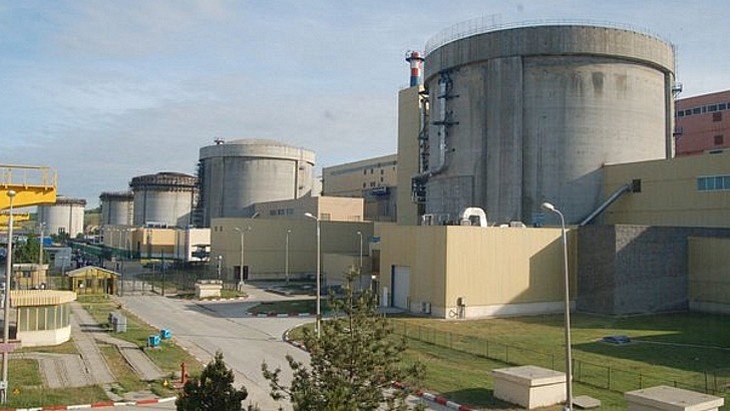
The first unit was reconnected to the grid on Friday 6 November, with unit 2 undergoing start-up work on Monday. It is due to be synchronised to the grid on Tuesday.
Unit 1 was shut down at the end of July, with the second unit shut in early August as precautions as drought in central Europe saw the river Danube’s water level drop too low to provide the required amount of cooling water for the units to be kept in operation. The historically low water levels – lower than designers had envisaged happening in 100 years – also had an impact on nuclear power plants in Hungary and Bulgaria.
Romania’s Prime Minister Luca Niculescu visited the plant after the reconnection of the first unit, saying: “The prolonged outage of production at the Cernavodă Nuclear Power Plant, which currently accounts for approximately 20% of Romania’s electricity consumption, has provided an important lesson, highlighting the extent to which energy security depends on the availability of reliable and stable generation capacity, as well as the critical role of nuclear energy in supporting the economy, the welfare of Romanian citizens and their quality of life … the government will firmly support projects aimed at ensuring the continued safe and reliable operation of the nuclear power plant … as well as investments designed to expand the country’s electricity generation capacity through the development of Cernavodă units 3 and 4.”
Mihai Gioară, Nuclearelectrica CEO, said the “milestone” of the units’ return to service also provided an “opportunity to review and assess the experience gained. Based on the conclusions, we will adjust our strategic approach for the coming period and identify solutions aimed at reducing the risk of similar situations occurring in the future”.
The company said it was working with “the competent authorities to develop concrete short, medium and long-term solutions aimed at enhancing plant availability and ensuring the uninterrupted operation”.
In a press conference, the prime minister said “the , which provides, in short, the possibility for more water to reach the Cernavodă power plant, becomes a priority and I ask all institutions to focus on this project with maximum seriousness and dedication. It will provide water for cooling, both to units 1 and 2, and to those that will be built – units 3 and 4. In parallel, dredging works must also be carried out permanently and expeditiously. It is extremely important to ensure all the conditions for the best possible operation of the Cernavoda power plant”.
He said that the estimated cost of the shutdown of the two units this summer was EUR200 million (USD223 million).
Cernavodă is the only nuclear power plant in Romania and consists of two operable 650 MWe Candu reactors, generating about one-fifth of its electricity. Unit 1 went into commercial operation in 1996 and unit 2 in 2007. Most of the work on units 3 and 4 – like units 1 and 2, Candu-6 reactors – was done in the 1980s. It was reported in 2021 that unit 3 was 52% complete and unit 4 was 30% complete. Work is now planned to finish units 3 and 4, with scheduled commercial operation in 2030 and 2031.