

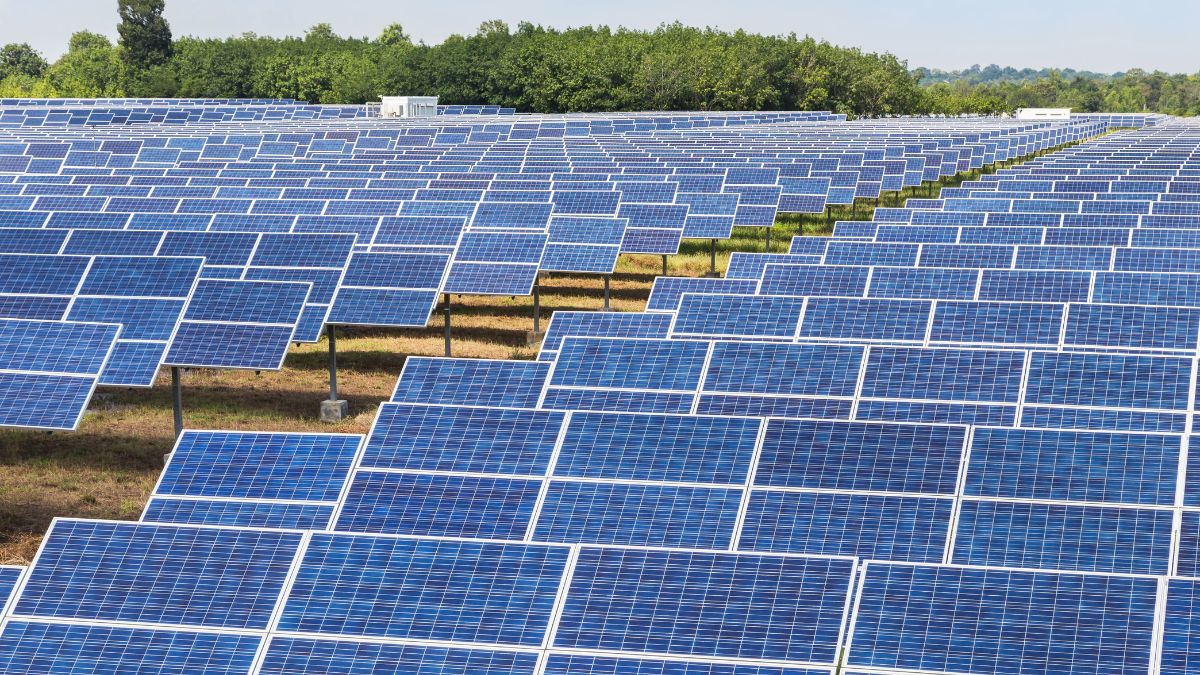
Chinese renewable energy manufacturers are rapidly increasing their global presence despite rising trade tensions, according to Wood Mackenzie’s latest Looking Overseas report. In 2024 alone, they established 35 new overseas manufacturing facilities, bringing their total to 114 across the wind, solar, and battery sectors. These facilities are strategically located in the Middle East, Asia-Pacific, and Europe to bypass escalating tariff barriers and ensure continued market access.
The report highlights that Chinese renewable exports rose by 20% year-on-year in 2024, but the industry is shifting from direct exports toward overseas manufacturing to navigate trade restrictions. Wind turbine exports recorded a sharp increase of 72%, while solar module and battery exports grew by 11% and 28% respectively. Although these figures are strong, they represent a slowdown compared to the higher growth rates seen in 2023.
China remains the dominant global producer of renewable energy equipment, manufacturing more than 80% of the world’s wind turbines, solar panels, and energy storage batteries. This leadership translates into significant cost advantages that competitors struggle to match. Even when produced outside China, Chinese-made wind turbines are 28% cheaper, solar modules are 4% cheaper, and energy storage batteries are 31% cheaper than comparable Western products, making them highly attractive to developers seeking cost efficiency.
Xiaoyang Li, director, China power and renewables research at Wood Mackenzie said “Despite facing over 20 markets with trade barriers and extreme US tariff rates reaching 696% for some solar products, Chinese companies added 35 new overseas facilities in 2024, demonstrating remarkable resilience in maintaining global market dominance in global renewable power manufacturing”.
He further added, “While export volumes continue growing, companies are adapting their strategies to address local content requirements and trade tensions through overseas manufacturing. The fundamental economics of Chinese manufacturing efficiency means that even with tariffs and trade barriers, these companies maintain competitive advantages that are reshaping global supply chains.”
China’s Belt and Road Initiative continues to play a central role in its energy strategy. From 2015 to 2024, the number of overseas power projects linked to the initiative grew by 34%, reaching a total of 369. Wood Mackenzie projects that by 2030, China could control nearly 80% of utility-scale solar and wind capacity in the top Belt and Road markets. This would create a powerful network of influence that sidesteps Western trade barriers entirely.
The report outlines four main business models behind Chinese overseas expansion, ranging from direct investor-led projects to component supply partnerships with Western original equipment manufacturers. This diversified approach allows Chinese companies to maintain control over production while presenting an appearance of local compliance.
Market focus is also shifting. Countries with stable political and economic conditions in Asia, the Middle East, and Latin America are becoming more appealing for investment, while Europe’s high costs and strict entry requirements are reducing its attractiveness. In particular, Saudi Arabia and Oman, with ambitious renewable targets for 2030, are drawing significant Chinese interest.
He continued, “The focus of renewable investment is shifting towards the Middle East, Asia-Pacific, and Caspian markets,” noted Li. “With high-quality products made in China, greenfield investments are becoming more appealing to investors looking to establish projects in easily accessible markets. These regions act as both manufacturing hubs for global market entry and local demand centres, effectively creating parallel supply chains that bypass traditional trade barriers for China.”
He concluded, “Trade barriers and local content rules aren’t reducing China’s influence, but they’re reshaping it. Instead of achieving true supply chain independence, we’re seeing more complexity and fragmentation in global renewable energy markets.”
Despite the growth in export volumes, China’s total export revenues for renewables dropped by 13% in 2024 due to falling prices driven by intense competition. Solar module export revenues fell by 29%, and battery revenues by 5%. This suggests that while Chinese manufacturers are holding their market share, they are facing pressure on profit margins.
Ironically, global local content policies—such as the EU’s Net Zero Industry Act, which aims for 40% domestic production by 2030, and the US Inflation Reduction Act’s manufacturing incentives—are accelerating Chinese overseas expansion. Instead of limiting China’s role in the renewable energy market, these policies are prompting more sophisticated global manufacturing strategies that could ultimately reinforce Chinese influence through widely distributed production networks.









%20To%20Strengthen%20The%20Southern%20Grid)