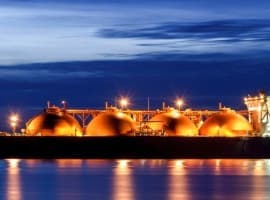
China plans to launch LNG futures in yuan as it aims to hedge against volatile prices and have more power over global LNG pricing.
The futures could be launched on the Shanghai Futures Exchange (ShFE) as soon as February, Reuters reported on Friday, quoting sources familiar with the plans.
The Shanghai Futures Exchange has sought for years to launch yuan-denominated futures of key commodities, including LNG and nickel, to seek a role for China in the global pricing of the major Chinese commodity imports.
The biggest global LNG markets are linked to physical hubs for the commodity, including the U.S. benchmark Henry Hub, the European benchmark for gas trading, the Dutch Title Transfer Facility (TTF), and the Japan-Korea Marker (JKM) for the north Asian benchmark.
“China needs a benchmark that reflects its own demand and supply. JKM can’t do that as it caters mostly to Japan and Korea,” a Chinese state gas trader involved in the discussions about the yuan LNG contract, told Reuters.
Major LNG traders and Middle Eastern exporters are likely to be interested in a yuan-denominated LNG contract, according to analysts.
Despite a late rebound in imports, overall Chinese LNG purchases fell last year. But China’s imports of LNG are set to jump this year, by a double-digit percentage over 2025, according to some analysts.
New LNG export projects coming online and ramp-ups of recently commissioned facilities are expected to drive a 10% jump in global LNG supply this year. This, in turn, is set to incentivize additional demand, especially in Asia, where buyers have become more price sensitive to LNG imports, according to the analysts.
Over the past week, China has seen wild swings in LNG prices. These slumped in December to a five-year low. A month later, LNG prices in China jumped this week, due to a cold spell that is expected to extend into February.
By Tsvetana Paraskova for Oilprice.com
More Top Reads From Oilprice.com
- Japan’s Largest Nuclear Plant Hit by New Halt After Brief Restart
- India Deepens Energy Ties With the Gulf While Balancing Russian Oil Risk
- Indian Refiners Boost Middle East Supply To Offset Lost Russian Oil