China has broken ground on what promises to be the world’s largest hydropower dam, a giant project on the eastern edge of the Tibetan Plateau that underscores Beijing’s dual ambitions: securing energy independence and solidifying geopolitical leverage over one of Asia’s most important rivers.
Premier Li Qiang’s formal launch of the $170 billion venture, described as a “project of the century”, is a symbolic reminder of China’s willingness to bet big on infrastructure as part of its climate and industrial strategy. But this vast undertaking is also raising significant alarms — from environmental groups to India and Bangladesh, two nations critically dependent on the Brahmaputra River, which originates as the Yarlung Zangbo in Tibet.
The Scale of China’s New Megadam
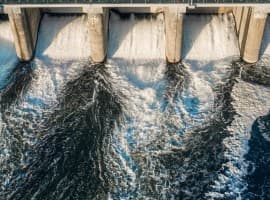
The dam will consist of five cascade hydropower stations straddling a 50-kilometer stretch of the Yarlung Zangbo River, where the river plunges nearly 2,000 meters — a geographic feature that gives this location immense hydropower potential.
Upon completion, the complex is expected to generate an astonishing 300 billion kilowatt-hours of electricity annually, more than doubling China’s installed hydropower capacity in Tibet and contributing significantly to Beijing’s carbon neutrality targets. The project’s timeline stretches into the 2030s, rivaling the Three Gorges Dam in ambition and scope.
For China’s government, this is about more than renewable energy: it’s a strategic infrastructure project designed to stimulate employment, industrial demand, and regional economic development in Tibet, a region long regarded by Beijing as politically sensitive.
Environmental and Geopolitical Fault Lines
While Chinese officials have promised “ecological conservation” and downplayed potential environmental risks, many environmental NGOs remain unconvinced. Groups such as the International Campaign for Tibet warn that the construction threatens one of the planet’s most biodiverse and fragile ecosystems. The Tibetan Plateau is sometimes called the “Third Pole” for its vast stores of freshwater locked in glaciers and rivers that sustain billions of people downstream.
These concerns are not just environmental: the dam lies upstream of India’s Arunachal Pradesh and Assam states, and Bangladesh’s Ganges Delta — regions already deeply vulnerable to seasonal flooding, water shortages, and climate-related disruptions.
New Delhi and Dhaka have both voiced apprehension over the lack of transparency in China’s hydropower planning. Given that water governance between these nations remains poorly institutionalized, the new megadam risks adding water security to the already fraught China-India geopolitical rivalry.
A Construction and Materials Boom
In the wake of the announcement, Chinese equity markets lit up. Shares of companies linked to construction, hydropower engineering, and materials surged dramatically. The CSI Construction & Engineering Index jumped to a seven-month high, and individual stocks such as Power Construction Corporation of China and Arcplus Group PLC hit their daily 10% limit.
Smaller firms supplying construction equipment and materials also saw eye-popping gains: Hunan Wuxin Tunnel Intelligent Equipment Co and Geokang Technologies Co Ltd soared 30%, while cement maker Xizang Tianlu Co Ltd and Tibet GaoZheng Explosive Co climbed 10%.
For investors, the project offers both a long-term anchor for infrastructure-linked returns and a short-term theme for speculation. However, market analysts caution that valuations in the sector could become inflated in the near term as speculative buying outpaces fundamentals.
An Infrastructure Gamble With Global Implications
China’s new megadam is much more than a domestic infrastructure project — it is a strategic, geopolitical, environmental, and market-shaping initiative. For China, it demonstrates industrial might and a commitment to renewable energy. For its neighbors and environmental groups, it signals escalating water competition and ecological risk.
As construction proceeds, the project will test not only Beijing’s engineering capabilities but also its ability to manage the complex social, environmental, and diplomatic fallout. The world will be watching — and so will energy markets.
By Charles Kennedy for Oilprice.com
More Top Reads From Oilprice.com:
- Oil Prices Remain Flat as Markets Digest EU Sanctions on Russia
- Houthi Attacks Trigger Unpaid-Debt Shutdown of Israel’s Eilat Port
- EU Lowers Russian Oil Cap to $47.60