China is increasingly reselling surplus liquefied natural gas (LNG) overseas as domestic demand plateaus and its portfolio of long-term contracts continues to grow, according to a new report from the Institute for Energy Economics and Financial Analysis (IEEFA).
The development comes as the global LNG market enters a period of rapid supply growth. Over 274 million tonnes (Mt) of LNG supply will enter the global market between 2026 and 2031, growing capacity by 52% from 2025 levels of 525Mt, while uncontracted capacity could add over 90Mt of uncommitted LNG supply.
Sam Reynolds, IEEFA’s Asia LNG and Gas Research Lead, said, “China’s emergence as a reseller of surplus LNG exposes the fragile assumptions underlying the current wave of LNG export investment.
“For those looking to offload LNG over the coming decade…China, the world’s largest LNG customer, could increasingly become one of their most significant competitors,” he added.
IEEFA said the Middle East crisis delayed global LNG oversupply rather than offsetting it entirely.
Read more:
China’s LNG surplus
China’s LNG imports have fallen from 79Mt in 2021 to 66Mt in 2025, according to IEEFA, representing a 16.5% decrease, with a further decline to 63Mt forecasted in 2026.
In parallel, Chinese buyers signed nearly 60Mt of new supply agreements between 2021 and 2023, leading to a growing surplus of contracted volumes as contracted supply increasingly outpaces domestic demand.
This mismatch has left Chinese buyers with growing volumes of LNG that cannot be absorbed by the domestic market.
IEEFA said China resold between 17Mt and 19Mt of LNG in 2025 alone, with resales expected to increase further in 2026.
In the first half (H1) of 2026, Chinese charters diverted 47% of LNG handled by chartered vessels to buyers in other countries.
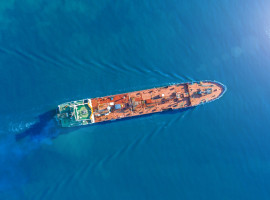
Ship-tracking data show that resales by Chinese-chartered vessels reached 8.4Mt in 2025, representing a third of China’s total chartered volumes that year.
South Korea (19%), Japan (14%), and the Netherlands (9.9%) were the main buyers of the rediverted LNG volumes.
The Pacific region was a key market for Chinese LNG resellers in 2025. In total, 1.3Mt of LNG was resold to Japan, Singapore, South Korea, and Taiwan during the year.
Australian LNG exports have supported Chinese resales by providing a strategic location to access the Pacific LNG market.
Notably, major state-owned energy firms China National Offshore Oil Corporation (CNOOC) and PetroChina Company (PetroChina) accounted for 64% of Chinese charterer resales in 2025.
The IEEFA said these companies’ recent expansions into the shipping and bunkering segments of the LNG supply chain reflect Chinese LNG buyers seeking to monetise surplus volumes.
It projects that China will remain in LNG oversupply until at least the early 2030s, with more contracts scheduled for delivery.
US-China LNG relations
The IEEFA said the breakdown of US-China trade relations in early 2025 has accelerated China’s LNG resale activities.
In February 2025, China imposed a on US LNG and coal following the US 10% tariff on Chinese imports. Historically, however, China and the US have not been heavily reliant on one another for LNG.
In the three-year window leading up to April 2025, US LNG supplied of China’s total LNG imports, according to data from S&P Global Commodity Insights.
Notably, while no US LNG was delivered to China for over a year, resales of US-based LNG increased by almost 63% in 2025.
The IEEFA estimates Chinese companies have profited $4.6bn from the resale of US and Australian-sourced LNG between 2021 and June 2026.
Christopher Doleman, IEEFA’s Asia LNG and Gas Specialist, said, “Fueling this trend is a surge in flexible long-term contracts, particularly from Australia and the US.
“US supply has largely been leveraged to capitalise on arbitrage opportunities in the Atlantic region,” he noted.
This comes as the US has LNG exports in the past year. US LNG exports averaged 17.4 billion cubic feet per day (bcf/d) in H1 2026, up 23% from H1 2025, according to analysis published by the US Energy Information Administration (EIA).
The EIA said market disruptions from the closure of the Strait of Hormuz contributed to a doubling of US shipments to Asia in H1 2026, with export volumes rising 2.3 bcf/d (108%) from H1 2025.
US President Donald Trump and China’s President Xi Jinping meet in Washington today [24 September], with energy supply security among a raft of issues up for discussion.
Read more: