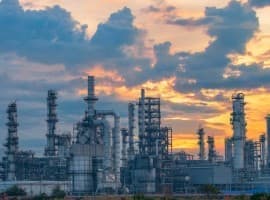
Chinese petrochemical makers have started idling capacity as the cost of their feedstocks rises amid the Middle East war, Bloomberg has reported, noting that output is down to the lowest in three years.
About a fifth of the country’s petrochemicals capacity has been taken offline, the publication wrote today, citing data from a Chinese industrial news outlet. The report added that the petrochemicals industry is currently operating at just 68% of capacity.
The futures prices of purified terephthalic acid, a chemical that is used in the production of polyester, have gained close to 25% since the start of the war, eroding petrochemical makers’ margins, Bloomberg noted. At the start of the year, PTA was trading at less than 5,000 yuan per ton, while this month, prices are above 6,000 yuan per ton, after topping 7,000 yuan per ton in March.
Oil prices, meanwhile, remain elevated although they have retreated below $100 per barrel on hopes that ceasefire talks between the United States and Iran would resume, even as the U.S. blockade halts the outflow of Iranian crude, per the latest reports.
On the physical markets, however, hope does not play a part. “While diplomatic headlines suggest the possibility of renewed U.S.-Iran talks and even a temporary easing of transit restrictions, the physical reality remains fragmented,” energy price forecaster the Schork Group said in a note, as quoted by Reuters today.
The publication reported that refiners are urgently seeking replacement crude for their lost Middle East supplies, and are ready to pay hefty premiums for alternatives. WTI for delivery to the Netherlands yesterday hit a premium of $22.80 per barrel to Brent crude, Reuters wrote.
China has been relatively insulated from the worst of the supply shock, but global prices and crude oil availability do affect its industries—and demand for the products that these industries churn out, including petrochemicals.
By Irina Slav for Oilprice.com
More Top Reads From Oilprice.com
- U.S. Blockade of Hormuz Holds Firm Under Pressure
- Oil Traders Bet on Diplomacy Even as Physical Supply Tightens
- EU Considers Lower Energy Taxes as Hormuz Crisis Drives Costs Higher