Monday, 14 July 2025
Although China has made significant progress in further strengthening its regulation of nuclear safety, the staffing levels of the country’s regulatory body must keep up with China’s fast-growing nuclear industry, an International Atomic Energy Agency team of experts said.
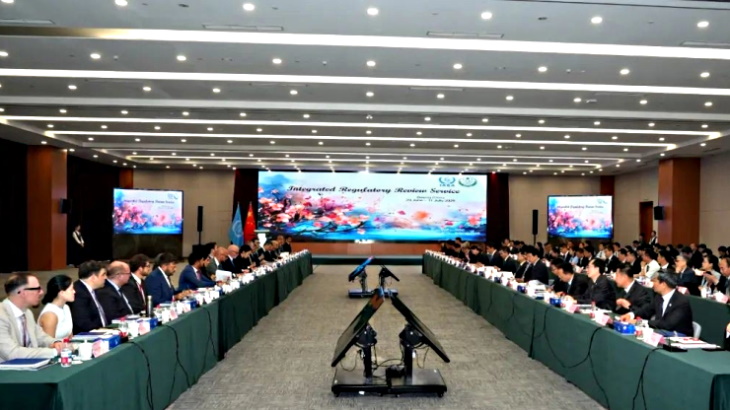
An Integrated Regulatory Review Service (IRRS) team concluded a 12-day mission to China on 11 July, a full-scope review covering all facilities, activities and exposure situations. The 24-member expert mission was conducted at the request of the government and hosted by the Ministry of Ecology and Environment (the National Nuclear Safety Administration (NNSA)), which regulates nuclear safety in China.
IRRS missions are designed to strengthen the effectiveness of the national nuclear and radiation safety regulatory infrastructure, based on IAEA safety standards and international good practices, while recognising the responsibility of each country to ensure nuclear and radiation safety.
The previous IRRS mission to China – a follow-up review – was carried out in 2016, when it had 32 nuclear power reactors in operation. China is currently operating 59 reactors generating around 5% of its electricity. In addition, it is constructing 32 reactors and planning to build another 21 units.
The IRRS team reviewed areas including: responsibilities and functions of the government and the regulatory body; the activities of the regulatory body including authorisation, inspection and enforcement processes; development and content of regulations and guides; emergency preparedness and response; radiation sources; research reactors; nuclear power plants; fuel cycle facilities; radioactive waste management facilities; transport of radioactive material; decommissioning; occupational exposure; control of medical exposure and public exposure; and interfaces with nuclear security.
Two policy issues were discussed during the mission: the impact of the rapid development of artificial intelligence on regulation and the shortage of human resources due to the surge in the number of operating reactor units in China.
While identifying several good practices by the NSSA, the team made a number of recommendations and suggestions for further improvement of the overall effectiveness of China’s regulatory system, These include: clarifying protection strategies in the case of a nuclear or radiological emergency; providing a documented process for developing inspection plans for nuclear facilities; establishing and implementing a comprehensive safety culture oversight programme; and enhancing its processes to ensure that updates to department rules, guides, and standards are completed to appropriately align with the latest IAEA safety standards.
“Over the past decade, China has made impressive headway in establishing a capable and independent regulatory body and promoting a healthy nuclear safety culture,” said IRRS team leader Mark Foy, former Chief Executive and Chief Nuclear Inspector of the UK’s Office for Nuclear Regulation. “China has a strong, competent and trusted national regulator that works effectively to ensure the safety of the public and environment.
“The fast growth in China’s nuclear power programme will require the recruitment and training of a significant number of additional nuclear professionals in the regulatory field in the coming years. Its use of technology to support the effectiveness of its national regulator is an exemplar for all of us to learn from.”
Baotong Dong, Ministry of Ecology and Environment Vice Minister and NNSA Administrator, said: “China has established a regulatory system that aligns with international standards while meeting national conditions. The government will further enhance its regulatory capabilities, accelerate the development of a modern nuclear safety regulatory system, and promote a virtuous cycle of high-level nuclear safety and high-quality development in the nuclear sector. China stands ready to contribute to strengthening global nuclear safety governance and elevating worldwide nuclear safety standards.”
The final mission report will be provided to the Chinese government in about three months. The government plans to make the report public. China will consider inviting an IRRS follow-up mission at a later stage.