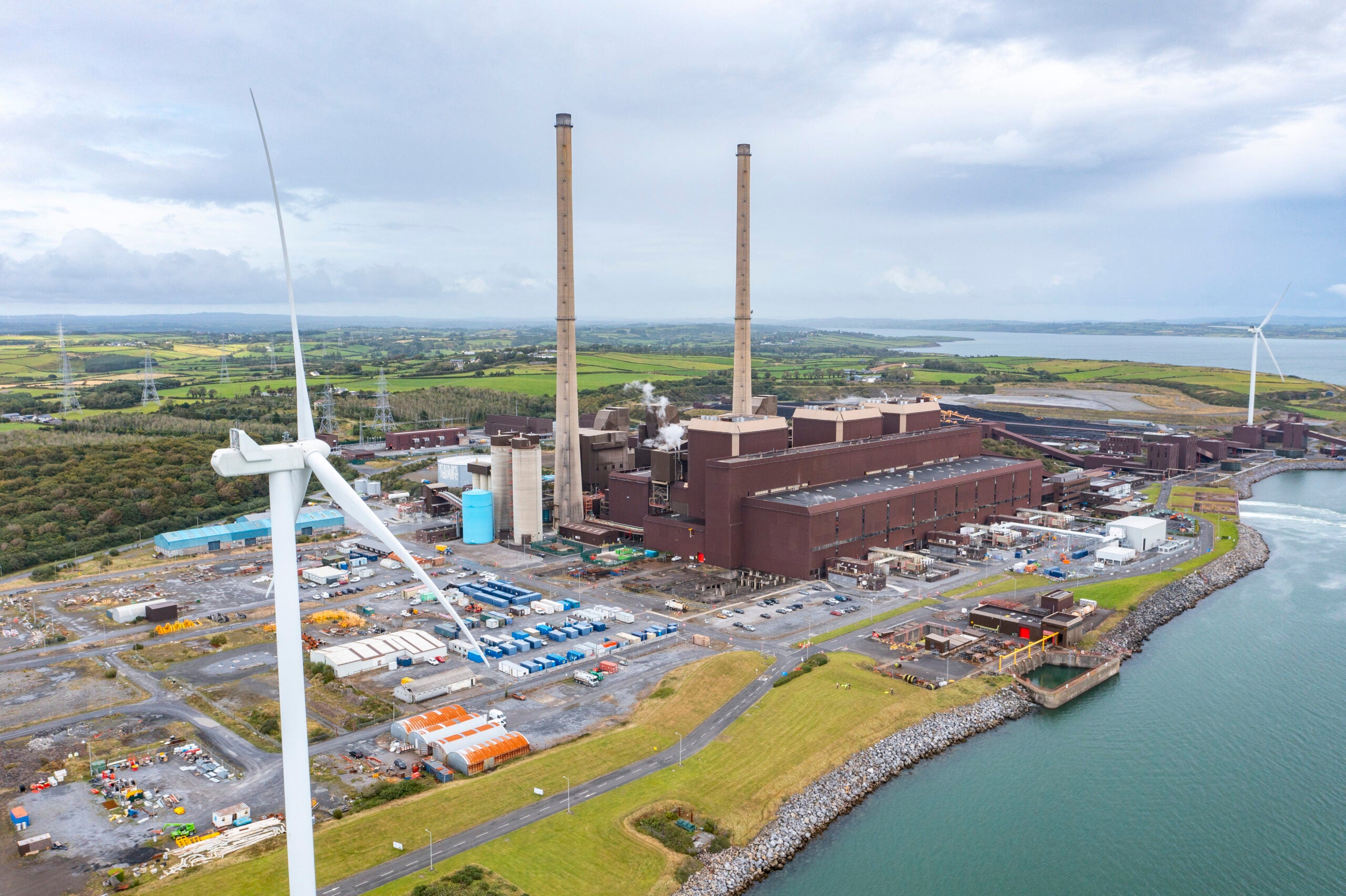
China’s thermal power generation reached a record high in 2024, primarily due to the country’s coal-fired power plants, even as the country continues to add renewable energy resources to its power grid.
Data from China’s National Bureau of Statistics showed electricity production from the country’s coal, oil, natural gas, and nuclear power sectors increased 1.5% year-over-year, the slowest pace of growth in the past decade but still reaching a record 6.34 trillion kilowatt hours. Officials said power demand continues to increase across China, and reliable baseload power is needed despite record additions of wind and solar energy. .
Data from the country’s National Energy Administration showed China’s solar power generation capacity rose by 45.2% in 2024 compared to 2023, and wind power generation capacity increased by 18% year-over-year. The International Renewable Energy Agency has said China leads the world in deployment of renewable energy.
Ember, a global energy think tank, has said coal accounts for about 60% of China’s electricity output. Renewable energy, led by hydropower, makes up most of the rest.
Some researchers, including from the Centre on Research and Clean Air, and LSEG, a data and analytics shop, have said they expect China’s coal-fired generation will decline this year as the country continues to deploy more renewables. A drop in coal-fueled output would mark the first non-Covid yearly decline since 2015.
Lauri Myllyvirta, lead analyst at the Centre for Research on Energy and Clean Air and senior fellow at Asia Society Policy Institute, wrote that growth in renewable energy installations, along with slower demand for electricity from industry, “would be expected to push China’s coal-power output into decline in 2025.”
China also continues to lead in deployments of power generation in foreign countries. A new report from Wood Mackenzie (WoodMac) released Jan. 27 said Chinese companies last year installed a record 24 GW of capacity as part of its ongoing Belt & Road Initiative, a program designed to strengthen China’s economic ties and relationships with other governments.
WoodMac said the 2024 deployments were double the amount of capacity installed in 2023, and represents the highest level of investment in the Belt & Road program since it was launched in 2013. The 2024 installations were led by renewable energy, primarily solar and hydropower.
The report—”Record Chinese overseas power project completion in 2024: Update on the Belt & Road Initiative”—said 52% of the 2024 projects were for renewable energy, including 8 GW of solar power and 5 GW of hydro. The report said the 48% of the projects were for thermal power generation, including 6 GW of coal plants and 6 GW of natural gas- and oil-fired plants.
“The rapid growth in overseas solar projects in 2024 is remarkable,” said Alex Whitworth, vice president, head of Asia Pacific power and renewables research at Wood Mackenzie. “Chinese companies are heavily prioritising greener technologies overseas and these make up over two thirds of the project pipeline. As Chinese manufacturers drive down the costs of renewable power technology, Chinese companies are leading its deployment in many developing markets that could not previously afford it.”

The report noted that China’s overseas project pipeline includes 19 GW of coal-fired units, though the status of those projects is uncertain due to China’s 2021-announced policy that it would build no new overseas coal-fired plants. The report said 9 GW of gas-fired projects are either under construction or still in the planning stages.
WoodMac said Chinese companies have installed 156 GW of power generation capacity in participating countries since the launch of the Belt & Road program.

“Chinese companies have installed 156 GW of power projects in participating countries since the launch of the B&R Initiative,” said Yanqi Cao, managing consultant, Asia Pacific power research at Wood Mackenzie. “Between 2013 to 2024, these companies completed 369 overseas power projects, representing an investment of approximately $281 billion,” Cao added.
The report said developing countries remain the focus of the initiative. Asia accounted for about 70% of installed capacity, with Africa next at 15%. The report said five markets—Pakistan, Indonesia, Vietnam, Saudi Arabia, and Malaysia—are expected to experience major growth in solar and wind power over the next 10 years, with a projected 120 GW of capacity additions, representing investment of $73 billion.
WoodMac said Saudi Arabia would lead those markets, with plans to install 41 GW of solar power and 13 GW of wind power.
“Chinese companies are more and more involved in investing in renewable power in the top five B&R markets. Five years ago, they accounted for only 7% of the wind and solar capacity in these markets. However, this share has risen to over 60% in 2024, and it could reach 80% by 2030 if the current trend continues,” Cao said.
—Darrell Proctor is a senior editor for POWER.