 |
POWER’s 2026 Top Plant Water Award winner—WA Parish Unit 8 in Texas—integrated commercial-scale thermal evaporation into an operating coal plant, pairing verified performance with a retrofit that leveraged existing plant systems to demonstrate that FGD wastewater ZLD depends as much on plant integration as on treatment technology.
Flue gas desulfurization (FGD) wastewater—the contaminated water stream produced when wet scrubbers remove sulfur dioxide from coal-fired plant exhaust gases—can be inherently challenging to treat reliably. It contains high concentrations of dissolved solids, heavy metals, and suspended constituents, and its chemistry can change according to coal characteristics, FGD operation, and other plant conditions. Those characteristics can complicate treatment where scaling, fouling, or tightly controlled influent chemistry become concerns.
In April 2024, the Environmental Protection Agency (EPA) ramped up regulatory pressure, issuing a final revision to the Steam Electric Power Generating Effluent Limitation Guidelines (ELG) to establish a zero-discharge standard for pollutants in FGD wastewater at affected plants. The agency’s envisioned endpoint is zero liquid discharge (ZLD), which requires that no FGD wastewater should be released to surface waters and that remaining contaminants be managed through reuse, concentration, evaporation, or solids handling by Dec. 31, 2029. EPA’s analysis considered biological treatment, membrane filtration, spray evaporation, other thermal treatment, and encapsulation. But selecting a workable treatment train remains plant-specific, and multi-step processes can add complexity, cost, and operational risk.
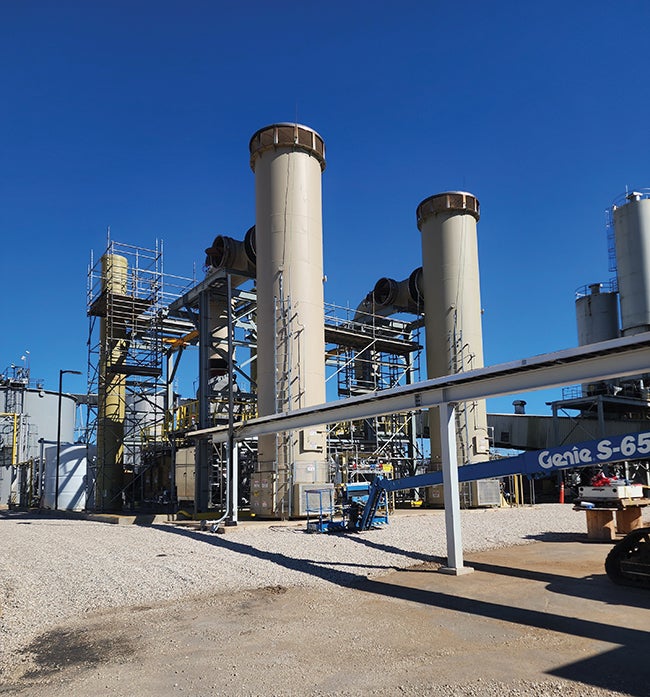
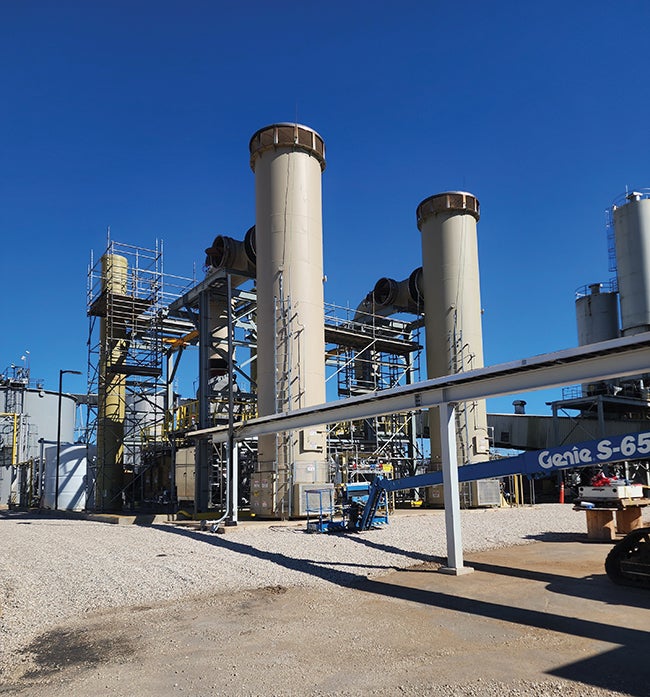
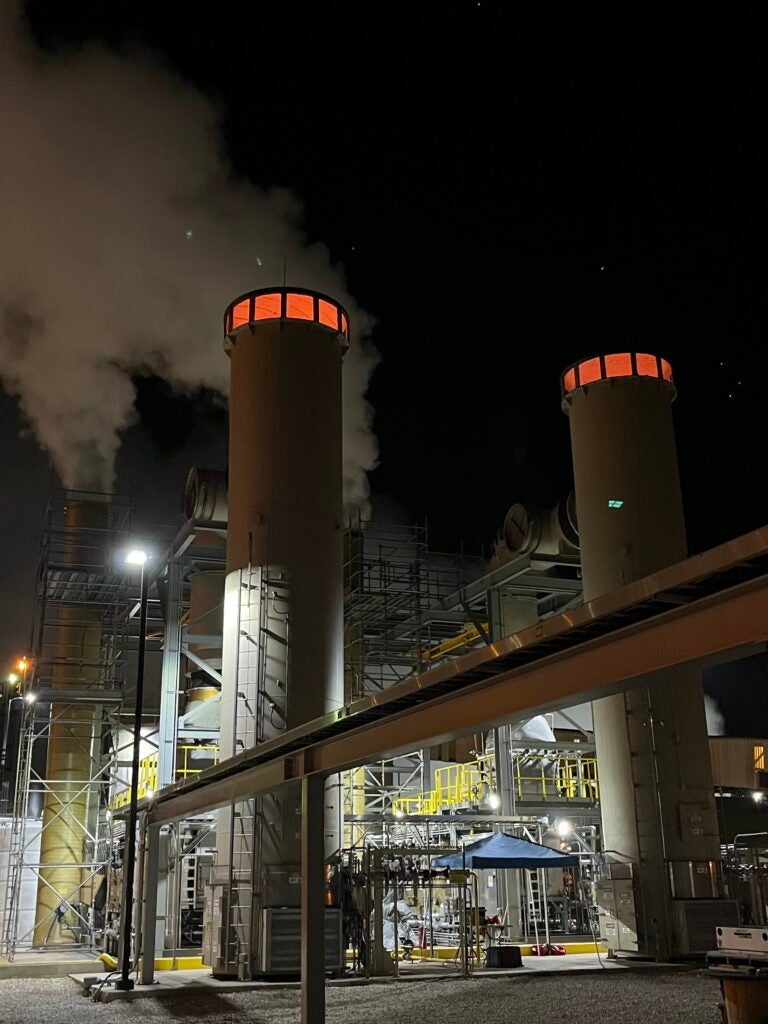
At NRG Energy’s WA Parish Generating Station in Thompsons, Texas, the compliance challenge also had to account for reliability. The roughly 3.6-GW complex includes about 2.5 GW of coal-fired capacity and 1.1 GW of natural gas generation and is a pivotal source of power on the Electric Reliability Council of Texas (ERCOT) grid. In November 2025, the plant commissioned two redundant Heartland Water Technology Concentrators, each sized for 50,000 gallons per day, to thermally evaporate Unit 8 FGD wastewater and route the concentrated residual into existing gypsum and solids-handling systems.
The project, POWER’s 2026 Top Plant Water Award winner, combines commercial scale, difficult-wastewater tolerance, verified performance, and practical retrofit execution. “One of the biggest lessons from WA Parish is that FGD wastewater treatment should be viewed as a plant-integration project, not simply as the purchase of a piece of wastewater equipment,” the project team told POWER.
“Successful implementation depends on understanding the wastewater chemistry, utilities, air permitting, residuals management, existing plant infrastructure, construction constraints and the way operators will actually run and maintain the system,” the team said.
From Recirculation to Thermal Evaporation
Before the project, Unit 8—a 660-MW Babcock & Wilcox dry-bottom, opposed-fired boiler that began operating in 1982—used a wet limestone FGD system for sulfur dioxide control. Its wastewater was routed to a thickener, where solids were concentrated and removed using vacuum filters. The treated water was mixed with makeup water and recirculated to the FGD system. “However, the recirculated water still contains dissolved chemicals, metals and elevated chloride concentrations, which contributes to corrosion and erosion of FGD stainless steel components,” the project team noted.
Given that EPA’s ELG requirements have evolved, NRG sought a reliable, long-term wastewater strategy that could tolerate variable chemistry and operate inside an active coal plant. “That meant finding something that was not simply capable of treating the wastewater, but could be integrated into an operating coal plant and perform reliably as part of the plant’s existing operations,” the team noted.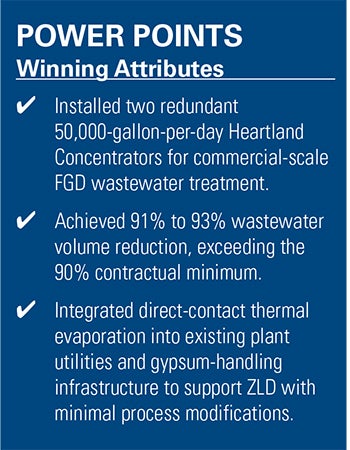
The power company evaluated several treatment technology alternatives and, based on cost, project duration, schedule, and application simplicity, it ultimately chose a ZLD system based on evaporation technology. While a consulting engineer initially identified Heartland’s Concentrator as the best technical fit, the team also weighed commercial operating experience, ability to handle difficult wastewater, high volume reduction, a relatively small residual stream, and fit within the existing plant.
Heartland’s “Concentrator was attractive in part because it is designed for difficult industrial wastewater and does not depend on maintaining a narrow influent chemistry window,” the team said. “The design process considered wastewater flow, chemistry, available utilities and site conditions together rather than treating wastewater chemistry as a standalone parameter.”
The design also considered residuals management from the outset. Expected wastewater flow and chemistry were evaluated alongside utility availability, site conditions, and how the concentrated residual would ultimately be handled. That broader design basis led to the two-unit configuration, which gave NRG treatment capacity as well as operational flexibility.
Heartland also had commercial experience treating challenging industrial wastewater, including landfill leachate. “For a project like this, there is an important distinction between a technology that can work in a test environment and one that has demonstrated that it can operate continuously on difficult industrial wastewater. Commercial operating experience was a significant part of the decision,” the team said.
Concentrators Close the Loop
The two redundant Concentrators provide operating flexibility and reliability. Their direct-contact design is intended for the solids burden inherent in high-total-dissolved-solids wastewater.
“Heartland’s approach is designed around the reality that high-TDS wastewater will contain—and, as it is concentrated, generate—significant amounts of dissolved and suspended solids,” the team said. “Rather than relying on conventional heat-transfer surfaces that can become coated with scale, the Concentrator brings the wastewater directly into contact with hot gas in a low-temperature, high-turbulence evaporation zone.”
As water evaporates, non-volatile dissolved and suspended constituents remain in a smaller concentrated residual stream. Large liquid droplets enter the turbulent hot-gas stream, creating a dynamic liquid–gas interface that maximizes heat transfer while limiting solids deposition. “The process intentionally maintains relatively large liquid droplets and avoids drying them into fine particulate,” the team said. “The resulting vapor stream then passes through a high-efficiency, three-stage mist eliminator, where entrained droplets and particulate matter are captured and returned to the process rather than carried to the exhaust stack.”
Controlled recirculation further concentrates the residual, while periodic purge manages solids loading. Periodic washing and flushing remove accumulated salts.
At WA Parish, evaporation leaves a much smaller residual volume containing the concentrated non-volatile constituents from the wastewater. That residual is ultimately managed through the plant’s gypsum-handling system, allowing the ZLD strategy to use existing solids handling instead of creating another wastewater stream requiring separate treatment.
“One of the strengths of the project is that this was accomplished without wholesale changes to the plant,” the team noted. Connections include natural gas, electrical power, wastewater feed, and residual discharge. The team also added an ultra-low-nitrogen oxides (NOx) flare specifically for the installation.
The amount of concentration achieved in practice is not fixed. “The objective is not simply to achieve the highest possible concentration factor,” the team stressed. “It is to find the operating point that maximizes water removal while maintaining reliable operation and producing a residual that can be effectively managed by the plant.”
Retrofit and Commissioning Lessons
NRG provided site integration, utilities, natural gas supply, wastewater and solids-system connections, and operational support. Heartland delivered engineering, equipment, installation, commissioning, control-system integration, emissions compliance, and contractual performance guarantees.
“Interestingly, some of the biggest challenges were not related to the evaporation technology itself. They were the practical realities of building a new treatment system inside an operating power plant,” the team said.
Because the Concentrators’ compact footprint allowed the units to fit beside existing water-treatment facilities, it reduced utility-routing distance and cost. “No significant modifications to the existing process were required,” the team noted. Buried utilities and field coordination, however, required close collaboration, and mandatory safety standdowns during lightning storms affected construction.
Still, the installed system remained substantially consistent with the original design. Changes made during execution were “relatively minor” and primarily related to health, safety, and environment observations.
“One involved accessibility to burner components located within the enclosed skirt of the low-NOx flare,” the team said, noting that future designs will make those components easier to access. “Another involved the residuals thickener underflow pump. It was designed to accommodate very low flow rates, but future designs can optimize pump size, duty cycle, and flushing velocity while preserving that turndown capability.”
The team later characterized those flows more specifically as the “extremely low flow rates required for ZLD operation”—the kind of field condition that becomes clearer once equipment moves from drawings into operating service.
Early operating fixes were similarly practical. Ambient dust on the flare flame eye periodically interfered with operation, so Heartland added an air purge. Solar loading, meanwhile, raised temperatures inside flare control panels more than anticipated, prompting supplemental ventilation. Low flow and pressure in the residual discharge line were traced to an unintended slipstream back to the thickener. Correcting the routing restored normal flow and pressure.
“The issues encountered to date have been relatively typical of commissioning a new industrial system and have been addressed collaboratively by NRG and Heartland,” the team noted.
Routine maintenance includes periodic cleaning of mist eliminators and Concentrator internals to remove solids buildup, plus piping flushes. Heartland also monitors system performance under its Long-Term Service Agreement, allowing operating trends to be identified and addressed.
Performance and ELG Compliance
The Concentrators achieved nameplate performance during startup and have performed as designed. Actual wastewater volume reduction has averaged approximately 91% to 93% to date, exceeding the 90% contractual minimum.
“The achievable concentration is not a single fixed number,” the team said. “It depends on the incoming wastewater chemistry, the amount and nature of dissolved and suspended material in the feed, operating conditions, and the characteristics required for downstream residual management.”
Today, NRG personnel operate the equipment following Heartland training. Heartland continues to support the installation under a long-term service agreement that includes preventive maintenance, periodic cleaning, diagnostics, and key performance indicator (KPI)-based monitoring.
From an ELG standpoint, the Concentrators remove the large majority of the water from Unit 8’s FGD wastewater and reduce it to a relatively small concentrated residual stream. The project team said recirculating that stream effectively meets ZLD for Unit 8 and described the installation as “an important building block toward the plant’s longer-term ZLD strategy.”
“The regulatory timeline has evolved since the project was initiated, but the installation puts WA Parish in a strong position: the plant now has a full-scale thermal concentration system installed and operating rather than needing to begin technology evaluation and deployment when future compliance requirements take effect,” the team said.
“Perhaps most importantly, the project shows that a major reduction in FGD wastewater volume can be integrated into an existing coal plant without requiring wholesale changes to the facility,” the team underscored. “The two 50,000-gallon-per-day Concentrators were incorporated largely using existing plant utilities and wastewater infrastructure. That makes WA Parish a useful real-world reference for other plants facing similar decisions.”
—Sonal Patel is a POWER senior editor (, ).
![POWER Digest [October 2026]](https://energyheadlines.com/wp-content/uploads/2026/09/ai-generated-solar-array-RAwm8e.jpeg)