By
- Oil markets discount risk of Trump hitting Russia with secondary sanctions
- Russia produces nearly 10% of global oil, is the third largest exporter
- Secondary sanctions could lead to severe energy price shock, inflation
LONDON, July 15 – U.S. President Donald Trump’s threat to choke off Russia’s oil revenue via secondary sanctions would deal a hammer blow to Moscow’s finances, but markets are betting that the risk of higher energy prices will keep Washington from following through.
Get the Latest US Focused Energy News Delivered to You! It’s FREE:
Speaking at the White House on Monday alongside NATO Secretary General Mark Rutte, Trump warned that he would hit Moscow with “very severe” tariffs if a deal to end the war in Ukraine is not reached within 50 days.
Trump did not provide any details, but a White House official later said the new sanctions would include 100% tariffs on Russian exports to the U.S. as well as 100% secondary tariffs on countries that buy oil from Moscow.
If enacted, these sanctions would drastically escalate the economic war the West has waged against Russia since it invaded Ukraine in February 2022.
But oil traders are not buying it. Oil prices actually dropped by more than $1 after Trump’s announcement, signalling that investors think there is a low probability that Trump will make good on his threat.
That’s because effective U.S. secondary sanctions on Russian oil would most likely lead to a sharp increase in global energy prices, putting upward pressure on global inflation, ultimately hurting U.S. consumers, something Trump is loath to do.
In effect, investors are betting that the more extreme a Trump threat is, the less likely it is to be realized. That may be a decent bet, but it’s also a risky one.
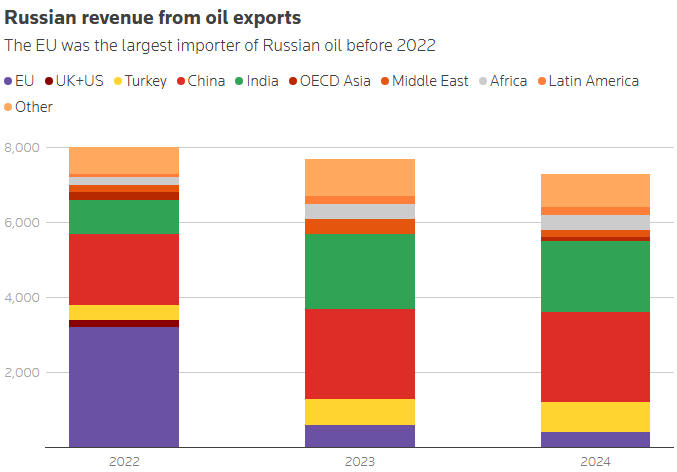
Note: In thousands of barrels per day
By Ron BoussoSource: IEA
HAMMER BLOW
When it comes to Russia, the stakes couldn’t be higher for energy markets.
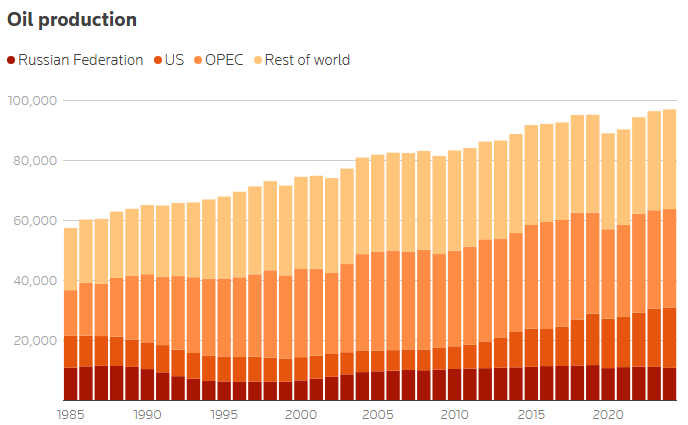
Russia is the world’s third-largest oil producer behind the United States and Saudi Arabia, pumping 9.8 million barrels per day of oil in June, nearly a tenth of global supplies.
Russia exported 4.68 million bpd of crude oil in June as well as 2.5 million bpd of refined products, with a total value of $13.6 billion, according to the International Energy Agency. China, India and Turkey are the main buyers of Russian crude, which they process in local refineries.
Revenue from oil and gas taxes and export tariffs accounted for between 30% to 50%, opens new tab of Russia’s federal budget in recent years, making these funds the single most important source of cash for the Kremlin.
The United States and its European allies have imposed heavy economic sanctions on Russia since 2022 and have stopped most direct oil purchases from Russia. This has been particularly consequential for Europe. It depended on Moscow for nearly one-third of its oil prior to the Ukraine war, but today Russian crude makes up less than 5% of the continent’s oil imports.
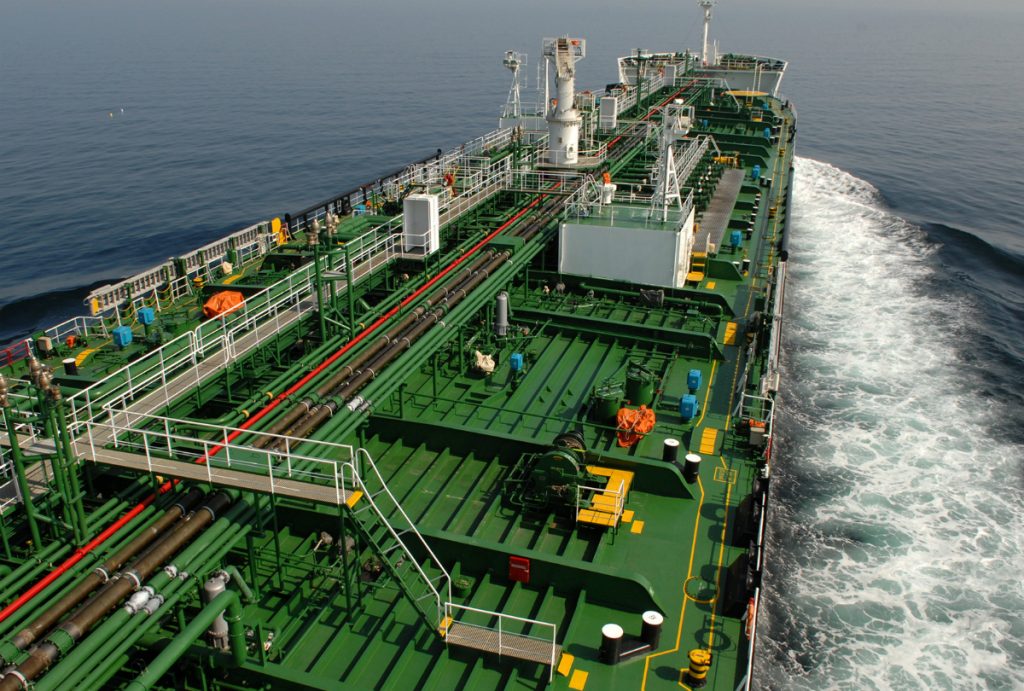
Importantly, western governments tailored these sanctions delicately to avoid creating a severe price shock. The existing measures include targeting Russian tankers and placing a $60 a barrel cap on the price countries can pay for Russian crude without violating sanctions.
The European Union is currently weighing a new package of sanctions that would lower the price cap and see all fossil fuel imports from Russia stop by 2027.
The existing sanctions have certainly hit the Kremlin’s revenue, but they have nevertheless been hard to enforce. Moscow has created a large network of so called “dark fleet” tankers that use alternative non-western financing and insurance to ship oil around the world.
At the same time, refiners in countries that currently import Russian crude oil have benefited from cheaper feedstock and, ironically, have been able to increase their fuel exports to Europe, as it sought an alternative to direct Russian supplies.
Therefore, secondary tariffs on Russian crude, if implemented, could drastically reduce Russia’s oil exports by curtailing its workarounds to the current sanctions regime.
Despite this backdrop, markets appear willing to bet that Trump’s latest threat is simply a negotiating tactic, as he seeks to up the pressure on Russian President Vladimir Putin to agree to a ceasefire in Ukraine.
Note: In thousands of barrels per day
By Ron BoussoSource: Energy Institute Statistical Review of World Energy
BRAVE NEW WORLD
Traders’ jaundiced reaction to Trump’s latest threat underscores how different, and how challenging, energy market forecasting has become during the second Trump administration.
Forecasts in a physical market like oil and gas are typically rooted in what’s actually happening on the ground. Investor sentiment can obviously play a role, but usually a much smaller one than in equities, for example.
But instead of focusing solely on fundamentals, investors today often find themselves having to guess whether the U.S. president’s often bombastic statements are merely negotiating tools, as appears to have been the case with the April 2 “Liberation Day” tariffs, or very real, as was seen with the U.S. attacks on Iran’s nuclear facilities. And to complicate matters even more, the market reaction itself can also play in what Trump ultimately does.
Such a volatile environment might benefit risk-searching traders, but it will be rather uncomfortable for everyone else.
(The opinions expressed here are those of the author, a columnist for Reuters.)
By Ron Bousso; Editing by Kim Coghill
Share This:
Next Article
More News Articles