“With this capital, and the USD863 million the company raised last year, CFS has now raised a total of USD4 billion,” the company said. “This USD4 billion represents about 30% of the total capital raised by the fusion industry to-date, reinforcing CFS’s position as the world’s largest and leading fusion company.”
CFS said its global network of private investors expanded with the addition of a growing number of institutional investors, including pension funds, sovereign wealth funds, infrastructure investors, and industrial corporate partners. “This widening diversity and maturation of CFS’s capital stack reflects the real evidence investors see in the assembly of SPARC and parallel development of its ARC power plant,” it said. “In this concrete progress, investors see that CFS is maturing and have expressed trust in CFS’s focused approach to commercialising fusion.”
CFS said it will use the funds raised to further accelerate its progress to commercialisation.
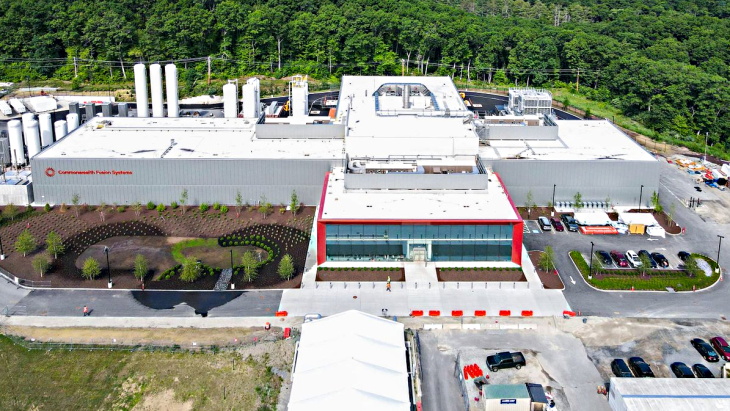
CFS – spun out of the Massachusetts Institute of Technology in 2018 – is currently building the SPARC prototype fusion machine at its headquarters in Massachusetts. It is described as a compact, high-field, net fusion energy device that would be the size of existing mid-sized fusion devices, but with a much stronger magnetic field. The donut-shaped device will use powerful electromagnets to produce the right conditions for fusion energy, including an interior temperature surpassing 100 million degrees Celsius. It is predicted to produce 50-100 MW of fusion power, achieving fusion gain greater than 10.
The plan is for SPARC to pave the way for a first commercially viable fusion power plant called ARC, which is intended to generate about 400 MWe – enough to power large industrial sites, or about 150,000 homes. ARC, at the company’s Fall Line Fusion Power Station in Chesterfield County, Virginia, is scheduled to deliver power to the grid in the early 2030s.
“CFS is making what once was impossible into inevitable,” said the company CEO and co-founder, Bob Mumgaard. “In the 2030s, we will put commercial fusion on the grid. We have the science that works and the proven execution that’s consistently validated by the market. We regularly welcome investors from around the world to our headquarters in Devens, Massachusetts, where they see real and tangible progress as we ready support systems and finalise the assembly of SPARC. In unlocking commercial fusion energy, we’re on a path to make an impact at a civilisational level.”