Monday, 17 February 2025
_28142.jpg)
Launched during Core Power’s New Nuclear for Maritime summit in Houston, Texas, on 12 February, the Liberty programme “will lay the foundation for the use of nuclear power in the civil maritime sector”, the company said. “It will encompass modular construction of advanced fission technology and create the regulatory and supply chain frameworks necessary to enable this technology to be rolled out worldwide.”
The first part of the programme will see the mass production of floating nuclear power plants (FNPPs). The expertise gained in rolling out FNPPs on a large scale will pave the way for the second part of the programme, which involves developing nuclear propulsion for civil ships.
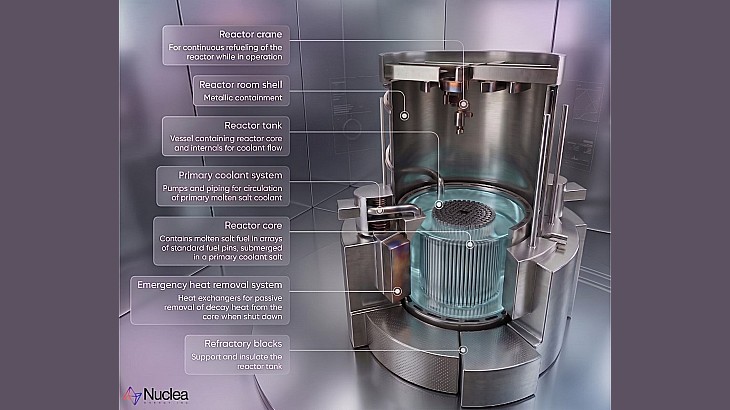
Core Power said FNPPs will be produced in shipyards on a modular production line, using well-established shipbuilding processes and leveraging an already-skilled workforce. They will be manufactured as power barges that can be moored at ports and coastal locations, as well as larger-capacity generation units anchored further offshore. A fleet of FNPPs can be mass produced and towed to customer locations without complex site preparations, it said, while a central yard carries out commissioning, maintenance, refuelling, and waste management. The Liberty programme will employ advanced nuclear technologies, such as molten salt reactors.
“The Liberty programme envisions opening the orderbook for FNPPs in 2028 and reaching full commercialisation by the middle of the next decade,” Core Power said. The company will choose a location in the USA to build the initial manufacturing yard for FNPPs.
The second phase of the programme will focus on developing the supply chain and workforce. The third phase will see the development of business operations models and creating the manufacturing base. At the same time, Core Power plans to aid the development of international safety and security standards by working together with the International Maritime Organization and the International Atomic Energy Authority to create a civil liability convention for nuclear-powered ships.
The programme, it said, will also encompass creating the robust regulatory framework necessary to operate FNPPs and (later) civil vessels with nuclear propulsion. It will also include the supply chains (such as fuel and highly trained personnel) that will enable advanced nuclear reactors to function.
“The Liberty programme will unlock a floating power market worth USD2.6 trillion, and shipyard construction of nuclear will deliver on time and on budget,” said Core Power CEO Mikal Bøe. “Given that 65% of economic activity takes place on the coast, this will allow nuclear to reach new markets.
“Core Power’s Liberty programme will deliver resilient energy security for heavy industry and ocean transport. In doing so, it will revolutionise the maritime sector and transform global trade.”
In October last year, Core Power announced it had signed an agreement with Mitsubishi Research Institute to study market conditions for a maritime civil nuclear programme in Japan.