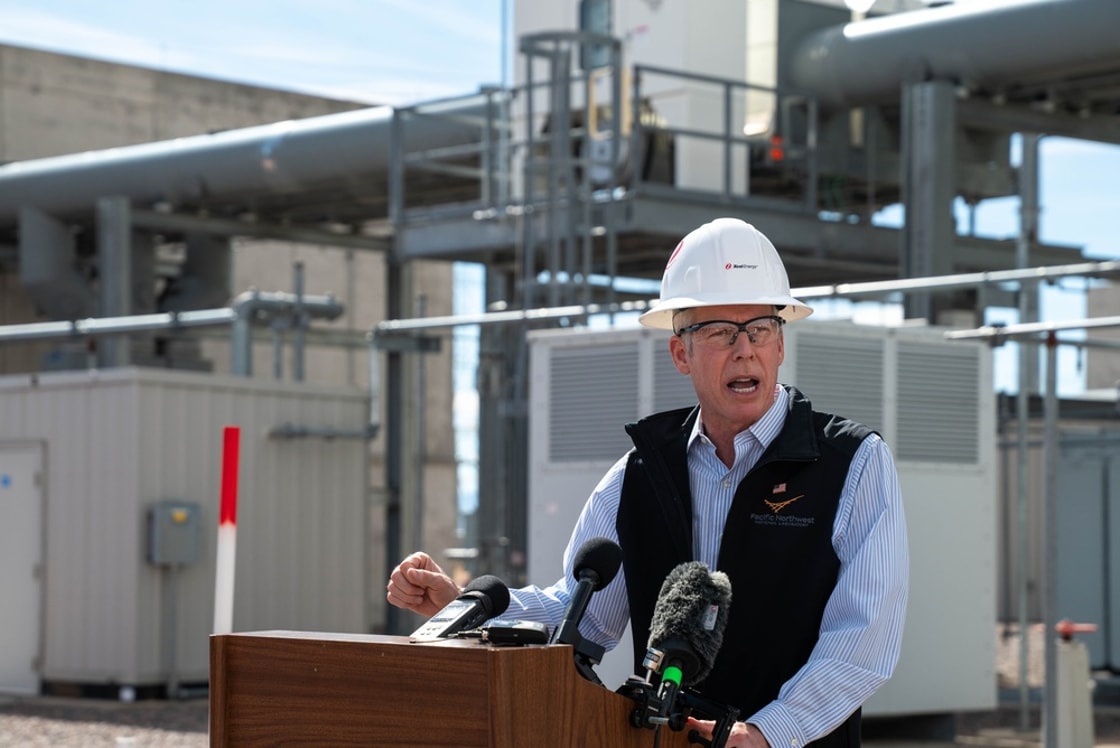
US Energy Secretary Chris Wright © Jesse Paul / Shutterstock.com
You’ve read 1 of 1 of your free articles this month.
The US Department of Energy (DOE) has designated helium as a critical material, citing growing supply risks and its importance to domestic semiconductor manufacturing and advanced technologies.
The designation, made under the Energy Act of 2020, formally recognises helium as essential to strategic industries and vulnerable to supply chain disruptions, potentially opening the door to greater federal support for domestic production and processing.
Helium is used extensively in semiconductor manufacturing, as well as quantum computing, natural gas infrastructure leak testing, and medical equipment, with few viable substitutes in many applications.
It comes amid significant disruption to global helium supplies following the outbreak of the US-Israeli war with Iran in February.
Iranian strikes on Qatat’s Ras Laffan liquefied natural gas complex, coupled with the effective closure of the Strait of Hormuz, have severely constrained Qatari helium production exports, which accounts for around 30% of .
The DOE also identified limited domestic refining capacity and lengthy permitting obstacles to increasing US production, despite the country’s helium-bearing natural gas reserves.
The move by Washington could strengthen the investment case for US helium extraction and refining projects. However, the designation itself does not provide new funding or introduce measures to accelerate permitting or expand capacity.
Since the outbreak of the war, industrial gas suppliers have been relying on systems to meet demand.
Bringing new helium supplies online remains challenging. At gasworld’s in Houston this week, 56% of delegates surveyed predicted that only a minority of new projects would reach commercial operations.
Panellists at the event identified access to capital, securing offtake agreements, and infrastructure development as key barriers to scaling production.