Tuesday, 22 July 2025
The first stage of design work on a prototype molten salt reactor has been completed, Russian state nuclear corporation Rosatom has said.
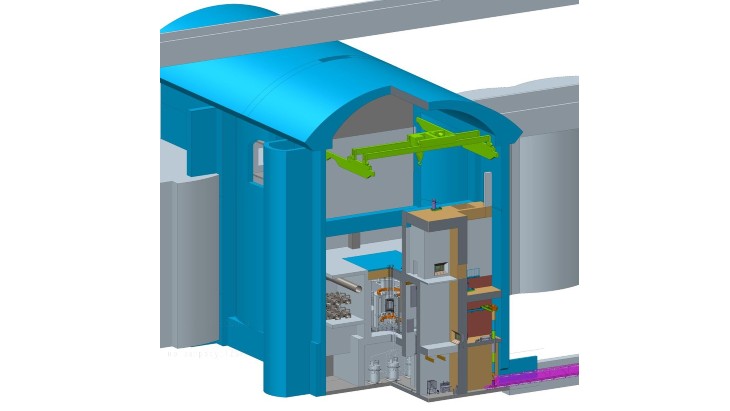
A preliminary design was unveiled in February 2024. The subsequent phase of design work included the development of materials for the design documentation, under the scientific supervision of the Kurchatov Institute.
Rosatom added: “A brief description of the design of the elements of the nuclear installation and the initial fuel preparation complex was also developed, and the main characteristics of the nuclear fuel and elements of the installation were given. This information will form the basis for the assessment of the impact … on the environment and a preliminary report on the justification of its safety.”
The design stage is due to last until 2027 – the next phase will see the creation of technical designs for the reactor installation and the initial fuel preparation complex.
Dmitry Kolupaev, director general of the Mining and Chemical Combine, said: “Successful implementation of this technology will, among other things, reduce the amount of waste subject to final isolation and the duration of its storage. And in the future, it will create the basis for the development of more powerful molten salt reactors, which will be sufficient for processing the entire volume of the most dangerous components of used nuclear fuel produced by thermal reactors.”
Vasily Tinin, director of state policy in the field of radioactive waste, used nuclear fuel and decommissioning of nuclear and radiation hazardous facilities, said: “The implementation of the project will allow us to take the environmental safety of nuclear power to a new level – to take a big step towards waste-free nuclear technologies. The main objective of the technology that we are preparing to develop and which relates to fourth-generation nuclear energy technologies will be the creation of a new system for the disposal (afterburning) of hazardous radioactive substances – minor actinides – which are products of the processing of spent nuclear fuel from VVER and RBMK thermal reactors.”
The project plans to use circulating molten salt fuel. And the intention is to continue research and developent work to justify the technological solutions in the design documentation with scaling of the technology expected to continue following the launch of the prototype reactor, which is targeted for 2031.
It is part of the wider Russian federal project to develop “new materials and technologies for advanced energy systems” and part of the country’s goal of closing the fuel cycle. Rosatom says that the period of potential danger from minor actinides can be reduced from 10,000 years to 300 as a result of the process.