

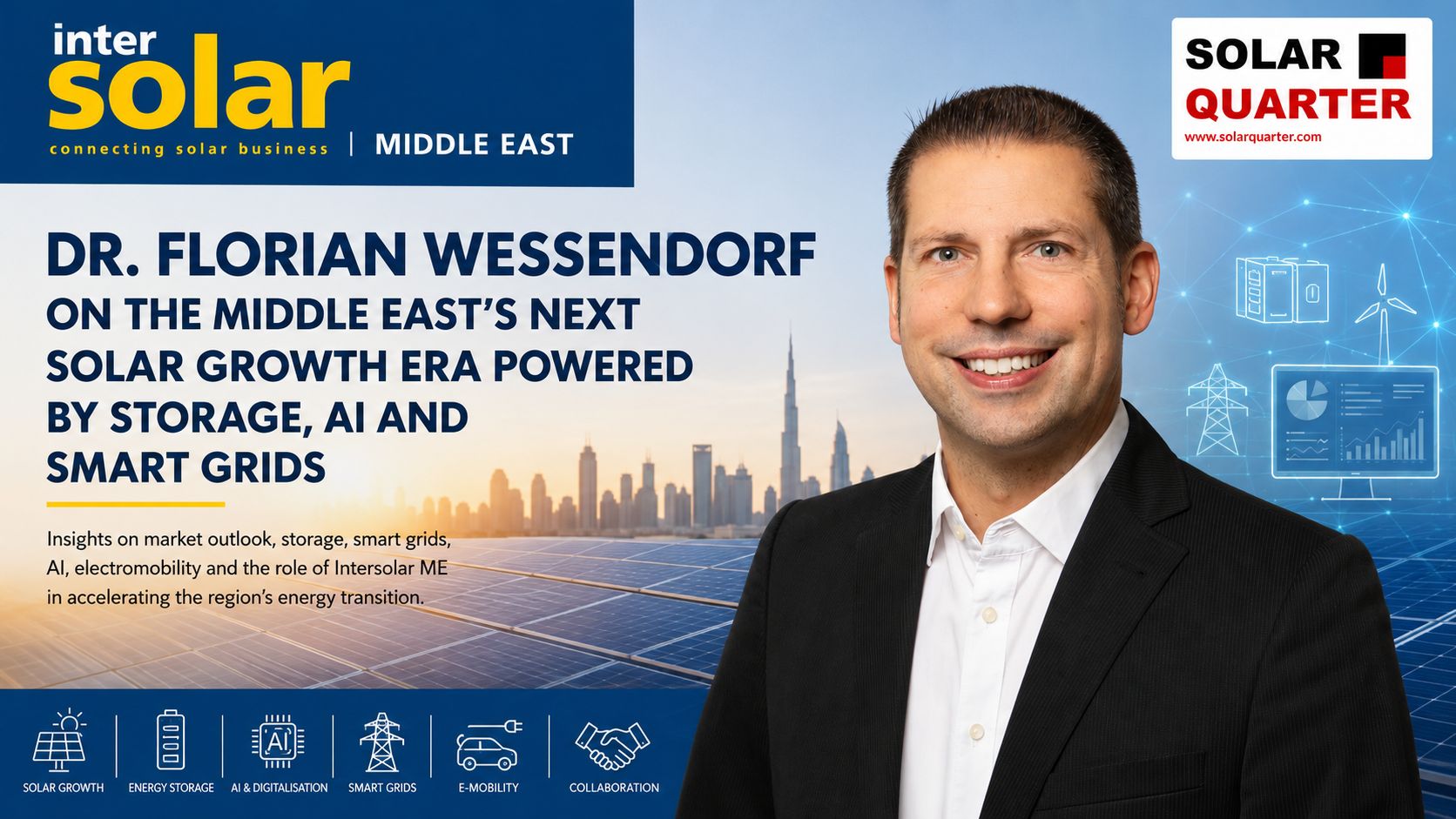
The Middle East is rapidly emerging as one of the world’s most dynamic solar energy markets, supported by ambitious renewable energy targets, rising electricity demand and sustained investment in clean energy infrastructure. As solar deployment accelerates, energy storage, smart grids, artificial intelligence and digitalisation are becoming increasingly important in creating a more flexible, resilient and integrated energy ecosystem.
In an exclusive interview Dr. Florian Wessendorf, Managing Director of Solar Promotion GmbH and Solar Promotion International GmbH, shares his perspective on the outlook for the Middle East solar market and the technologies that will define its next phase of growth. He discusses the critical role of battery storage and smart grids, the potential of AI and digitalisation to transform energy management, and the growing convergence of renewable energy with electromobility and emerging sectors such as green hydrogen. He also highlights how Intersolar Middle East can bring policymakers, utilities, investors and technology providers together to translate the region’s ambitious energy transition goals into concrete projects and partnerships.
- How do you see the Middle East’s solar energy market evolving over the next few years?
I believe the Middle East solar market will continue to grow rapidly, driven by ambitious government targets, increasing electricity demand, and economic diversification efforts. Countries such as Saudi Arabia and the UAE are leading the way with large-scale investments and significant project pipelines. A key trend will be the expansion of energy storage and the integration of solar with emerging sectors such as green hydrogen. At the same time, falling technology costs and innovative financing models will make solar increasingly competitive and accessible. Overall, I expect the Middle East to strengthen its position as one of the world’s most important solar growth markets, combining excellent solar resources with strong policy support and long-term investment commitments.
- What role will energy storage and smart grids play in supporting the region’s renewable energy growth?
Energy storage and smart grids will be critical enablers of the Middle East’s renewable energy growth. As solar capacity expands, battery storage will help balance supply and demand, improve grid stability, and ensure reliable power even when the sun is not shining. This will allow countries to integrate much higher shares of renewable energy into their power systems. Smart grids will play an equally important role by improving real-time energy management, integrating distributed generation, and optimizing electricity flows across networks. Combined with digital technologies, they will increase efficiency, reduce losses, and support the transition to a more flexible and resilient energy system. Together, energy storage and smart grids will be essential for unlocking the full potential of solar power and building a reliable, low-carbon energy infrastructure across the region.
- How can AI and digitalisation help build more efficient, resilient and future-ready energy systems?
AI and digitalisation are becoming key tools for building more efficient, resilient, and future-ready energy systems. By using real-time data and advanced analytics, utilities can better forecast energy demand, optimize power generation, and improve the integration of renewable sources such as solar and wind. This helps reduce costs, increase efficiency, and minimize energy waste. AI can also enhance grid reliability through predictive maintenance, identifying potential equipment failures before they occur and reducing unplanned outages. At the same time, digital platforms enable operators to monitor and manage increasingly complex energy networks in real time. As renewable penetration grows, AI-driven energy management and smart grid technologies will become essential for balancing supply and demand, integrating storage systems, and ensuring grid stability. Together, AI and digitalisation will help create a more flexible, reliable, and sustainable energy infrastructure capable of supporting long-term growth and decarbonization goals.
- How can the Middle East accelerate the integration of renewable energy with wider energy infrastructure and emerging technologies such as electromobility?
The Middle East can accelerate renewable energy integration by taking a more holistic approach to energy infrastructure. This includes expanding grid interconnections, investing in energy storage, and deploying smart grid technologies that enable renewable energy, electric vehicles, and other distributed assets to work together seamlessly. Electromobility will play an important role in this transition. By expanding EV charging infrastructure and aligning charging strategies with renewable energy generation, countries can create additional demand for clean electricity while reducing emissions in the transport sector. Equally important is digitalization. Advanced energy management systems, AI, and real-time data analytics can optimize energy flows, improve grid stability, and enhance the integration of renewable generation, storage, and electric mobility solutions. Ultimately, strong collaboration between governments, utilities, technology providers, and private investors will be essential to build an integrated, flexible, and future-ready energy ecosystem that supports both economic growth and sustainability goals.
- What role can Intersolar ME play in bringing together policymakers, utilities, investors and technology providers to accelerate the region’s energy transition?
Intersolar Middle East can play a vital role by bringing together policymakers, utilities, investors, and technology providers on a single platform to exchange ideas, share best practices, and accelerate collaboration across the energy value chain. As the region scales up renewable energy deployment, successful projects increasingly depend on cooperation between multiple stakeholders. Events such as Intersolar Middle East help connect decision-makers with technology innovators and investors, enabling discussions around policy frameworks, financing models, grid modernization, energy storage, digitalization, and emerging applications such as green hydrogen and electromobility. Equally important, the event provides a platform to showcase proven technologies, real-world case studies, and market opportunities. By fostering knowledge sharing and strategic partnerships, Intersolar ME can help turn ambitious energy transition targets into concrete projects and accelerate the development of a resilient, sustainable, and future-ready energy ecosystem across the Middle East.
Subscribe to get the latest posts sent to your email.



)