Peak shale may already be behind us. U.S. crude oil production is now forecast to slip from a record 13.5 million barrels per day (bpd) in Q2 2025 to around 13.3 million bpd by the end of 2026, according to the U.S. Energy Information Administration’s bombshell June Short-Term Energy Outlook, signaling to an already price-weary industry that shale’s best days are in the rearview.
It’s a subtle but significant shift—marking the first extended production dip forecast since the U.S. shale renaissance began more than a decade ago. And it’s being driven by a sharp and unexpected drop in active drilling rigs, paired with weakening oil prices.
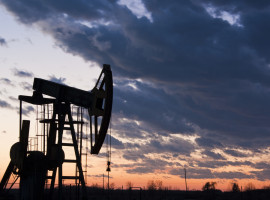
Rig activity is tumbling. Last month’s rig count decline far exceeded expectations—the lowest since November 2021—with Baker Hughes reporting U.S. oil rigs at just 442 as of last week. In the Permian, the industry’s crown jewel, rig totals have fallen to levels not seen since late 2021.
The EIA now projects that fewer wells will be drilled and completed through 2026. As a result, annual production averages are set to plateau: 13.42 million bpd in 2025, and 13.37 million bpd in 2026. The days of year-on-year output growth may be over—for now.
Adding to the bearish case: the EIA expects Brent crude prices to average $59 per barrel next year, from an average $66 this year—not exactly a rallying cry for new investment. Producers, still laser-focused on capital discipline and investor returns, are holding off on aggressive drilling campaigns.
What the EIA is now forecasting:
- Growth is hitting a ceiling: The EIA sees U.S. supply expansion slowing as rig attrition begins to outpace productivity gains.
- Price volatility could return: With thinner supply buffers, the market may react more sharply to any geopolitical flare-ups.
- Shale discipline isn’t going anywhere: EIA projects that operators will continue favoring shareholder returns over production growth.
- Time to temper the “supercycle” talk: The U.S. remains a heavyweight, but EIA no longer sees it as the same relentless engine of crude growth.
This is more than just a tweak in projections—it’s a directional shift. If the EIA is right, 13.5 million b/d will be the high-water mark for U.S. shale production. The relentless climb that defined the shale era is giving way to a plateau, and possibly, a slow descent. Whether that holds depends on prices, policy, and how long operators keep their foot off the gas. But for now, the EIA is signaling something the industry hasn’t heard in a long time: the top may already be behind us.
By Julianne Geiger for Oilprice.com
More Top Reads From Oilprice.com
- Permian or Bust? U.S. Oil Growth Has a One-Basin Problem
- Foreign Investors Are Betting Big on Argentina’s Energy Sector
- Iraq Says Kurdistan Is Legally Responsible for Oil Smuggling